Tianqiong Sensor IOT Technology Co., Ltd
Sales Manager:Ms. Emily Wang
Cel,Whatsapp,Wechat:+86 15898932201
Email:info@fengtutec.com
Add:No. 155 Optoelectronic Industry Accelerator, Gaoxin District, Weifang, Shandong, China


Sales Manager:Ms. Emily Wang
Cel,Whatsapp,Wechat:+86 15898932201
Email:info@fengtutec.com
Add:No. 155 Optoelectronic Industry Accelerator, Gaoxin District, Weifang, Shandong, China
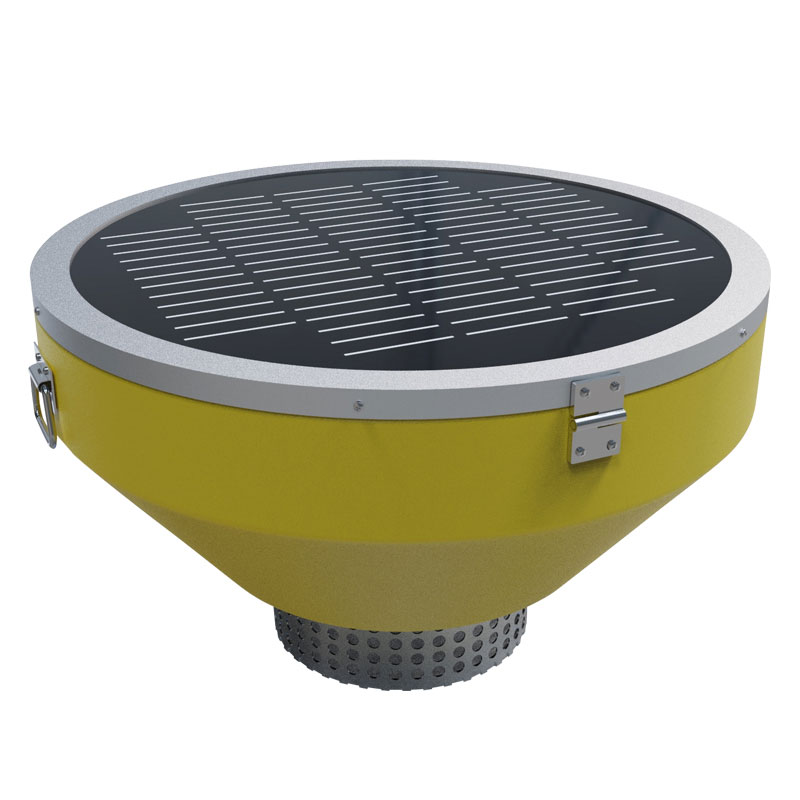
Model:FT-SFB
Brand:tianqiong
1.Introduction to IoT Water Quality Monitoring Station Functions
IoT Water Quality Monitoring Station monitors water quality through the Internet of Things, such as water temperature, pH, dissolved oxygen, conductivity, ammonia nitrogen, turbidity, COD, etc.
1.IoT Water Quality Monitoring StationSFB adopts an enhanced integrated cone structure, which increases equipment stability and durability and is more in line with floating engineering.
Real-time measurement of hydrological, water quality and meteorological parameters in lakes or basins.The system integrates data acquisition and transmission, and has SMS alarm function and automatic light sensing function beyond the standard.It has the characteristics of many measurement parameters, high measurement accuracy, large storage capacity, convenient network formation, and stable operation.The float adopts an unattended intelligent control system to complete the data collection and transmission of multiple sensors; solar panels and large-capacity batteries form a solar power supply system, which can ensure the power required for the system to work in the field for a long time; the float target is made of ultra-high molecular polyethylene material, and has good anti-corrosion ability, prevent biological adhesion, non-fading, strong collision resistance, lightning resistance, non-magneticity, etc., and is suitable for complex hydrological and hydrodynamic conditions such as reservoirs.
2.The water quality monitoring system consists of six parts: water quality sensor, data collector, communication system, power supply system, overall support, and water quality monitoring platform.It can simultaneously monitor water temperature, pH, dissolved oxygen, conductivity, ammonia nitrogen, turbidity, COD, etc., and a variety of water quality factors.The data collector has data acquisition, real-time clock, data timing storage, parameter setting and standard 2G/4G (GPRS) communication functions.
2.IoT Water Quality Monitoring Station product features
1.Easy to deploy: All types of probes are highly integrated and easy to install; free cloud platform services are provided, and the system is quickly launched;
2.Easy maintenance: After the equipment is installed, it can work by itself, without manual duty, and the normal operation of the equipment can be ensured through remote monitoring;
3.Easy to expand: All sensor probes use a unified communication protocol, which can quickly connect to the original equipment and quickly expand monitoring parameters;
4.Low power consumption: The device can operate for a long time in a low power consumption state, increasing the convenience of the device;
5.Real-time: The data monitored by the device is transmitted to the cloud platform in real time, improving the timeliness of environmental data feedback.
3.IoT Water Quality Monitoring Station Technical Parameters
1.Main parameters
| Product Name | describe |
| IoT Water Quality Monitoring Station |
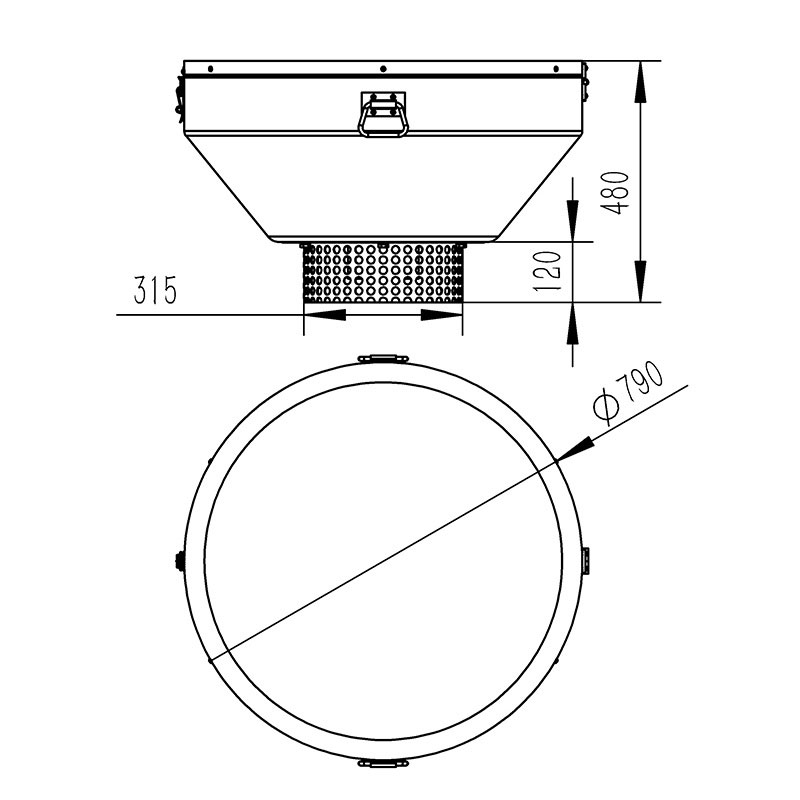
Online monitoring of multiple parameters can be realized in real time. Battery power monitoring can be realized. It can realize cloud platform data monitoring, data push, data storage and alarm functions; data wireless transmission functions. The peak power consumption is 5W; the sensor power consumption is about 0.25W per piece. Dimensions: 800*350mm.Maximum diameter of floating body 790mm Weight: 26kg |
| Core components | describe |
| Collector data acquisition | Reliable operation, anti-interference, and can integrate multiple RS485/MODBUS-RTU slave equipment |
| Collector data output | 1-channel Rs485/JSON protocol output |
| Battery | Lithium battery 12VDC, 20AH (default) |
| Solar panels | 18V/55W (default) 800mm round solar panel frame aluminum alloy customization |
| Power supply capacity | Customized selection; work for more than 5 days between rainy days |
| Position indication (optional) | Warning light; GPS positioning; |
| Monitoring platform | Cloud platform; mobile phone/computer multi-terminal login |
| Protective cover | 304 stainless steel filter cartridge protective cover |
| Floating body | Diameter 790mm Conical floating body*1 integrated engineering plastic |
2.The main parameters of optional sensors
| Model | Name | Measurement range | Principle | Measurement accuracy | Resolution | Is it standard equipment | Note |
| S1S | cod | 0~1000mg/L | UV254 absorption method | ±5%, ±0.3℃ | 0.1mg/L | cod turbidity integrated; brush self-cleaning, with temperature compensation | |
| Turbidity | 0~400NTU | Scattering light method | ±1%, ±0.3℃ | 0.1NTU | |||
| S2 | Water hardness | 0~1000.0mg/L | Contact method of electrode | Reading ±10%; ±0.3℃ | 0.1mg/L | ||
| S3 | pH | 0~14 (ph) | Electrochemistry (salt bridge) | ±0.1PH;±0.1℃ | 0.01 | With warm supplement | |
| pH | 0~14 (ph) | Electrochemistry (salt bridge) | ±0.1PH;±0.1℃ | 0.01 | |||
| S5 | Ammonium nitrogen | 0~1000mg/l | Ion selective electrode method | 10% of the reading, ±0.5℃ | 0.01mg | Ammonia nitrogen pH integrated; with temperature compensation | |
| pH | 0~14 (ph) | Electrochemistry (salt bridge) | ±0.1PH;±0.1℃ | 0.01 | |||
| S6 | ORP | -1500mv~1500mv | Electrochemistry (salt bridge) | ±6mv | 1mV | ||
| S7 | Electrical conductivity | 0~10000uS/cm | Contact method of electrode | ±1.5%; ±0.1°C | 1uS/cm | With warm supplement | |
| S7H | High range conductivity | 0~30000μS/cm | Contact method of electrode | ±1.5%; ±0.1°C | 1uS/cm | High range conductivity TDS salinity sensor; with temperature compensation | |
| TDS | 0-10000ppm | Contact method of electrode | ±1.5%; ±0.1°C | 1ppm | |||
| Salinity | 0-10000ppm | Contact method of electrode | ±1.5%; ±0.1°C | 1ppm | |||
| S8 | Dissolved oxygen | 0~20mg/L | Fluorescence lifetime method | ±2%, ±0.3℃ | 0.01mg/L | With warm supplement | |
| S9 | Turbidity | 0~1000NTU | Scattering light method | ±1%, ±0.3℃ | 0.1NTU | With warm supplement | |
| S10 | Suspended matter | 0~2000mg/L | Scattering light method | ±5% (depending on the homogeneity of the sludge) | 0.1mg/L | ||
| S11S | Sludge concentration | 0~20.000g/L | Scattering light method | ±5% (depending on the homogeneity of the sludge) | 0.001g/L | Brushed self-cleaning | |
| S15S | Chlorophyll | 0~400ug/L | Fluorescence method | R²>0.999 | 0.01ug/L | Self-cleaning with brush; with temperature compensation | |
| S16S | Cyanobacteria | 0~200.0Kcells/mL | Fluorescence method | R²>0.999 | 0.1Kcells/mL | Brushed self-cleaning | |
| S17S | Oil in water | 0~60ppm | Fluorescence method | 0.1ppm | 0.01ppm | Brushed self-cleaning | |
| S20 | Transparency | 50~1000mm | Scattering light method | ±5% (depending on the homogeneity of the sludge) | 1mm | With warm supplement | |
| S21 | Water temperature | −20℃~85℃ | High-precision digital sensor | ±0.1℃ | 0.1℃ |
Appropriate testing solutions can be customized according to the actual situation of the customer and the technical indicators to be achieved.
Note: The sensor cannot be installed inverted or horizontally when installed, and should be installed at least 15 degrees above the angle of inclination.
The working environment of the above water quality sensor is 0-50℃, <0.3Mpa.
4.IoT Water Quality Monitoring Station product size diagram
5.IoT Water Quality Monitoring Station device installation requirements
1.Stay away from high-power radio transmitters
2.Stay away from high-voltage transmission lines and microwave radio transmission channels
3.Try to be close to the data transmission network
4.Stay away from strong electromagnetic interference
Five Elements Micrometeorological Instrument, model FT-WQX5S, features an exterior made of stainless steel. This material not only boasts high strength, capable of withstanding a certain degree of external impact, but also exhibits excellent anti-oxidation and anti-corrosion properties. This makes i...
In the fields of solar energy resource assessment and meteorological monitoring, the Fully Automatic Solar Spectrometer is revolutionizing traditional measurement methods. This instrument combines multi - spectral filters with thermopiles to capture radiant energy within the spectral range of 280 to...
The Atmospheric Visibility Sensor is a device that accurately acquires atmospheric visibility data.The working principle of the Atmospheric Visibility Sensor is based on the theory of light scattering. The instrument is equipped with a light source of a specific wavelength, mostly an infrared LED li...
Environmental monitoring centers play a crucial role in atmospheric environment monitoring, responding to sudden environmental incidents, and providing data support for environmental protection decision - making. A portable and powerful mobile weather station is of great significance for improving i...


 Get a Free Quote
 Skype
Skype
 whatsapp
 mail
mail