Tianqiong Sensor IOT Technology Co., Ltd
Sales Manager:Ms. Emily Wang
Cel,Whatsapp,Wechat:+86 15898932201
Email:info@fengtutec.com
Add:No. 155 Optoelectronic Industry Accelerator, Gaoxin District, Weifang, Shandong, China


Sales Manager:Ms. Emily Wang
Cel,Whatsapp,Wechat:+86 15898932201
Email:info@fengtutec.com
Add:No. 155 Optoelectronic Industry Accelerator, Gaoxin District, Weifang, Shandong, China
time:2025-08-25 09:02:04 source:Weather Station viewed:494 time
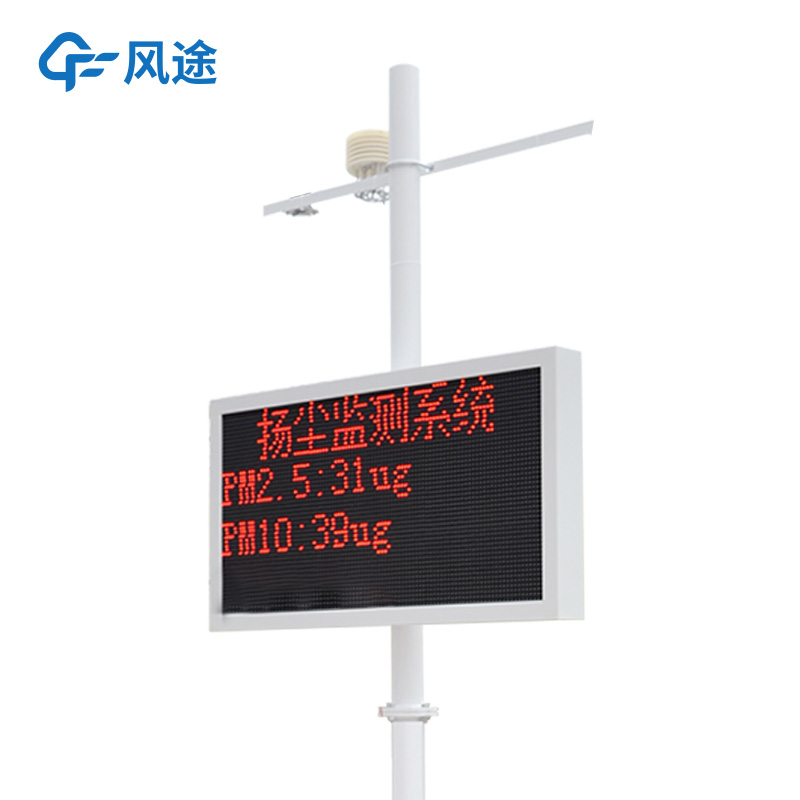
With the acceleration of urbanization, dust pollution from construction sites has become increasingly severe. It not only impairs urban air quality but also poses a threat to residents' health. To efficiently monitor and control this issue, the Dust Detector system has been developed by leveraging the Internet of Things (IoT) and cloud computing technologies. It enables real-time tracking of dust concentration and on-site conditions, realizes automatic analysis and management of monitoring data on the monitoring center software platform, supports remote evidence collection, and provides data support. This helps relevant authorities activate emergency measures in a timely manner and reduce the impact of dust pollution.
The system mainly consists of four parts. The first part is dust monitoring equipment, which includes an online particulate matter monitor, a video photography system, and meteorological equipment. Among them, the automatic particulate matter monitor can conduct real-time monitoring of PM2.5 and PM10 concentrations. It can also be expanded with a meteorological unit, an outdoor display unit, and a noise unit to form a comprehensive monitoring system capable of simultaneously monitoring particulate matter, meteorological conditions, and noise. By grasping particulate matter concentrations in real time, it enables accurate monitoring of dust emission.
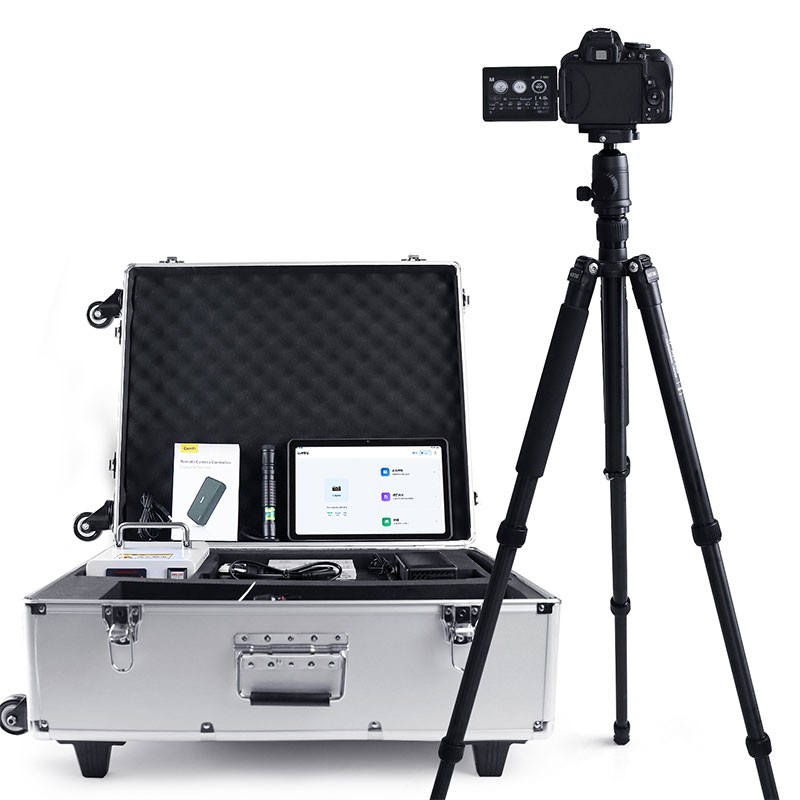
The second part is the emergency response system. It integrates video surveillance into the central cloud platform and links with platform data. When dust concentration exceeds the standard, the system can automatically capture on-site images or capture them at regular intervals, and staff can also manually operate to capture images. The system can be linked with local pollution control equipment; once pollutants exceed the standard, it will transmit control signals to realize operations such as starting and stopping the pollution control equipment, thereby curbing the spread of dust in a timely manner.
The third part is the data aggregation central cloud platform. This platform can collect real-time air quality data from the monitoring points of the construction sites under its jurisdiction and monitor the operating status of each monitoring point in real time. Staff can set early warning thresholds according to needs; the platform will regularly generate data analysis reports and provide targeted management suggestions, effectively improving the management efficiency of environmental supervision departments.
The fourth part is the mobile phone APP (mobile application). This software has a convenient site subscription function, allowing users to independently follow specific monitoring sites and query site data at any time. It facilitates real-time understanding of changes in dust pollution at construction sites when users are out, making supervision and public supervision more flexible and efficient.
The Negative Oxygen Ion Monitoring System is a monitoring framework built on professional technologies, with its core technical architecture integrating sensing technology and IoT communication technology. The sensor employs a universal capacitive detection principle to measure the concentration of...
Instruments for measuring water flow velocity are specialized devices used to determine the speed of water in rivers, canals, pipelines, and other bodies of water. They fall into categories such as mechanical propeller, electromagnetic, and ultrasonic Doppler types. Modern portable flow meters...
In traditional agricultural production, there has always been a problem of lag in crop disease prevention and control. Farmers mainly rely on experience to judge diseases, and by the time obvious symptoms appear in the field, certain losses have often been caused. Blind use of pesticides is also com...
weather monitoring system is an unattended meteorological data acquisition system that uses ultrasonic principles to measure wind speed and direction. This system integrates data acquisition, storage, and transmission functions, featuring a compact structure and easy installation....



 Skype
Skype
 whatsapp
 mail
mail