Tianqiong Sensor IOT Technology Co., Ltd
Sales Manager:Ms. Emily Wang
Cel,Whatsapp,Wechat:+86 15898932201
Email:info@fengtutec.com
Add:No. 155 Optoelectronic Industry Accelerator, Gaoxin District, Weifang, Shandong, China


Sales Manager:Ms. Emily Wang
Cel,Whatsapp,Wechat:+86 15898932201
Email:info@fengtutec.com
Add:No. 155 Optoelectronic Industry Accelerator, Gaoxin District, Weifang, Shandong, China
time:2026-06-03 11:44:16 source:Weather Station viewed:199 time
Handheld anemometers measure wind speed and direction using the ultrasonic time-of-flight method. Multiple built-in ultrasonic probes calculate wind field data by measuring the time difference of sound wave propagation in the wind direction. The device has no moving mechanical parts, zero start-up wind speed limit, and can measure wind speed from 0-40 meters per second and wind direction from 0-360 degrees. It is suitable for mobile inspection scenarios such as meteorological monitoring, construction machinery, and port terminals.
Handheld anemometers are portable wind speed and direction measurement devices based on the ultrasonic time-of-flight method. Unlike traditional mechanical anemometers that rely on cup rotation and wind vane direction, ultrasonic handheld anemometers have no moving parts. They calculate wind speed and direction by measuring the time difference of ultrasonic wave propagation in the air. Inside the device, multiple ultrasonic probes are arranged in pairs, emitting and receiving sound pulses. When the ultrasonic wave propagates in the same direction as the wind, its propagation speed is faster; when it propagates in the opposite direction to the wind, its propagation speed is slower. The device measures the propagation time difference in the headwind and tailwind directions using a high-precision timing circuit, and the built-in microprocessor calculates the wind speed and wind direction angle. To eliminate the influence of temperature changes on the speed of sound, the device measures the propagation time difference of ultrasonic waves in two opposite directions along the same measurement path. Since temperature has an equal impact on the speed of sound in both directions, these effects cancel each other out when calculating the time difference, thus eliminating the need for additional temperature compensation to obtain accurate measurement results. Using four ultrasonic probes enables 360° omnidirectional, blind-spot-free measurement in a two-dimensional plane, while a six-probe configuration allows for three-dimensional wind speed component measurement.
In terms of technical parameters, the wind speed measurement range of this handheld ultrasonic anemometer is typically 0 to 40 meters per second, with some models extending to 0 to 60 meters per second, and a measurement accuracy of ±0.1 meters per second. The wind direction measurement range is 0 to 359 degrees or 0 to 360 degrees, with an accuracy of ±1 to ±3 degrees and a resolution of 0.1 or 1 degree. The internal data processing sampling rate can be set to 1Hz, 4Hz, or 8Hz, with a response time controllable to within 0.5 seconds, enabling the capture of instantaneous wind speed changes and subtle airflow fluctuations. The device casing is made of ABS engineering plastic or high-quality ASA material, featuring lightweight, impact resistance, and corrosion resistance. The design with no moving mechanical parts fundamentally eliminates wear issues, requiring no frequent maintenance or on-site calibration, and extending its service life far beyond traditional mechanical equipment. With a protection rating of IP65 or IP66, it can withstand extreme temperature ranges from -40℃ to 60℃ and operate stably in harsh environments such as rain, snow, sandstorms, and salt spray. In terms of functionality, some models have a built-in Bluetooth module supporting BLE4.0 wireless output, allowing connection to a mobile app for real-time monitoring data viewing. The internal storage module can store tens of thousands of monitoring data points up to 365 days. Power is supplied by a removable 18650 rechargeable lithium battery, with a single battery providing over 24 hours of continuous operation. Some high-end models also integrate temperature, humidity, and atmospheric pressure sensors, as well as GPS positioning and an electronic compass.
In terms of application scenarios, ultrasonic handheld anemometers cover a wide range of industry needs. Meteorological departments use them for on-site wind condition surveys, mobile meteorological observations, and emergency meteorological support. In the construction machinery and railway/port sectors, they are used for wind speed safety monitoring at construction sites, ensuring safety assessments for tower crane operations and high-altitude construction. The power industry uses them for line inspections, acquiring real-time wind data during routine inspections of wind farms and high-voltage transmission lines. In the shipbuilding, dock, and maritime sectors, they are used for deck operation wind speed measurement and berthing safety assessments. Environmental protection departments utilize wind speed and direction data to analyze the diffusion direction and path of atmospheric pollutants. In agricultural meteorology, they are used for microclimate monitoring in orchards and greenhouses. In outdoor adventure and forest fire early warning, they are used to quickly assess wind conditions in work areas. Through its portable design and maintenance-free characteristics, the ultrasonic handheld anemometer integrates precise wind field measurement capabilities into a single-handed device, meeting the needs of mobile inspections, on-site inspections, and rapid deployment of meteorological monitoring.
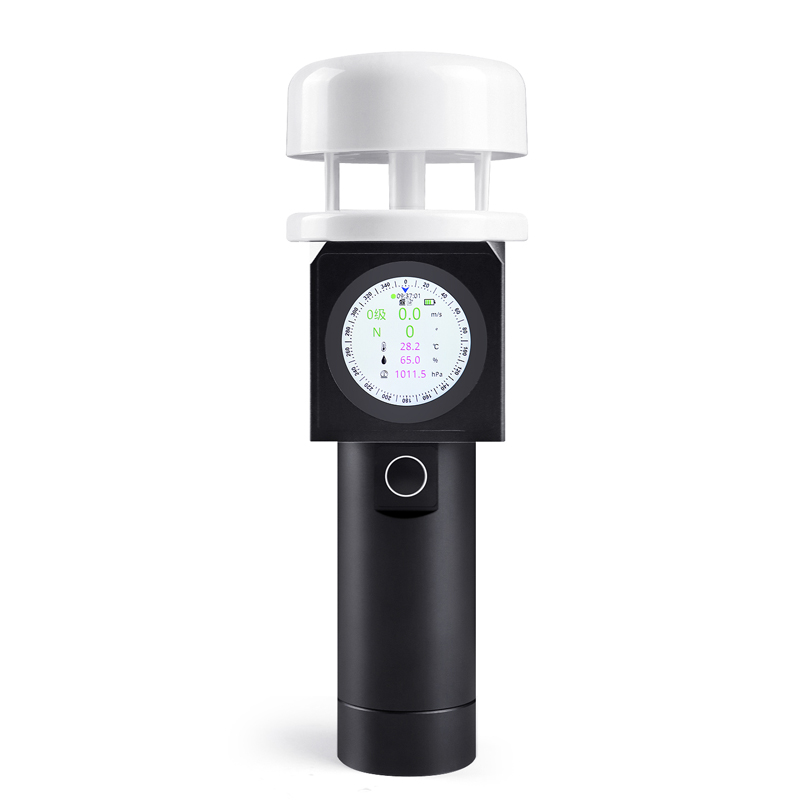
The Portable Weather Station enhances monitoring convenience and efficiency with its lightweight, integrated design, meeting the demand for rapid and accurate acquisition of meteorological data across multiple fields.The core of achieving the lightweight and integrated design of such devices lies in...
All - in - One Weather Sensors represent a significant technological update in the field of modern meteorological monitoring. Through a highly integrated design, it combines traditional discrete measurement modules into a single device, enabling the synchronous collection of all - element meteorolog...
This detector can complete the processes of pine wilt nematode isolation, DNA extraction, and quantitative PCR detection. It features a built-in automated detection program, eliminating the need for complex parameter settings and allowing for one-button operation. This four-...
Traditional visibility monitoring mainly relies on ground-based fixed stations. While these stations can provide continuous data, they have limitations such as limited spatial coverage, high construction costs, and difficulty in mobility. Especially in complex terrain areas (such as mountainous regi...


 Skype
Skype
 whatsapp
 mail
mail