Tianqiong Sensor IOT Technology Co., Ltd
Sales Manager:Ms. Emily Wang
Cel,Whatsapp,Wechat:+86 15898932201
Email:info@fengtutec.com
Add:No. 155 Optoelectronic Industry Accelerator, Gaoxin District, Weifang, Shandong, China


Sales Manager:Ms. Emily Wang
Cel,Whatsapp,Wechat:+86 15898932201
Email:info@fengtutec.com
Add:No. 155 Optoelectronic Industry Accelerator, Gaoxin District, Weifang, Shandong, China
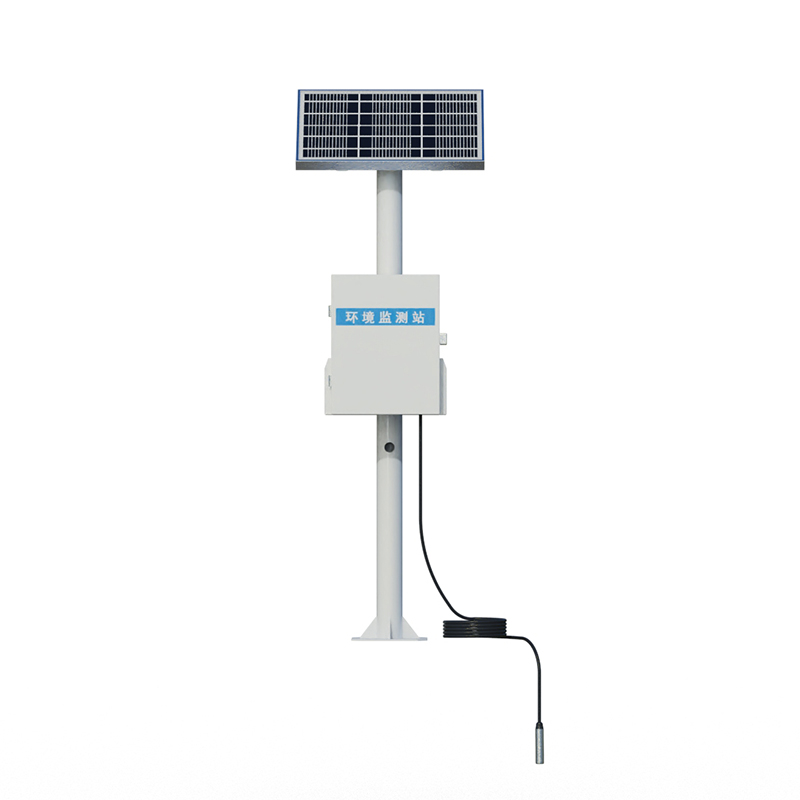
Model:FT-SY1
Brand:tianqiong
1、Osmotic pressure monitoring Product Introduction
Osmotic pressure monitoring can accurately predict the dam osmotic pressure and analyze the abnormal seepage pressure of the concrete dam body.Osmotic pressure monitoring (SY1) is used to monitor seepage pressure in real time within different geological layers of a landslide. Its main components are constructed of specialized steel, making it suitable for use in harsh environments. With improved cable protection, it can be buried directly in roller-compacted concrete, which places high demands on the instrument.
Monitoring data is transmitted to the monitoring and early warning cloud service platform via various communication methods, including Netcom, GPRS, and Beidou satellite.
2、Osmotic pressure monitoring Product Features
Integrated structure, compact size, no integration required, and easy installation
Supports multiple power supply modes
Automatically identifies communication card numbers and uploads them to the backend server
Alarm thresholds can be set remotely and locally
RS485 and RS232 interfaces
Supports data transmission via various communication methods, including Netcom, GPRS, and Beidou satellite
CS architecture software platform, supports direct observation via mobile phones and PC browsers, without the need for additional software installation.
Supports multiple accounts and multiple devices to log in
Supports real-time data display and historical data dashboards
Cloud server and cloud data storage, stable and reliable, easily scalable, and load balancing.
Supports map display and device information viewing.
Supports data curve analysis
Supports data export in table format
Supports data forwarding, including HJ-212, TCP, and HTTP protocols.
Supports data post-processing
Supports external JavaScript script execution
3、Osmotic pressure monitoring Product Parameters
| Device Name | Technical Specifications | Technical Specifications |
| Piezoresistive sensor | Measuring medium | Water and non-corrosive liquids |
| Range | 0-1000KPa | |
| Overload pressure | 1.5 times the maximum range | |
| Stable drift | 0.01%F.S/C | |
| Work environment | -40-120°C, a measurement environment that does not corrode stainless steel | |
| Accuracy | 0.5-grade accuracy | |
| Power supply system | Solar panel | Monocrystalline silicon 30W (customizable based on site conditions) |
| Battery | 20AH (customizable based on site conditions) | |
| Protective box | Material | Stainless steel corrosion-resistant material, used to protect internal equipment. |
| Integrated mounting bracket | Selection | Carbon steel bracket |
| Acquisition terminal | Supports RS485/RS232/GPRS interfaces, etc. | |
While traditional environmental air quality monitoring stations (national and provincial control points) provide accurate data with legal validity, their high construction and operational costs result in insufficient spatial distribution density. This sparse layout primarily serves regional macro ai...
electronic weather station is a handheld multi-element meteorological observation device that simultaneously measures wind speed, wind direction, temperature, humidity, air pressure, altitude, thermal index, wet-bulb temperature, dew point, wind chill, wave height, and GNSS positioning. With b...
When traditional mechanical weather stations monitor wind speed and direction, they encounter a difficult problem. The wind speed sensor usually consists of wind cups and an axis, and the wind direction sensor relies on mechanical components such as a wind vane. When these mechanical components are...
In the field of wind power generation, wind measurement is of great significance. Traditional wind - measuring methods, such as wind towers or radars, are effective but have limitations. Wind towers can only measure at fixed locations, while radar equipment is expensive and bulky, making it difficul...


 Get a Free Quote


 Skype
 whatsapp
 mail