Tianqiong Sensor IOT Technology Co., Ltd
Sales Manager:Ms. Emily Wang
Cel,Whatsapp,Wechat:+86 15898932201
Email:info@fengtutec.com
Add:No. 155 Optoelectronic Industry Accelerator, Gaoxin District, Weifang, Shandong, China


Sales Manager:Ms. Emily Wang
Cel,Whatsapp,Wechat:+86 15898932201
Email:info@fengtutec.com
Add:No. 155 Optoelectronic Industry Accelerator, Gaoxin District, Weifang, Shandong, China
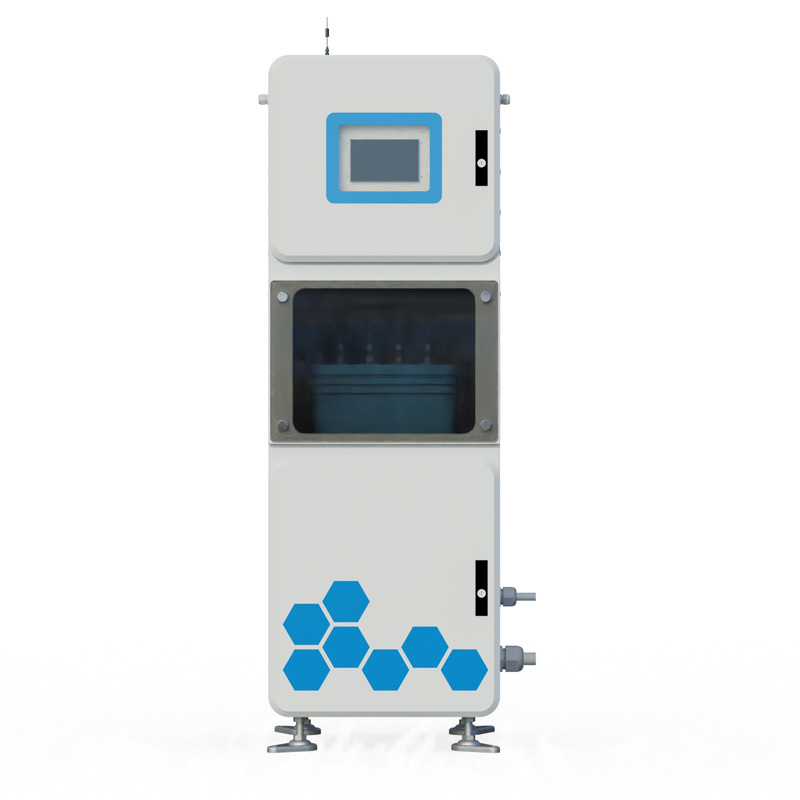
Model:FT-QSZ2
Brand:tianqiong
1、Online Water Quality Monitor Product Introduction
1. Overview
Online Water Quality Monitor is commonly used in municipal water treatment plants to monitor the quality of water provided to the public and can monitor multiple water qualities simultaneously.Online Water Quality Monitor is a Online Water Quality Monitoring micro-system based on Internet of Things (IoT) technology. It consists of a flow stabilization and venting unit, an analysis and testing unit, a system control unit, and a remote communication unit, possessing comprehensive power supply, lightning protection, and network communication functions.
2. Product Positioning
Online Water Quality Monitor features automatic monitoring capabilities. This integrated, extractive micro-water quality automatic monitoring station primarily monitors: pH, temperature, turbidity, conductivity, dissolved oxygen, COD, ammonia nitrogen, and suspended solids. It employs highly integrated technology, achieving automatic Online Water Quality Monitoring within a single cabinet.
Online Water Quality Monitor can be widely used for online Online Water Quality Monitoring in rivers, urban or rural waterworks, water supply networks, secondary water supply systems, end-user systems, indoor swimming pools, large-scale water purification equipment, and direct drinking water systems. It is an indispensable online analysis device in water plant process control, water conservancy and water affairs management, and health supervision.
3. Functions and Features
· GPRS/4G network connectivity
· Supports extended RJ45 network connectivity
· Supports extended sensor remote transmission
· Supports 7.0-inch LED screen display and touch control screen
· Supports extended Android screen display and storage
· Extended Android screen supports 2G data storage and USB flash drive data export
· Complementary IoT data display, storage, and analysis platform
· Platform supports multiple protocol data forwarding, including TCP short connections and HTTP.
2、System Composition
The Online Water Quality Monitoring microsystem consists of a power supply unit, a pump control unit, an analysis and testing unit, a display unit, a pump unit, a remote communication unit, and an integrated box main unit.
1. Power Supply Unit
200W photovoltaic panel, photovoltaic controller, 12V/100Ah battery, DC contactor (DC12V)
Power inverter (DC12V to AC220V)
2. Pump Control Unit
Intelligent self-priming pump, maximum head: 25m, open flow rate: 1.8m³/h
3. Analysis and Testing Unit
The analysis and testing unit mainly consists of pH, dissolved oxygen, conductivity, turbidity, ORP, and temperature sensors. These sensors are fixed to the flow cell via threads or tight-fitting fasteners. The main parameters of the sensors are as follows:
| Serial number | Name | Measurement Range | Measurement Principle | Measurement accuracy | Is it standard? | Notes |
| 1 | Temperature | 0~85℃ | High-precision digital sensor | ±0.1℃ | ||
| 2 | pH | 0~14 (pH) | Electrochemistry (Salt Bridge) | ±0.1PH | ±0.1℃ | |
| 3 | ORP | -1500mv~1500mv | Electrochemistry (Salt Bridge) | ±6mv | ||
| 4 | Conductivity | 0~10000 uS/cm | Contact electrode method | ±1.5% | ||
| 5 | Turbidity | 0~1000NTU | Light scattering method | ±1% | ±0.3℃ | |
| 6 | Dissolved oxygen | 0~20mg/L | Fluorescence lifetime method | ±2% | ±0.3℃ | |
| 7 | Ammonia nitrogen | 0~1000mg/l | Ion-selective electrode method | 10% of the reading, ±0.5℃ | Ammonia Nitrogen pH Integrated | |
| pH | 0~14 (pH) | Electrochemistry (Salt Bridge) | ±0.1PH, ±0.1℃ | |||
| 8 | cod | 0~1000mg/L | UV254 Absorption Method | ±5%, ±0.3℃ | Cod turbidity integrated; equipped with an automatic cleaner to prevent biofouling and avoid optical window contamination, ensuring long-term monitoring remains stable; automatic cleaning time and frequency can be set, power consumption is 0.7W. | |
| Turbidity | 0~400NTU | Light scattering method | ±1%, ±0.3℃ | |||
| 9 | Suspended matter | 0~2000mg/L | Light scattering method | ±5% (depending on sludge homogeneity) | ||
| 10 | Chlorophyll | 0~400ug/L | Fluorescence method | R2>0.999 | Equipped with an automatic cleaner to prevent biofouling and avoid light window contamination, ensuring long-term monitoring remains stable; the automatic cleaning time and frequency can be set, with a power consumption of 0.7W. |
Note: The sensor must not be installed upside down or horizontally; it must be installed at an angle of at least 15 degrees. The above water quality sensor operates in an environment of 0-50℃ and <0.3Mpa.
4. Display Unit
Multi-parameter monitor, installed at the cabinet door, performs data acquisition, analysis, display, communication, and data storage operations.
· Android version: 4.4.2 · CPU: Quad-core Cortex™-A7 · RAM/ROM: 512M/4G · Screen: 7-inch capacitive touchscreen · Power supply: 12V/1A · Supports USB flash drive expansion and memory card expansion
5. Equipment Box Main Unit
| Installation method | Cabinet floor-standing installation, base. |
| External dimensions | 1684mm*560mm*510mm 50-100mm adjustable |
| Casing material | 201 stainless steel. |
| Protection rating | IP54 |
| Power supply | Solar Photovoltaic Power Supply System 200W/12V/100aH Water Pump AC220V |
| Inlet | 4-inch PE pipe |
| Outflow | 6-inch water purifier PE pipe |
| Outfall | 3-minute water purifier hose, (can also be manually drained periodically) |
| Self-priming pump | Motor power: 250W |
| Rated voltage: AC220V/50hz | |
| Water pump size 210*145*245/mm | |
| Maximum suction range: less than 5 meters | |
| Flow rate: Peak 10 m3/h |
The portable anemometer is a mobile intelligent observation device integrating multiple meteorological monitoring functions. Relying on precision sensors and intelligent chips, it achieves accurate measurement of multiple elements, supports long-term data storage and convenient data transmissi...
There is a hidden hazard invisible to the naked eye in solar photovoltaic panels —— hidden cracks. This hazard can negatively impact the performance and lifespan of photovoltaic power generation systems. Let’s take a detailed look at it.Hidden cracks refer to fine cracks that occur in the cells o...
The 7-element Portable Weather Station can real-time monitor seven key meteorological elements: wind speed, wind direction, air temperature, humidity, atmospheric pressure, illumination, and optical rainfall. Monitoring wind speed and direction helps understand air flow conditions, which is of great...
The Anemometer for Drones is a specialized device designed for low-altitude meteorological monitoring, with its core technology operating on the principle of ultrasonic resonance. This principle works as follows: the ultrasonic generator inside the device emits sound waves of a specific frequency. W...


 Get a Free Quote
 Skype
Skype
 whatsapp
 mail
mail