Tianqiong Sensor IOT Technology Co., Ltd
Sales Manager:Ms. Emily Wang
Cel,Whatsapp,Wechat:+86 15898932201
Email:info@fengtutec.com
Add:No. 155 Optoelectronic Industry Accelerator, Gaoxin District, Weifang, Shandong, China


Sales Manager:Ms. Emily Wang
Cel,Whatsapp,Wechat:+86 15898932201
Email:info@fengtutec.com
Add:No. 155 Optoelectronic Industry Accelerator, Gaoxin District, Weifang, Shandong, China
time:2026-03-02 11:09:24 source:Weather Station viewed:319 time
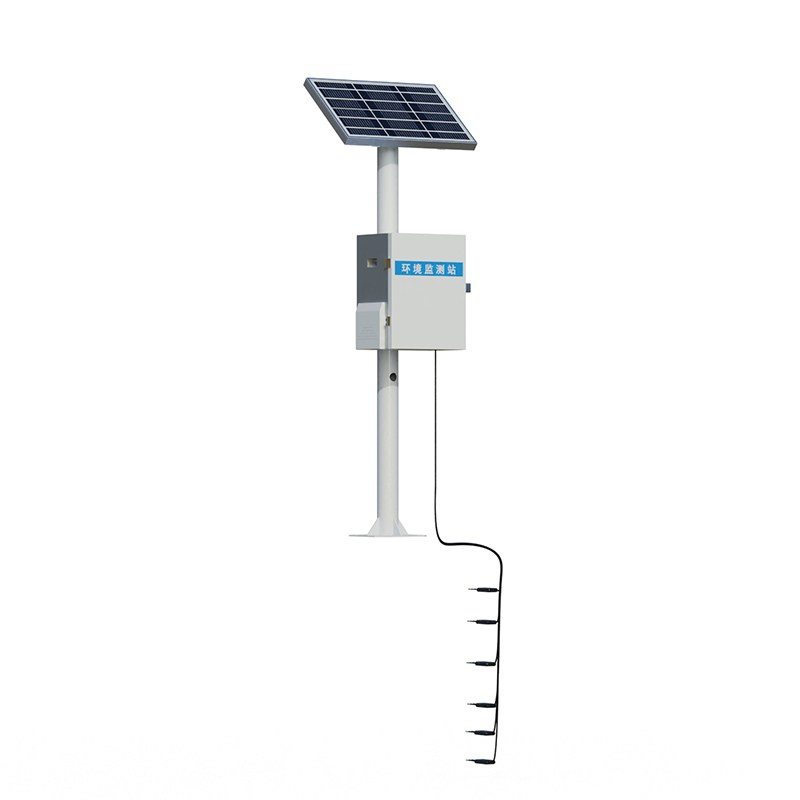
This instrument integrates FDR (Frequency Domain Reflectometry) principle soil moisture measurement sensors and data acquisition technology. Through moisture and temperature sensors, it accurately measures soil volumetric water content (VWC) and temperature. Powered by solar energy, it is adaptable to field environments and can monitor soil moisture, temperature, and other moisture data at different depths in real time. It is widely used in monitoring across various fields.
The automatic regional soil moisture observation instrument is an automated measurement device integrating FDR frequency domain reflectometry principle, sensor technology, and data acquisition technology. Its core function is to automatically and in real-time capture soil moisture-related data without frequent manual intervention, significantly improving the efficiency and accuracy of soil monitoring. Utilizing the FDR principle, it emits electromagnetic waves of a specific frequency and uses the linear relationship between soil dielectric constant and water content to accurately calculate soil volumetric water content (VWC). The measurement error is controllable and meets relevant monitoring standards.
This observation instrument is equipped with moisture and temperature sensors, enabling simultaneous measurement of soil volumetric water content and temperature. It supports monitoring soil layers at different depths, comprehensively reflecting the vertical distribution and dynamic changes of soil moisture within a region. Considering the unique characteristics of field monitoring environments, the equipment is solar-powered, eliminating reliance on mains power. It can operate stably for extended periods in remote areas without electricity coverage, adapting to various field scenarios such as arid regions, mountains, and grasslands, thus solving the problem of inconvenient power supply for field soil monitoring.
As an automated measurement system, the regional automatic soil moisture observation instrument can automatically collect, store, and transmit soil moisture and temperature data, avoiding the lag and errors of manual sampling and measurement. This provides accurate and timely data support for related fields. Its applications are wide-ranging, covering basic scenarios such as soil moisture measurement, drought monitoring, snow depth measurement, and agricultural irrigation guidance. It can also be used in specialized fields such as slope stability analysis, flash flood forecasting, water supply management, numerical weather prediction, and climate model construction.
In agricultural production, this monitoring instrument can provide real-time feedback on soil moisture, offering a scientific basis for irrigation decisions and preventing water waste and crop damage from drought or flooding. In ecological and disaster monitoring, it can promptly capture abnormal changes in soil moisture, providing data references for drought early warning and flash flood prevention. In scientific research, its accurate monitoring data can be used for climate model optimization and soil-related research, promoting technological upgrades in related fields. The equipment is easy to operate and maintain, requiring no complex debugging; it can be put into use immediately after installation, making it an ideal device for long-term regional soil moisture monitoring.
In today's society, people are paying increasing attention to air quality. As an important component of the air, the measurement of negative oxygen ions is of great significance in many aspects. Firstly, negative oxygen ions can effectively purify the air by combining with particulate matter, ba...
The Photovoltaic Weather Station under Tianqiong enables precise, real-time, and continuous monitoring. Specifically designed for the photovoltaic industry, it accurately detects key meteorological parameters that affect photovoltaic power generation. In particular, regarding solar radiation, it can...
Micro Weather Station utilizes a 10-parameter integrated sensor that consolidates measurement functions for wind speed, wind direction, temperature, humidity, atmospheric pressure, illumination, optical rainfall, PM2.5, PM10, and noise. It transmits data via wired connections, Bluetooth, GPRS,...
TianQiong, as a professional supplier of meteorological monitoring equipment, offers a wide range of weather station types. The company provides everything from basic sensors to regional automatic weather stations that meet operational observation standards, and also specializes in developing profes...


 Skype
Skype
 whatsapp
 mail
mail