Tianqiong Sensor IOT Technology Co., Ltd
Sales Manager:Ms. Emily Wang
Cel,Whatsapp,Wechat:+86 15898932201
Email:info@fengtutec.com
Add:No. 155 Optoelectronic Industry Accelerator, Gaoxin District, Weifang, Shandong, China


Sales Manager:Ms. Emily Wang
Cel,Whatsapp,Wechat:+86 15898932201
Email:info@fengtutec.com
Add:No. 155 Optoelectronic Industry Accelerator, Gaoxin District, Weifang, Shandong, China
time:2026-04-23 11:07:20 source:Weather Station viewed:257 time
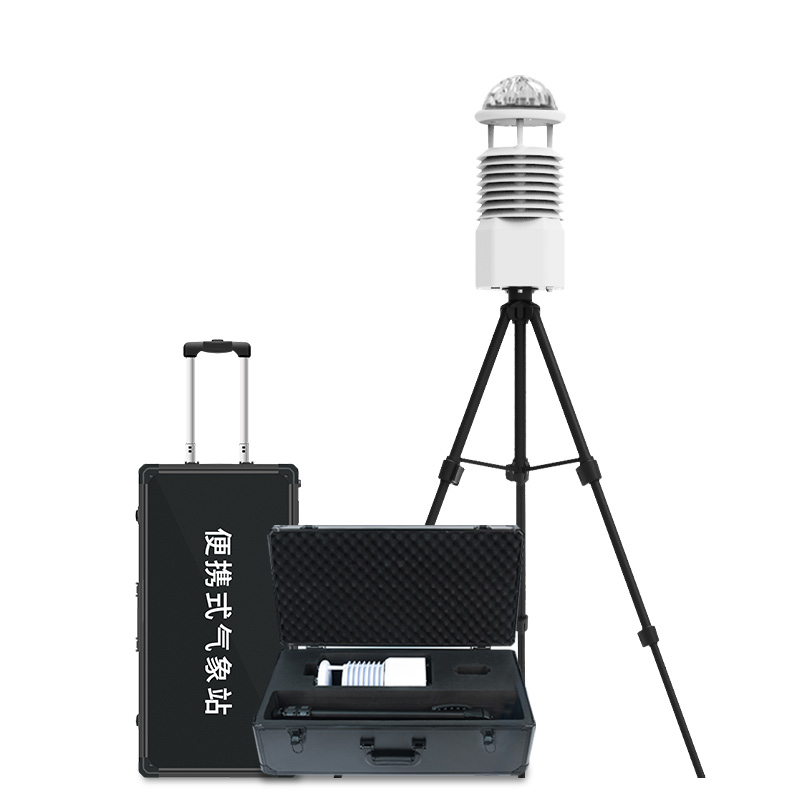
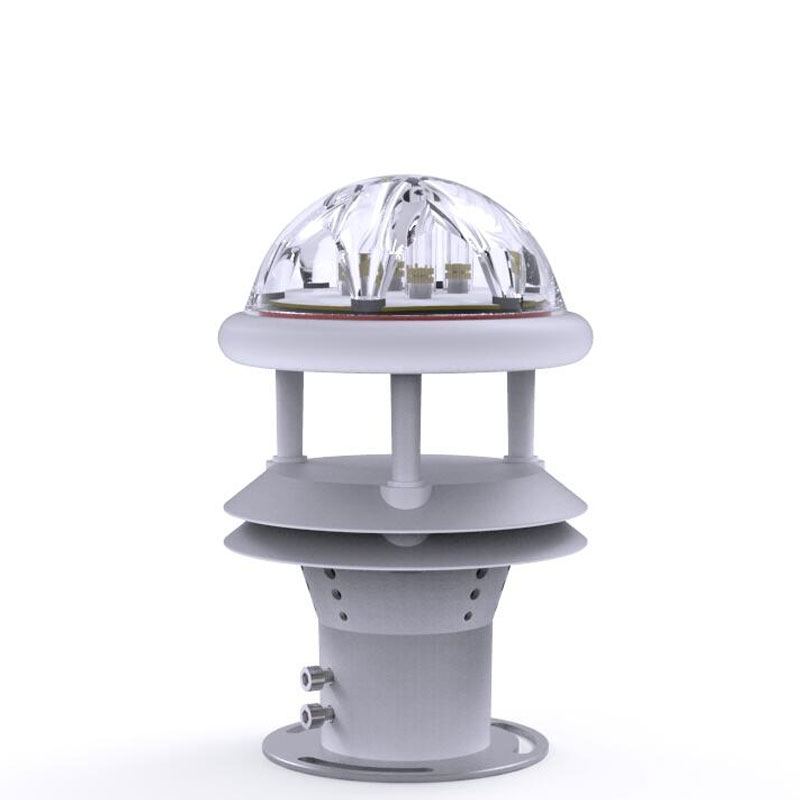
Micro Weather Station utilizes a 10-parameter integrated sensor that consolidates measurement functions for wind speed, wind direction, temperature, humidity, atmospheric pressure, illumination, optical rainfall, PM2.5, PM10, and noise. It transmits data via wired connections, Bluetooth, GPRS, and other methods, supporting rapid, calibration-free deployment. It is widely applied in fields such as meteorology, environmental protection, and emergency monitoring.
Micro Weather Station is a highly integrated, low-power, rapidly installable, and field-friendly high-precision automated meteorological observation device. Employing a 10-parameter integrated sensor, the device enables real-time observation of meteorological elements—including wind speed, wind direction, temperature, humidity, atmospheric pressure, illumination, optical rainfall, PM2.5, PM10, and noise. Through a highly integrated design, it consolidates these ten measurement functions into a single sensor unit, thereby achieving continuous, 24-hour online monitoring of outdoor meteorological parameters. The device supports various transmission modes—including wired connections, Bluetooth, and GPRS—and allows for rapid deployment without the need for calibration. It is suitable for various scenarios involving short-term emergency meteorological observation and mobile weather monitoring, finding extensive application in meteorology, agriculture and forestry, environmental protection, marine science, airports, ports, scientific expeditions, and campus education. The sensor housing is constructed from imported ABS material, offering enhanced resistance to corrosive environments such as salt spray; with an IP65-plus protection rating, it is well-suited for long-term outdoor deployment. The system features a modular design and comes equipped with a shock-absorbing carrying case; with a total weight not exceeding 5 kg, it supports rapid, single-person deployment, effectively resolving the issues associated with traditional fixed meteorological stations—namely, their lengthy deployment cycles and their reliance on mains power and wired network infrastructure.
In terms of technical specifications and performance, the Micro Weather Station features a wind speed measurement range of 0 to 60 m/s with an accuracy of ±0.1 m/s, and a wind direction measurement range of 0 to 360 degrees with an accuracy of ±1 degree. The measurement ranges for both PM2.5 and PM10 span from 0 to 1000 µg/m³; the noise measurement range is 30 to 130 dB; the atmospheric pressure measurement range is 300 to 1100 hPa; and the humidity measurement range is 0 to 100% Relative Humidity (RH). The device features a low-power design that effectively manages energy consumption during continuous field operation, thereby preventing monitoring interruptions caused by battery depletion. The entire unit is housed in an IP65-rated enclosure, offering robust protection against water, dust, and corrosion, and ensuring stable, long-term performance even under harsh weather conditions. Regarding data acquisition and transmission, the device supports wireless connectivity; equipped with Bluetooth and GPRS modules, it can bundle and transmit ten real-time meteorological parameters simultaneously to a cloud server or mobile terminal. Select models feature a built-in high-capacity FLASH storage chip capable of storing over 50,000 meteorological data records, ensuring that no data is lost in the event of a network signal outage.
In terms of practical application, the Micro Weather Station plays a pivotal role in emergency meteorological monitoring, distinguished by its rapid deployment and plug-and-play capabilities. In the event of extreme weather phenomena—such as typhoons, torrential rains, or flash floods—personnel can quickly deploy the device on-site to acquire firsthand meteorological data, providing a critical basis for disaster assessment and rescue decision-making. For forest fire prevention and grassland fire risk monitoring, the device can be rapidly deployed in the vicinity of a fire zone to provide real-time monitoring of wind speed, wind direction, temperature, and humidity, thereby supporting fire command and control operations. In the agricultural sector, the device facilitates microclimate observation in fields and monitors crop growth environments, empowering farmers to gain precise insights into prevailing meteorological conditions. Furthermore, the Micro Weather Station finds application in diverse scenarios, including meteorological support for airport runways, weather monitoring for ports and maritime navigation, data collection for scientific expeditions, and educational demonstrations in school meteorology programs; its inherent mobility and flexibility make it an invaluable complement to traditional fixed meteorological stations.
Meteorology encompasses a wide range of elements, such as rain, ice, wind, frost, clouds, and temperature, among others. In the power system, "micro-meteorology" is different from what is described in meteorology. Power micro-meteorology refers to the meteorological conditions in a small s...
Portable Weather Station is a highly integrated, low-power, and rapidly deployable high-precision automatic meteorological observation device. It is suitable for various scenarios such as emergency short-term meteorological observation, mobile meteorological monitoring, and microclimate environment monitoring. It is primarily used for data acquisition in fields such as meteorology, agriculture and forestry, environmental protection, and emergency monitoring....
The handheld weather station is a portable observation instrument that integrates wind speed, wind direction, temperature, humidity, atmospheric pressure, altitude and other meteorological elements. It uses precision sensors and smart chips and has built-in large-capacity storage chips. It can...
Designed for water source applications, this 5-parameter automatic water quality analyzer enables the online monitoring of five core indicators: water temperature, pH, conductivity, dissolved oxygen, and ammonia nitrogen. Leveraging precision sensing and detection technologies, it performs rea...


 Skype
Skype
 whatsapp
 mail
mail