Tianqiong Sensor IOT Technology Co., Ltd
Sales Manager:Ms. Emily Wang
Cel,Whatsapp,Wechat:+86 15898932201
Email:info@fengtutec.com
Add:No. 155 Optoelectronic Industry Accelerator, Gaoxin District, Weifang, Shandong, China


Sales Manager:Ms. Emily Wang
Cel,Whatsapp,Wechat:+86 15898932201
Email:info@fengtutec.com
Add:No. 155 Optoelectronic Industry Accelerator, Gaoxin District, Weifang, Shandong, China
time:2025-04-02 10:17:44 source:Weather Station viewed:552 time
The construction of smart wetlands takes wetland monitoring equipment as the core, and combines Internet of Things (IoT), big data, and artificial intelligence technologies to build a three-dimensional monitoring network covering hydrology, meteorology, and ecology.
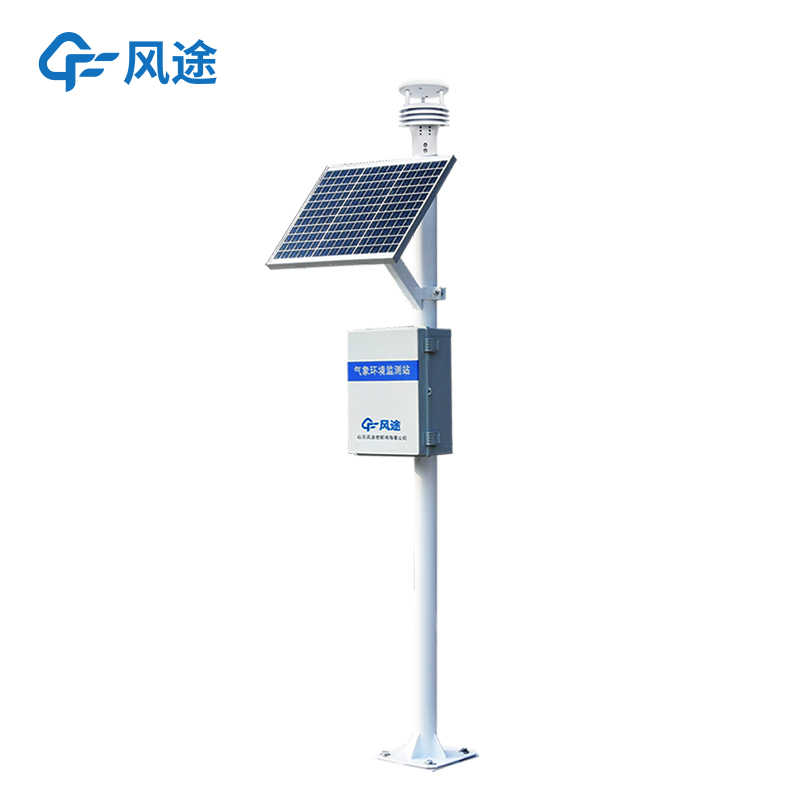
The wetland weather stations are preferentially located to cover the core ecological areas of wetlands (such as migratory bird habitats and water source conservation areas) and ecological fragile zones, avoiding human interference. It is a high-precision automatic weather station that integrates sensors for temperature and humidity, wind speed and direction, precipitation, solar radiation, negative oxygen ions, etc. It supports solar power supply and wireless data transmission, enabling the linkage analysis of meteorological and ecological data.
Radar and thermal imaging devices can be combined to monitor the impact of extreme weather (such as rainstorms and typhoons) on wetlands, and link with the early warning system.
The water quality monitoring stations are equipped with items such as pH, dissolved oxygen (DO), turbidity, chemical oxygen demand (COD), total phosphorus (TP), total nitrogen (TN), and chlorophyll a. According to the water flow direction of the wetland, the functional zoning of the water area, and the distribution of potential pollution sources, the water quality monitoring points are reasonably arranged. Monitoring points are set up at the inlet and outlet of the wetland, in the main water area, and in areas vulnerable to pollution, such as the water areas close to farmlands or residential areas.
By establishing a unified wetland monitoring database, meteorological and water quality data are classified, stored, and managed. The database is scalable, capable of accommodating the increasing monitoring data, and supports the import and export of multiple data formats. At the same time, data access rights are set to ensure the security and confidentiality of the data.
Moreover, the data from weather stations and water quality monitoring equipment can be integrated with other monitoring data of the wetland, such as soil moisture, vegetation coverage, and animal activities. A comprehensive smart wetland management platform is established. Through the visual interface of the platform, a comprehensive and multi-level display of the wetland ecosystem is realized, facilitating unified management and decision-making for managers.
Smart agriculture emerges from the deep integration of modern technology and agriculture. Through technologies like the Internet of Things, big data, and artificial intelligence, it achieves full-process information perception, intelligent decision-making, automatic control, and precise management i...
This fully automatic online hydrological monitoring system is based on microwave technology. It employs K-band planar radar technology to non-contactly measure water level, flow velocity, flow rate, and rainfall within channels. The system's built-in algorithm calculates cross-sectional fl...
In traditional cognition, agricultural production has often "relied on the weather", and weather changes have a huge impact on crop growth. Especially during the Sanfu days (the peak summer heat period), extreme weather such as high temperatures, high humidity, and heavy rainfall occurs fr...
The FT-WQX series miniature sensors are highly integrated meteorological monitoring devices. Their unified design incorporates multiple meteorological parameter monitoring functions into a single structure, making them widely applicable in fields such as meteorological monitoring, urban environmenta...


 Skype
Skype
 whatsapp
 mail
mail