Tianqiong Sensor IOT Technology Co., Ltd
Sales Manager:Ms. Emily Wang
Cel,Whatsapp,Wechat:+86 15898932201
Email:info@fengtutec.com
Add:No. 155 Optoelectronic Industry Accelerator, Gaoxin District, Weifang, Shandong, China


Sales Manager:Ms. Emily Wang
Cel,Whatsapp,Wechat:+86 15898932201
Email:info@fengtutec.com
Add:No. 155 Optoelectronic Industry Accelerator, Gaoxin District, Weifang, Shandong, China
time:2025-09-05 08:53:43 source:Weather Station viewed:562 time
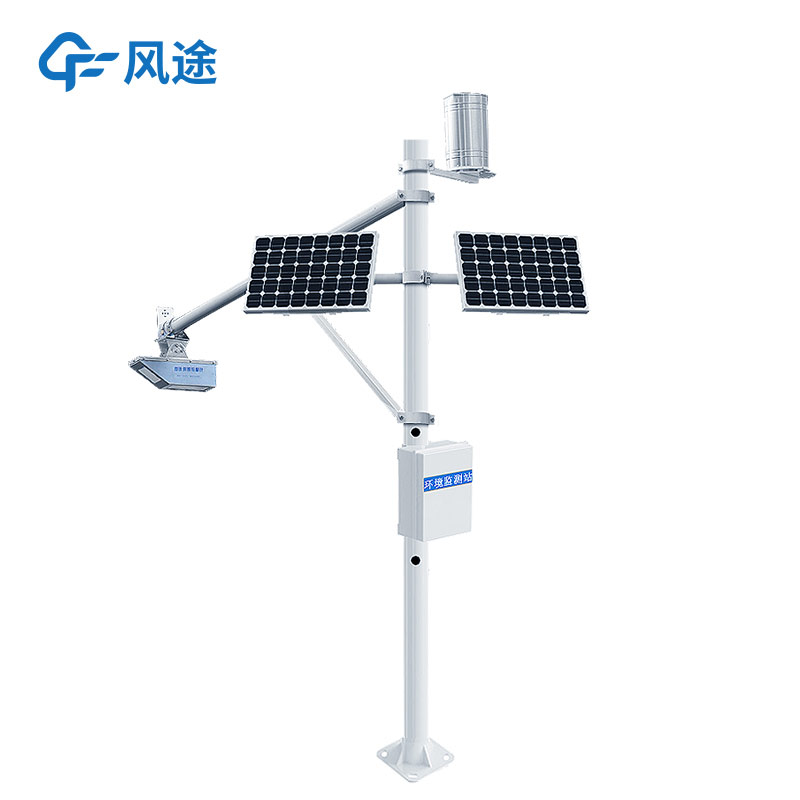
The River Flow Monitoring System is mainly used for remotely grasping the real-time hydrological conditions of various water areas, including natural rivers, artificial canals, and landscape watercourses. It assists relevant authorities in promptly recording the dynamic changes of river water sources. Once a flood risk is detected, early warnings can be issued, thereby effectively reducing casualties and economic losses. This system plays a crucial role in safeguarding people's lives and property safety as well as ensuring the stable development of regional economies.
The functional features of this device are quite clear. Firstly, it has real-time monitoring capability, which enables continuous and accurate collection of river water level and rainfall data. This allows staff to keep track of the current basic hydrological information of water areas at any time, providing timely support for subsequent analysis and decision-making. Secondly, it is equipped with an automatic alarm function. When the monitored data exceeds the preset normal range, or when on-site equipment malfunctions or encounters abnormalities, the device will immediately trigger the alarm mechanism. Alarm information is quickly transmitted to responsible personnel through preset methods such as SMS and platform notifications, facilitating the timely implementation of response measures.
The device realizes bidirectional data storage between the monitoring center and on-site equipment. On-site equipment stores the monitored data locally, while the monitoring center also conducts synchronous backups. This prevents data loss caused by failures in a single storage location, ensures the integrity and security of historical hydrological data, and provides a reliable basis for subsequent tracing of hydrological change patterns and conducting relevant research.
In addition, the device can intelligently count and analyze monitoring data and alarm data. In accordance with preset rules and algorithms, it organizes and summarizes large volumes of data, generating various statistical reports and analysis results. This helps staff more clearly understand the trends and patterns of hydrological changes.
The device also has good scalability. Based on adjustments to actual monitoring needs, it can not only expand functions such as water quality, flow velocity, and flow rate monitoring but also add features like scheduled photography and remote photography. This enables more comprehensive and detailed hydrological monitoring and management of rivers and other water areas, meeting the application requirements in different scenarios.
When traditional mechanical weather stations monitor wind speed and direction, they encounter a difficult problem. The wind speed sensor usually consists of wind cups and an axis, and the wind direction sensor relies on mechanical components such as a wind vane. When these mechanical components are...
Pine wood nematode DNA rapid detection system achieves specific analysis of pine wood nematode genes through separation, extraction, and fluorescence quantitative PCR technology. This system boasts rapid detection speed and is applied in forestry disease monitoring, agricultural quarantine, and ecological protection fields....
The Portable IV Curve Tester is known as the "stethoscope" of power stations, capable of accurately diagnosing the operational status of power stations.The working principle of the Portable IV Curve Tester is based on the photovoltaic effect and basic circuit principles. When light shines...
The Photovoltaic Weather Station under Tianqiong enables precise, real-time, and continuous monitoring. Specifically designed for the photovoltaic industry, it accurately detects key meteorological parameters that affect photovoltaic power generation. In particular, regarding solar radiation, it can...


 Skype
Skype
 whatsapp
 mail
mail