Tianqiong Sensor IOT Technology Co., Ltd
Sales Manager:Ms. Emily Wang
Cel,Whatsapp,Wechat:+86 15898932201
Email:info@fengtutec.com
Add:No. 155 Optoelectronic Industry Accelerator, Gaoxin District, Weifang, Shandong, China


Sales Manager:Ms. Emily Wang
Cel,Whatsapp,Wechat:+86 15898932201
Email:info@fengtutec.com
Add:No. 155 Optoelectronic Industry Accelerator, Gaoxin District, Weifang, Shandong, China
time:2026-02-27 10:57:37 source:Weather Station viewed:329 time
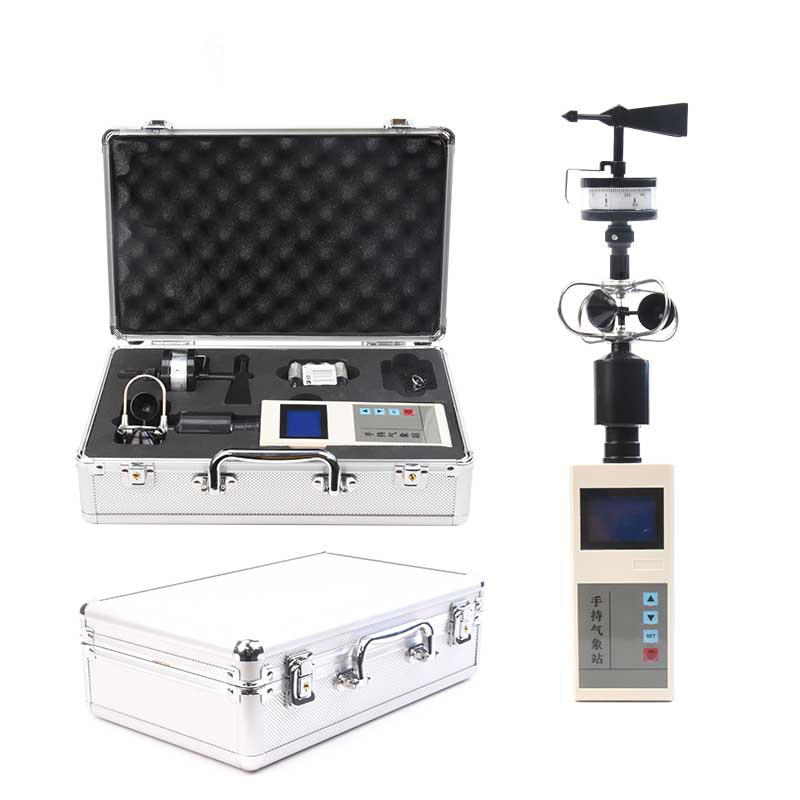
Handheld Anemometer employs precision sensors and intelligent chips to accurately measure both wind direction and wind speed simultaneously. It is suitable for agriculture, forestry, environmental protection, marine science, and scientific research, used for real-time monitoring of atmospheric wind parameters and outputting meteorological data.
Handheld Anemometer is a portable meteorological device specifically designed to measure both wind direction and wind speed in the atmosphere. This instrument integrates high-precision wind direction and wind speed sensors, coupled with an intelligent signal processing chip, enabling rapid acquisition of real-time wind parameter data on-site. Its portable design allows users to flexibly conduct meteorological monitoring in various locations, and it is widely used in agriculture, forestry, environmental protection, marine monitoring, and scientific research.
In terms of measurement principle, Handheld Anemometer typically employs a combination of a mechanical wind cup and a wind vane. The wind speed sensor uses a lightweight three-cup wind cup. When airflow drives the wind cup to rotate, a photoelectric conversion module converts the rotational speed into an electrical signal, and the instantaneous wind speed is calculated using the pulse frequency. The wind direction sensor employs a precision potentiometer or photoelectric encoder. As the wind vane changes direction, the sensor outputs a corresponding angle signal with a resolution of 1 degree or 2.5 degrees. A smart chip collects and processes these raw signals, calculating standard meteorological parameters through built-in algorithms, including instantaneous wind speed, instantaneous wind direction, two-minute average wind speed, ten-minute average wind speed, and maximum wind speed.
Applications of Handheld Anemometer in agriculture and forestry primarily include crop growth environment monitoring, forest fire early warning, and pest and disease control. In orchards or farmland, wind speed and direction data can guide pesticide spraying operations, avoiding pesticide drift that leads to waste and environmental pollution. In forest fire prevention, real-time wind parameters help determine the direction and speed of fire spread, providing a basis for firefighting decisions. In the environmental protection field, this instrument is used to assess atmospheric diffusion conditions and monitor wind field conditions around industrial parks or urban ventilation corridors. In marine and lake areas, Handheld Anemometer is used in conjunction with hydrological monitoring to understand the impact of surface wind fields on water exchange and water quality changes.
In terms of data management, most modern wind turbines are equipped with an LCD display screen that can show real-time wind speed, direction, and gust data. Some models support Bluetooth or USB data transfer, allowing measurement records to be exported to computers or mobile devices for further analysis. The built-in data storage function of the smart chip can record multiple sets of measurements, facilitating data comparison at continuous monitoring points. Routine maintenance mainly includes cleaning the wind cups and wind vane bearings to ensure smooth and flexible operation of rotating parts and guarantee measurement accuracy over long-term use.
Digital Weather Station is a low-power, easy-to-install, high-precision automatic monitoring device. Equipped with an integrated nine-parameter sensor and supporting multiple transmission modes, it offers excellent protective performance. It is suitable for real-time meteorological data monitoring a...
Handheld Weather Station is a portable observation device integrating multiple meteorological elements. It can simultaneously measure and display five parameters: wind direction, wind speed, atmospheric pressure, temperature, and humidity. It is suitable for meteorological monitoring, outdoor...
The Portable Weather Station enhances monitoring convenience and efficiency with its lightweight, integrated design, meeting the demand for rapid and accurate acquisition of meteorological data across multiple fields.The core of achieving the lightweight and integrated design of such devices lies in...
FT-WQX7, All-in-One Weather SensorsThe top cover hidden ultrasonic probe with physical shielding structure can effectively prevent rain and snow from accumulating on the probe surface to interfere with signal transmission and reception, and reduce the turbulence effect caused by direct impact of nat...


 Skype
Skype
 whatsapp
 mail
mail