Tianqiong Sensor IOT Technology Co., Ltd
Sales Manager:Ms. Emily Wang
Cel,Whatsapp,Wechat:+86 15898932201
Email:info@fengtutec.com
Add:No. 155 Optoelectronic Industry Accelerator, Gaoxin District, Weifang, Shandong, China


Sales Manager:Ms. Emily Wang
Cel,Whatsapp,Wechat:+86 15898932201
Email:info@fengtutec.com
Add:No. 155 Optoelectronic Industry Accelerator, Gaoxin District, Weifang, Shandong, China
time:2025-12-01 10:52:27 source:Weather Station viewed:507 time
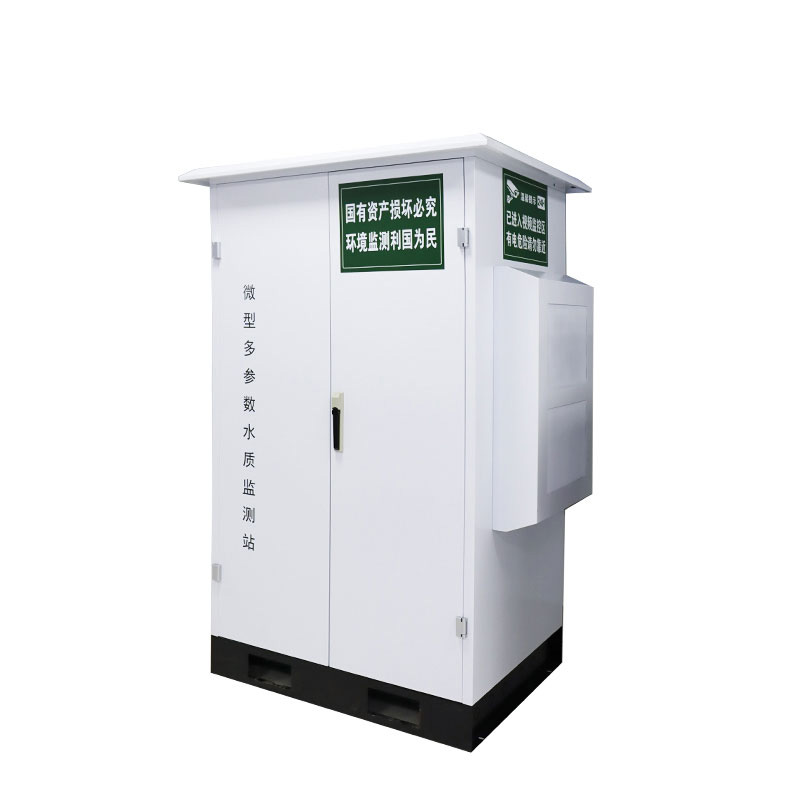
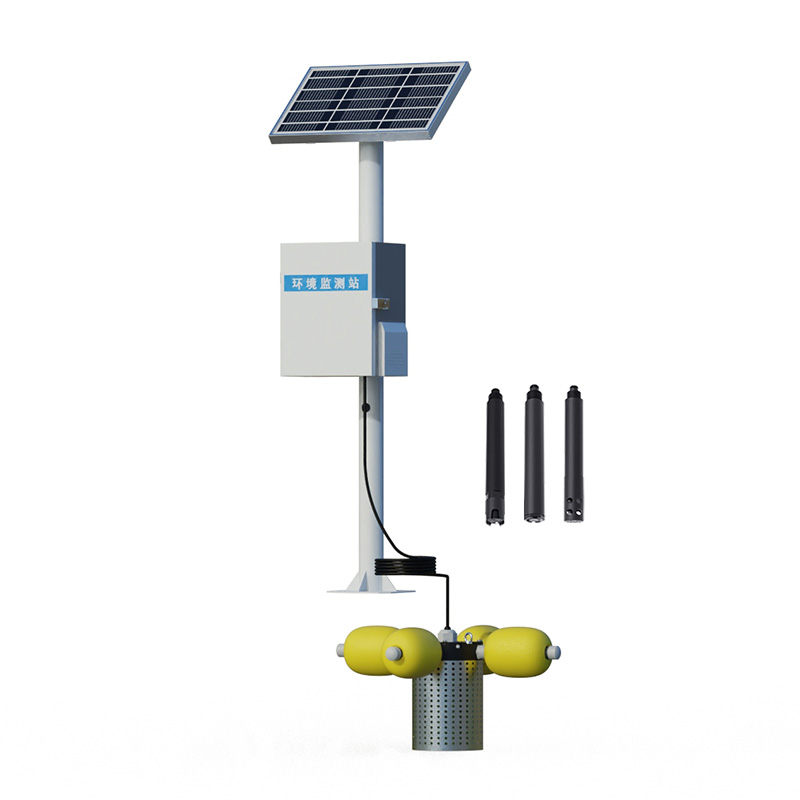
Miniature automatic water quality monitoring station is a one-stop online water quality monitoring system compliant with national standards, capable of periodic or continuous monitoring of parameters such as temperature, pH, dissolved oxygen, COD, and ammonia nitrogen. Based on optical and electrochemical principles, it achieves automatic water sampling and distribution, pre-treatment, data monitoring, and remote transmission. It is suitable for environmental protection, water conservancy, and other water bodies requiring high-density, low-cost, and high-frequency monitoring.
Miniature automatic water quality monitoring station is a standardized monitoring facility in modern environmental monitoring systems, specifically designed for the continuous monitoring needs of various natural and artificial water bodies. The system integrates automatic sampling, parameter analysis, data acquisition, and remote communication functions, enabling long-term water quality monitoring in an unattended state.
The core monitoring parameters of the monitoring station include basic physical indicators and key chemical indicators. Temperature, pH, conductivity, and turbidity are directly measured by digital sensors; dissolved oxygen is detected using the fluorescence method; chemical oxygen demand (COD) is analyzed using ultraviolet-visible spectrophotometry; and ammonia nitrogen is measured based on the ion-selective electrode method or salicylic acid spectrophotometry. These monitoring methods all comply with national environmental monitoring standards, ensuring the reliability and comparability of the data.
The system's automated operation is achieved through a precisely designed fluidic system. Water pumps collect water samples according to a preset program, and after filtration and sedimentation pre-treatment, the samples are distributed to each analysis unit. After analysis, the system automatically performs a cleaning process to prevent cross-contamination and biofouling. The entire monitoring cycle can be set to hourly, every two hours, or multiple times daily, meeting the monitoring frequency requirements in different scenarios.
In terms of data management, the monitoring station is equipped with an industrial-grade controller that records the measured values of each parameter in real-time and calculates statistical indicators. Data is transmitted to the monitoring center via 4G/5G network or satellite communication, supporting remote parameter setting and fault diagnosis. The system's built-in storage module can save at least 30 days of monitoring data in case of network interruption, ensuring data integrity.
The deployment plan of the miniature monitoring station fully considers actual application needs. The compact design allows the device to be directly installed on buoys, shorelines, or small monitoring wells. The solar power system supports continuous operation in areas without mains power. The protection level reaches IP67, enabling it to adapt to ambient temperatures from -10℃ to 50℃, ensuring stable operation under harsh weather conditions.
This type of monitoring station plays an important role in river chief system management, water source protection, and industrial park drainage monitoring. Through network deployment, a high-density water quality monitoring network can be formed to capture the spatio-temporal characteristics of water quality changes. The system's monitoring data is integrated with video surveillance and hydrological and meteorological data for comprehensive analysis, providing complete technical support for water environment management and pollution source tracing.
With the miniaturization and intelligent development of sensor technology, the range of monitoring parameters of the system continues to expand, and operational stability is continuously improved. Standardized interface design facilitates future functional expansion and maintenance upgrades, and the modular structure reduces operating costs. This technological evolution makes large-scale, high-frequency water quality monitoring possible, providing more timely and accurate data support for water environmental protection decision-making.
With the continuous progress of science and technology, refined meteorological monitoring has become an important development direction of modern meteorological services. The purpose of refined meteorological monitoring is to obtain more accurate, detailed, and high spatio-temporal resolution meteor...
When traditional mechanical weather stations monitor wind speed and direction, they encounter a difficult problem. The wind speed sensor usually consists of wind cups and an axis, and the wind direction sensor relies on mechanical components such as a wind vane. When these mechanical components are...
Meteorological Instruments for Solar Energy is a professional device that integrates the monitoring functions of six key meteorological parameters: temperature, humidity, wind speed, wind direction, air pressure, and rainfall. Its core highlight lies in its highly integrated and ingenious design. It...
Pathogen detection is a device designed for the rapid and accurate detection of viruses in farmed fish and shrimp. It focuses on the detection of pathogen nucleic acids within samples, featuring multi-channel parallel processing capabilities that support both qualitative and quantitative analy...


 Skype
Skype
 whatsapp
 mail
mail