Tianqiong Sensor IOT Technology Co., Ltd
Sales Manager:Ms. Emily Wang
Cel,Whatsapp,Wechat:+86 15898932201
Email:info@fengtutec.com
Add:No. 155 Optoelectronic Industry Accelerator, Gaoxin District, Weifang, Shandong, China


Sales Manager:Ms. Emily Wang
Cel,Whatsapp,Wechat:+86 15898932201
Email:info@fengtutec.com
Add:No. 155 Optoelectronic Industry Accelerator, Gaoxin District, Weifang, Shandong, China
time:2026-04-15 11:01:12 source:Weather Station viewed:271 time
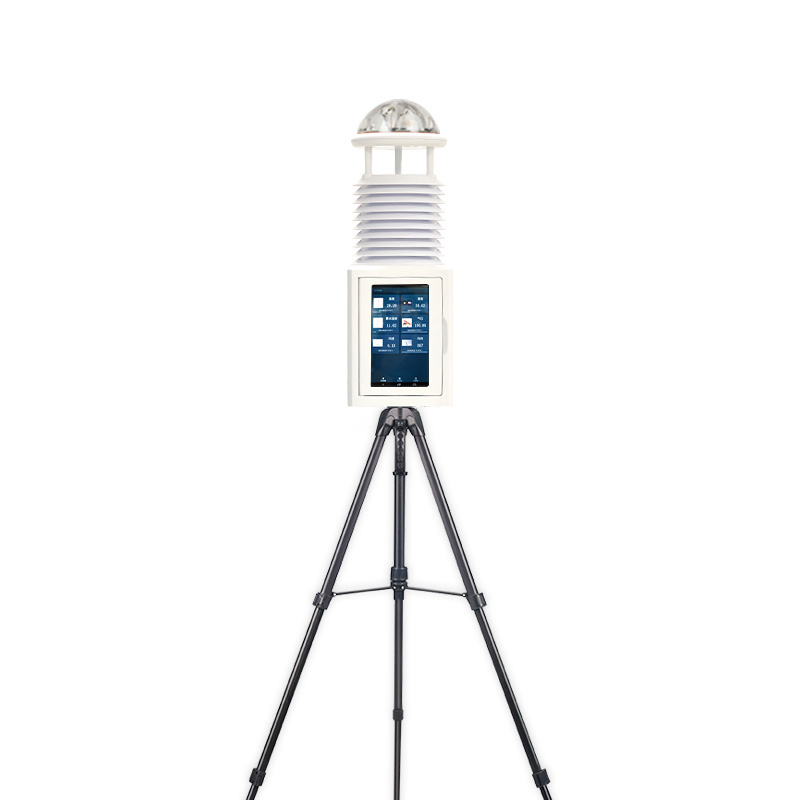
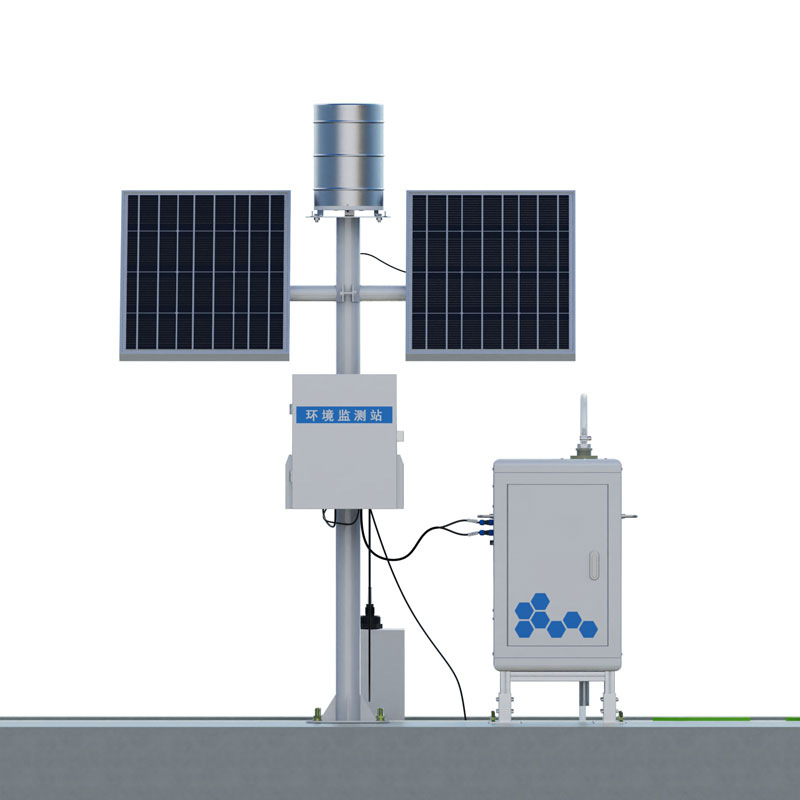
Integrated Weather Observation System is a high-precision automatic meteorological observation device that integrates sensors for wind speed, wind direction, temperature, humidity, atmospheric pressure, PM2.5, PM10, noise, and other parameters. It utilizes solar power supply and wireless transmission capabilities, allowing for rapid deployment without the need for on-site debugging.
Integrated Weather Observation System is a highly integrated, low-power, and rapidly installable high-precision automatic meteorological observation device designed for convenient use in field monitoring applications. The device consists of five main components: meteorological sensors, a data collector, a solar power supply system, a mounting pole, and a cloud-based platform. It enables real-time observation of various meteorological and environmental parameters, including wind speed, wind direction, temperature, humidity, atmospheric pressure, PM2.5, PM10, and noise levels. Supporting wireless data transmission and requiring no debugging, the device can be deployed quickly; it is ideally suited for acquiring meteorological data in scenarios such as short-term emergency weather observations and mobile weather monitoring. It is widely applied across diverse fields, including meteorology, agriculture, forestry, environmental protection, marine science, airports, seaports, scientific expeditions, and campus education.
In terms of sensor technology, Integrated Weather Observation System employs ultrasonic principles to measure wind speed and direction, offering a wind speed measurement range of 0 to 60 m/s with an accuracy of ±0.1 m/s, and a wind direction range of 0 to 360° with an accuracy of ±2°. Air temperature is measured using the diode junction voltage method, covering a range of -40 to 60°C with an accuracy of ±0.3°C; air humidity is measured using a capacitive sensor, covering a range of 0 to 100% RH with an accuracy of ±3% RH. PM2.5 and PM10 concentrations are measured using the light scattering principle, with a measurement range of 0 to 1000 µg/m³ and an accuracy of ±10%; the noise sensor covers a measurement range of 30 to 120 dB with an accuracy of ±1.5 dB.
Regarding data acquisition and transmission, Integrated Weather Observation System is equipped with a low-power data collector featuring a static power consumption of less than 1 mA. It utilizes a solar charge management system incorporating MPPT (Maximum Power Point Tracking) technology, paired with a lead-acid battery, to ensure a reliable solar power supply. The device supports various data transmission methods—including 4G, GPRS, Bluetooth, and RS485—enabling the simultaneous upload of data to a cloud platform or terminal devices for remote monitoring and early warning purposes. Once thresholds are configured, the system automatically triggers SMS notifications or audible-visual alarms whenever monitored parameters exceed the specified limits, alerting users to promptly address any anomalies. Featuring an integrated structural design with a total weight of no more than 5 kilograms, the device is equipped with a retractable aluminum alloy stand and a shock-absorbing protective case; this design allows for rapid, single-person deployment within just two minutes. It operates effectively across a wide temperature range spanning from -40°C to 85°C. By leveraging modern integrated circuit technology and cloud-based IoT frameworks, this device establishes an industrial-grade environmental quality monitoring station, providing robust technical support for applications such as emergency meteorological observation, agricultural irrigation management, and environmental monitoring and early warning systems.
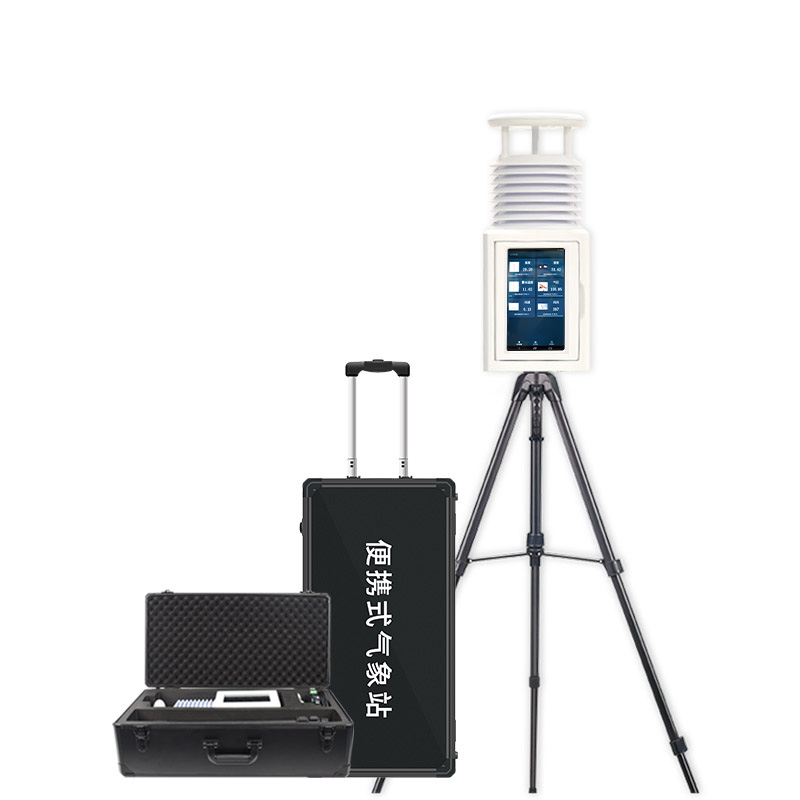
Meteorological Stations integrates twelve meteorological parameters: wind speed, wind direction, temperature, humidity, atmospheric pressure, optical rainfall, PM2.5, PM10, CO, SO2, NO2, and O3. The sensor housing is constructed from imported ABS material, offering an ingress protection rating...
The core component of an ultrasonic anemometer is the ultrasonic transducer—a device specifically designed to transmit and receive ultrasonic waves. The entire equipment contains four such transducers. It adopts the ultrasonic time-difference method to measure wind speed and wind direction. The pri...
Sex identification in birds is a professional instrument capable of real-time detection. It consists of a dual-channel 16-well quantitative PCR instrument and a portable accessory kit. Simple to operate, it uses a non-invasive method to identify the sex of birds. Relying on molecular biology a...
With the continuous progress of science and technology, refined meteorological monitoring has become an important development direction of modern meteorological services. The purpose of refined meteorological monitoring is to obtain more accurate, detailed, and high spatio-temporal resolution meteor...


 Skype
Skype
 whatsapp
 mail
mail