Tianqiong Sensor IOT Technology Co., Ltd
Sales Manager:Ms. Emily Wang
Cel,Whatsapp,Wechat:+86 15898932201
Email:info@fengtutec.com
Add:No. 155 Optoelectronic Industry Accelerator, Gaoxin District, Weifang, Shandong, China


Sales Manager:Ms. Emily Wang
Cel,Whatsapp,Wechat:+86 15898932201
Email:info@fengtutec.com
Add:No. 155 Optoelectronic Industry Accelerator, Gaoxin District, Weifang, Shandong, China
time:2026-04-02 10:36:58 source:Weather Station viewed:315 time
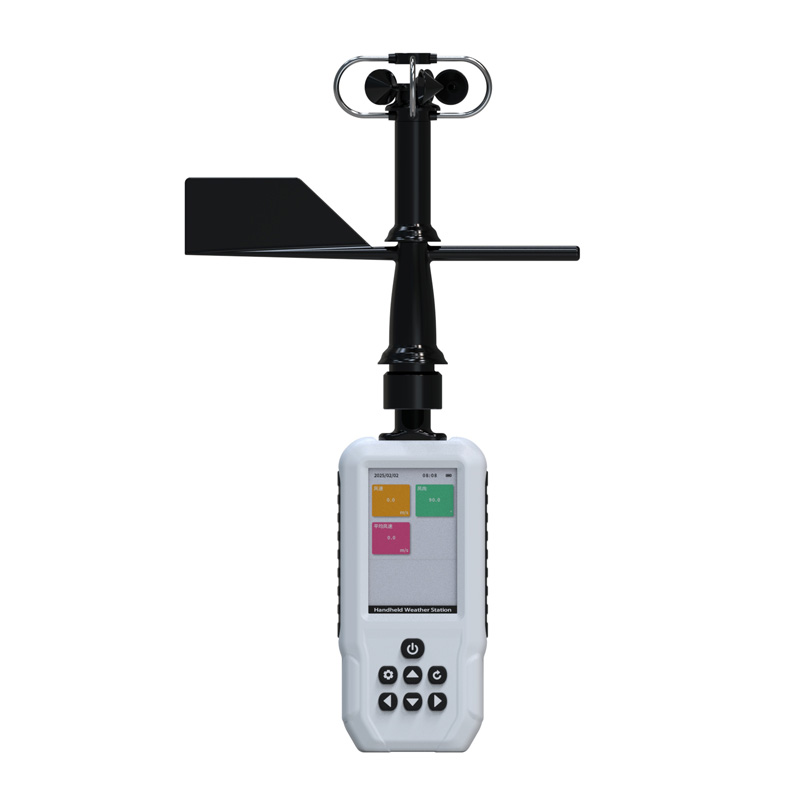
Handheld Anemometer is a portable meteorological observation instrument that integrates the measurement of wind speed, wind direction, and average wind speed into a single unit. It features a wind speed measurement range of 0–60 m/s with an accuracy of ±0.3 m/s, and a wind direction range of 0–360° with an accuracy of ±3°. It is suitable for use in fields such as construction machinery, railways, ports, meteorology, and environmental monitoring.
Handheld Anemometer is a portable meteorological instrument that combines wind speed, wind direction, and average wind speed measurements. Its portability and ease of operation have led to its widespread application across numerous industries. The device utilizes microprocessor technology to process sensor signals, enabling the simultaneous measurement of multiple wind parameters—including instantaneous wind speed, instantaneous wind force (Beaufort scale), average wind speed, and average wind force. Certain models are also equipped with a data-latch function to facilitate the recording of on-site readings. In terms of structural design, the wind speed measurement component typically employs a traditional three-cup anemometer or a propeller-type mechanism; an internal microcontroller samples and calculates the output frequency from the wind speed sensor, with the final measurement results displayed directly on an LCD screen. The wind direction measurement component utilizes an automatic north-seeking mechanism or an electronic compass, eliminating the need for manual alignment with true north during measurements and thereby simplifying on-site operational procedures.
Regarding technical specifications, the wind speed measurement range of the Handheld Anemometer typically spans from 0 to 30 m/s or 0 to 60 m/s, with a measurement accuracy of ±0.3 m/s and a resolution of 0.01 m/s. The wind direction measurement range covers 0 to 360 degrees, with an accuracy of ±3 degrees and a resolution of 0.1 degrees. The measurement range and accuracy for average wind speed are identical to those of the standard wind speed parameters. Some models also integrate a temperature measurement function, allowing for the simultaneous monitoring of ambient temperature; the temperature measurement range covers -20°C to 80°C, with an accuracy ranging from ±0.3°C to ±0.5°C. The device is powered by dry-cell batteries—typically requiring just two or three AA batteries—which is sufficient to meet the demands of prolonged field measurements. With a total weight of approximately 0.5 kg, the unit is designed for easy portability and convenient one-handed operation. In terms of application fields, Handheld Anemometer has been widely adopted across numerous industries—including construction machinery, railways, ports, docks, power plants, meteorology, cableways, environmental monitoring, greenhouses, and aquaculture—thanks to its portability and versatility. Within the construction machinery sector, it serves to monitor wind speeds and provide early warnings for tower cranes and aerial work platforms; in port and dock environments, it is utilized to assess wind conditions during ship arrivals and departures. Furthermore, in meteorological observation, it functions as a supplementary device to fixed weather stations, facilitating temporary on-site measurements and emergency observations. Certain models are also equipped with a high-grade aluminum alloy carrying case, offering robust protection for the instrument while ensuring ease of transport to a wide variety of field environments. The device typically operates within an ambient temperature range of -10°C to 45°C and accommodates humidity levels up to 100% RH, thereby meeting operational requirements across diverse outdoor climatic conditions.
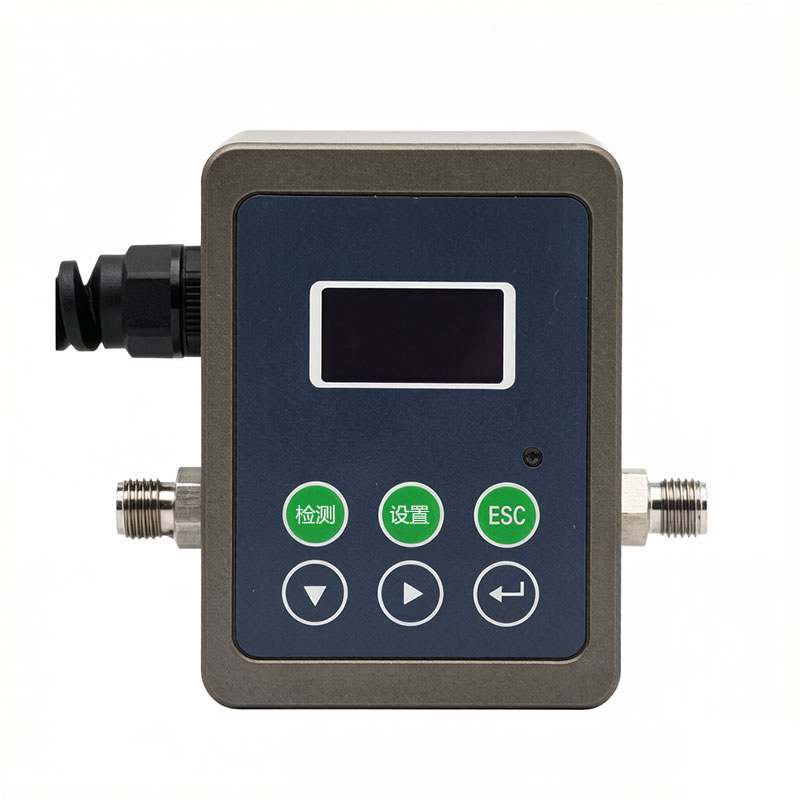
Designed for water source applications, this 5-parameter automatic water quality analyzer enables the online monitoring of five core indicators: water temperature, pH, conductivity, dissolved oxygen, and ammonia nitrogen. Leveraging precision sensing and detection technologies, it performs rea...
The Ultrasonic Wind Speed Direction Sensor achieves measurement based on the characteristics of ultrasonic waves propagating in the air. It accurately calculates the wind speed and direction by measuring the time difference of ultrasonic waves propagating in different directions. This non-mechanical...
Handheld anemometers measure wind speed and direction using the ultrasonic time-of-flight method. Multiple built-in ultrasonic probes calculate wind field data by measuring the time difference of sound wave propagation in the wind direction. The device has no moving mechanical parts, zero star...
In the context of the increasingly accelerating urbanization process today, air quality has become one of the key elements for measuring the quality of life. However, due to the high construction and operation costs and fixed layout, traditional large-scale environmental monitoring stations find it...


 Skype
Skype
 whatsapp
 mail
mail