Tianqiong Sensor IOT Technology Co., Ltd
Sales Manager:Ms. Emily Wang
Cel,Whatsapp,Wechat:+86 15898932201
Email:info@fengtutec.com
Add:No. 155 Optoelectronic Industry Accelerator, Gaoxin District, Weifang, Shandong, China


Sales Manager:Ms. Emily Wang
Cel,Whatsapp,Wechat:+86 15898932201
Email:info@fengtutec.com
Add:No. 155 Optoelectronic Industry Accelerator, Gaoxin District, Weifang, Shandong, China
time:2026-04-20 11:32:46 source:Weather Station viewed:289 time
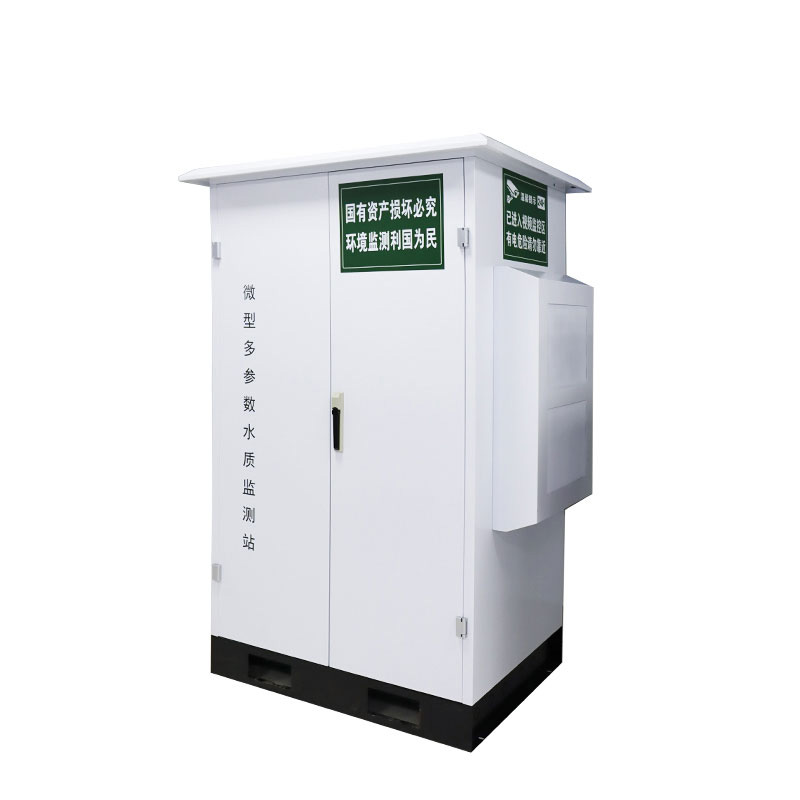
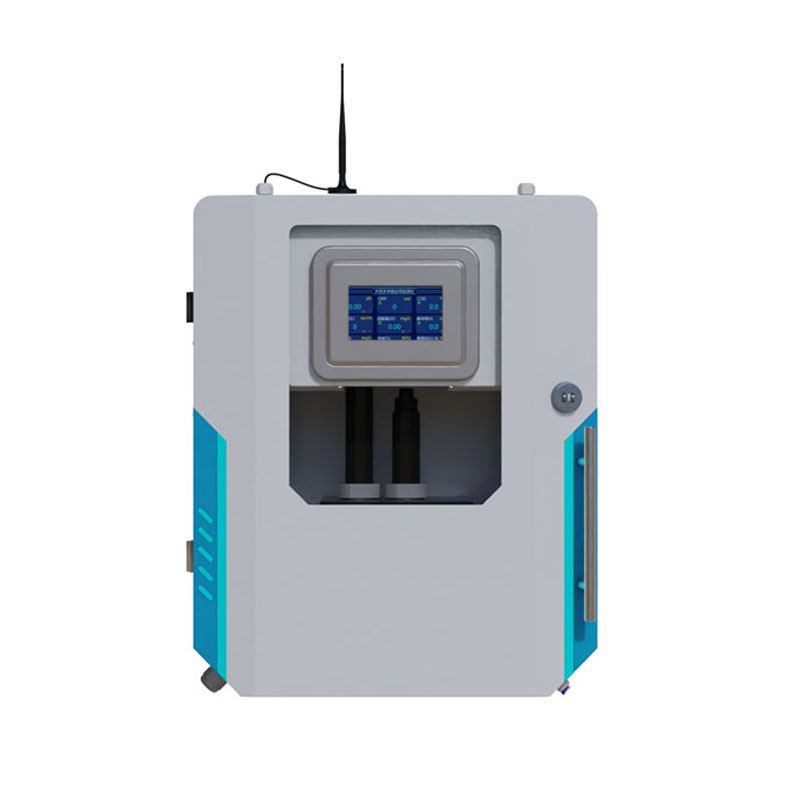
The water quality online monitoring micro-station integrates units for water sampling and distribution, analysis, and quality control. Core parameters—including total phosphorus, total nitrogen, chemical oxygen demand (COD), permanganate index, and ammonia nitrogen—are determined in strict accordance with national standard chemical analysis methods. The system is ideally suited for surface water cross-section monitoring, grid-based environmental management, and river chief system management.
Utilizing an integrated design philosophy, this micro-station is a fully automated water quality monitoring device widely deployed in surface water monitoring scenarios across rivers, lakes, and other bodies of water. The device primarily comprises a water sampling and distribution system, an analytical unit, a quality control unit, and an auxiliary unit. The auxiliary unit houses facilities for waste liquid collection, lightning protection, and climate control (air conditioning), ensuring the device's long-term, stable operation within outdoor environments.
The core component of the device is the analytical unit, which contains five distinct measurement modules covering total phosphorus, total nitrogen, COD, permanganate index, ammonia nitrogen, and the "five conventional parameters." Specifically, total phosphorus is determined via the ammonium molybdate spectrophotometric method; total nitrogen via the potassium persulfate digestion-UV spectrophotometric method; and ammonia nitrogen via the salicylic acid spectrophotometric method. COD is measured using the potassium dichromate method, while the permanganate index is determined via the potassium permanganate oxidation method; all these parameters strictly adhere to the chemical analysis methods prescribed by national standards. The "five conventional parameters"—dissolved oxygen, conductivity, turbidity, temperature, and pH—are measured using an integrated multi-electrode array: dissolved oxygen utilizes the fluorescence method; turbidity employs the 90° infrared scattered light method; conductivity uses the electrode method; and water temperature is measured via the thermal resistance method. For the measurement of chemical parameters such as the permanganate index, ammonia nitrogen, total phosphorus, and total nitrogen, the device utilizes specialized chemical reagent kits, which require replacement on a monthly basis.
In terms of structural design, the water quality online monitoring micro-station is housed within either an integrated outdoor cabinet or a pre-fabricated outdoor analytical shelter. Typically occupying a footprint of 1 to 2 square meters, the system offers flexible installation options, allowing for placement to be tailored to the specific site conditions of the monitoring location. The system seamlessly integrates water sampling, analysis, data transmission, and control functions into a single unit. Furthermore, it features flexible integration and expansion capabilities, allowing users to select and configure different combinations of monitoring parameters based on their specific operational requirements. The device is equipped with an intelligent temperature control system, a waste liquid separation function, and an automatic standard sample verification function. The analytical instrumentation features capabilities such as automatic calibration and automatic measurement; furthermore, in the event of a system anomaly, it records and uploads relevant information—including component failures, over-range alarms, and parameter exceedance alerts.
Regarding data management, the device uploads monitoring data in real-time to a monitoring center or cloud platform via wired or wireless transmission, supporting remote viewing and management. The device can monitor water quality parameters periodically or continuously; the monitoring frequency (cycles or intervals) can be dynamically adjusted based on the current water quality status. Concurrently, it retains samples of water that exceed regulatory limits and saves all monitoring data in real-time. When water quality data exceeds preset thresholds, the system immediately notifies management personnel via platform notifications, SMS alerts, and audible-visual alarms. The device features a "disconnected-upload" function, enabling it to store data locally during periods of weak or interrupted network signals and to transmit the complete historical data to the monitoring platform once network connectivity is restored. Additionally, the device is equipped with a lightning protection module and a robust grounding design to ensure stable system operation in harsh outdoor environments.
This online water quality monitoring micro-station is suitable for a wide range of monitoring applications, including surface water cross-section monitoring, grid-based environmental management, and river chief system management. Specific application scenarios include urban river cross-sections, administrative river boundary junctions, inland lakes, large-scale reservoirs, water used in industrial production processes, and industrial and municipal wastewater treatment facilities. The device enables the timely detection of anomalous changes in water quality, facilitates rapid early warning and forecasting to prevent water pollution, assists in the prompt tracing of pollution sources, and supports effective management decision-making. It represents a highly efficient solution specifically tailored to meet the evolving needs of ecological environment monitoring networks and grid-based water quality surveillance.
In the fields of meteorological monitoring and hydrology, the piezoelectric rain gauge and the Radar Precipitation Sensor Rain Gauge Distrometer are commonly used rainfall monitoring devices. Today, the author will compare the differences between the two.The piezoelectric rain gauge works by u...
Ultrasonic weather station uses non-contact sensing technology to accurately monitor weather conditions and leverages 4G wireless transmission to provide borderless data services for smart agriculture....
The Atmospheric Environment Monitoring System serves as a monitoring unit in grid-based monitoring systems. It adopts a miniaturized design enabled by sensor technology, capable of flexibly detecting one or more of various pollutant parameters, including PM10, PM2.5, SO2, NO2, CO, O3, and TVOC. This...
In today's society, environmental problems are becoming more and more serious. From air pollution to water quality deterioration, from soil pollution to noise interference, these issues seriously affect the survival and development of human beings. As an important cornerstone of environmental pr...


 Skype
Skype
 whatsapp
 mail
mail