Tianqiong Sensor IOT Technology Co., Ltd
Sales Manager:Ms. Emily Wang
Cel,Whatsapp,Wechat:+86 15898932201
Email:info@fengtutec.com
Add:No. 155 Optoelectronic Industry Accelerator, Gaoxin District, Weifang, Shandong, China


Sales Manager:Ms. Emily Wang
Cel,Whatsapp,Wechat:+86 15898932201
Email:info@fengtutec.com
Add:No. 155 Optoelectronic Industry Accelerator, Gaoxin District, Weifang, Shandong, China
time:2026-09-03 13:09:31 source:Weather Station viewed:30 time
The GNSS displacement monitor utilizes differential RTK technology to achieve millimeter-level displacement monitoring. It is suitable for scenarios such as dams, bridges, slopes, and tailings ponds. The equipment is resistant to complex environments, has low power consumption, supports offline calculation and remote monitoring, and can accurately capture minute deformations in engineering projects, ensuring operational safety.
The GNSS displacement monitor is a professional monitoring device developed based on the Global Navigation Satellite System and differential RTK technology. Its core function is to accurately monitor minute displacement deformations of the earth's surface, various buildings, and geotechnical engineering projects. It is a core device for engineering safety monitoring and geological disaster early warning, and is currently widely used in various engineering fields such as dam operation and maintenance, bridge inspection, slope protection, and tailings pond monitoring.
The GNSS displacement monitor possesses excellent monitoring accuracy and environmental adaptability. In differential mode, it can achieve millimeter-level monitoring accuracy of ±(2.5mm+1ppm) horizontally and ±(5mm+1ppm) vertically, accurately capturing minute deformation data. The device is equipped with a choke coil antenna and magnetic absorbing materials, effectively reducing signal multipath effects and ensuring monitoring stability in complex outdoor environments. It features a low-power design, consuming only 0.25W, and is compatible with DC 10V-15V power supplies. It can operate stably in environments ranging from -40℃ to +85℃, with no condensation and high humidity, making it suitable for harsh field conditions.
Regarding data transmission and processing, the GNSS displacement monitor supports RTCM3 differential data reception and Modbus-RTU communication protocols, enabling offline calculation of horizontal and vertical bidirectional displacement data without relying on a backend system. The device has a streamlined structure, compact size, and simple installation process, requiring no complex professional construction. It also supports remote device monitoring and data analysis, significantly reducing on-site maintenance costs.
The GNSS displacement monitor boasts strong compatibility and expandability, seamlessly integrating with various engineering monitoring systems on the market to achieve data sharing and fusion, building an integrated monitoring system. Relying on real-time, accurate, and stable monitoring capabilities, the equipment can collect deformation data continuously around the clock, promptly report the trend of changes in engineering structures, and provide real and effective data support for geological landslide early warning, engineering hazard investigation, and facility operation and maintenance control, thus comprehensively strengthening the safety defense line for various infrastructure projects and geological engineering projects.
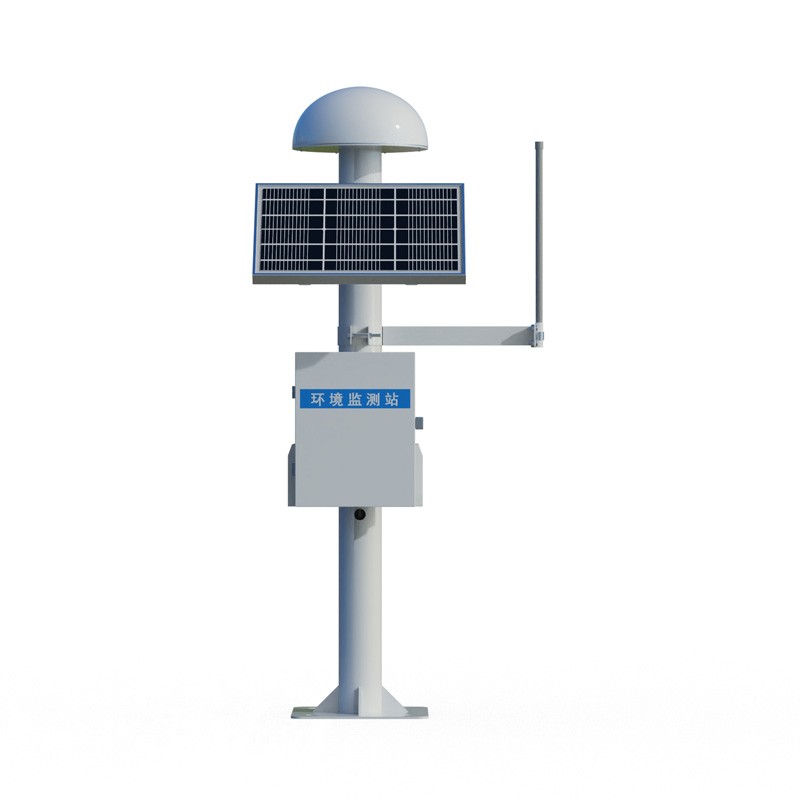
The crop growth condition is an important term in the agricultural field, referring to the growth and development status of crops at various stages from sowing to maturity. It includes comprehensive information such as plant morphology, population structure, and physiological indicators, and is cruc...
Integrated Weather Station is an integrated, high-precision outdoor monitoring device equipped with an all-in-one sensor capable of measuring ten parameters. It supports multiple data transmission methods, offers low power consumption, is easy to install, portable, and durable, making it suitable fo...
Handheld Weather Station FT-SQ8+ is a "meteorological monitoring expert" trusted by numerous users.Equipped with a 3.5-inch LCD screen, the FT-SQ8+ can clearly display a wealth of elements such as wind speed, wind direction, average wind speed, temperature, humidity, atmospher...
The construction of smart wetlands takes wetland monitoring equipment as the core, and combines Internet of Things (IoT), big data, and artificial intelligence technologies to build a three-dimensional monitoring network covering hydrology, meteorology, and ecology.The wetland weather stations...


 Skype
Skype
 whatsapp
 mail
mail