Tianqiong Sensor IOT Technology Co., Ltd
Sales Manager:Ms. Emily Wang
Cel,Whatsapp,Wechat:+86 15898932201
Email:info@fengtutec.com
Add:No. 155 Optoelectronic Industry Accelerator, Gaoxin District, Weifang, Shandong, China


Sales Manager:Ms. Emily Wang
Cel,Whatsapp,Wechat:+86 15898932201
Email:info@fengtutec.com
Add:No. 155 Optoelectronic Industry Accelerator, Gaoxin District, Weifang, Shandong, China
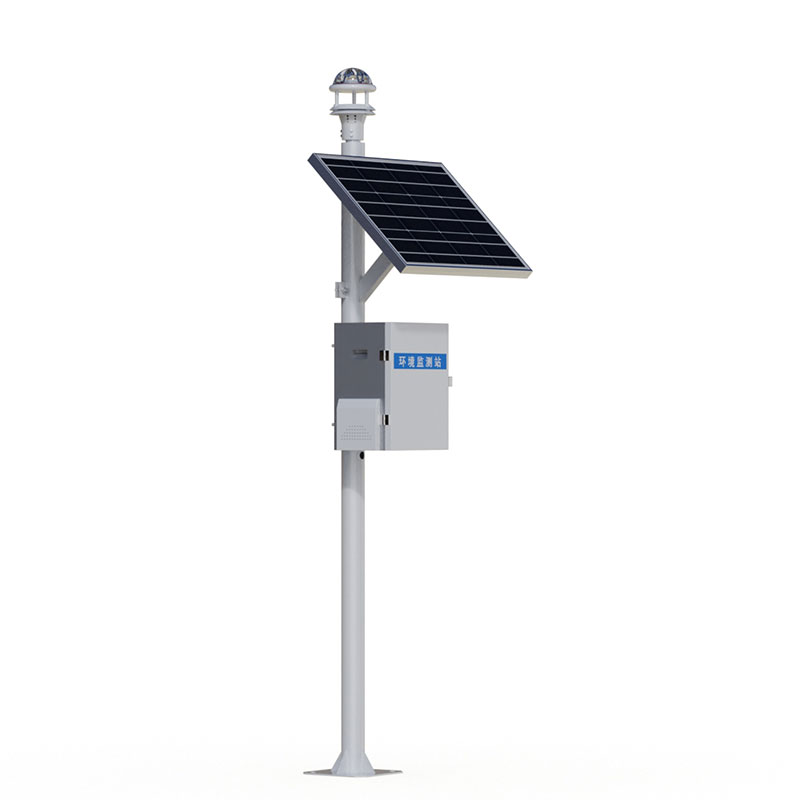
Model:FT-YJ3
Brand:tianqiong
1.Remote Rain Gauge product overview
Remote Rain Gauge allows you to track current and historical rainfall, sending data wirelessly for remote monitoring of rainfall at different locations.YJ3 Remote Rain Gauge is a modern rainfall station based on the Internet of Things.It consists of optical rainfall sensors, collectors, solar power supply systems, pole brackets, etc.The equipment can send rainfall data in the form of wireless remote transmission, and can send data wirelessly to the monitoring platform.
Log in to the IoT platform to view real-time data and historical records.The rainfall data includes rainfall status, one-minute rainfall, five-minute rainfall, ten-minute rainfall, one-hour rainfall, daily rainfall, monthly daily rainfall bar chart, hourly rainfall change curve and bar chart in one day.The cloud platform supports daily boundary time settings, daily rainfall alarm threshold settings, and data can be exported EXCEL.
Remote Rain Gauge can be widely used in meteorological, flood control, agriculture, hydrological and water conservancy, environmental protection, highways, airports and ports.It can provide raw data for the meteorological observatory (station), hydrological station, agriculture and forestry, national defense, field surveying and reporting station and other relevant departments to measure precipitation, precipitation intensity, precipitation time and other parameters; it can also provide reference value real-time data for flood control, water supply scheduling, power stations, and reservoir water situation management.
2.Remote Rain Gauge product features
1.This optical rainfall sensor uses a pure sinusoidal infrared light source, a built-in narrowband filter, and a rain-sensitive surface of 78 square centimeters.It can measure rainfall with high accuracy and be not affected by high-intensity sunlight and other lights.The high transmittance rain cover does not affect direct sunlight and is compatible with other built-in optical sensors, such as light, total radiation, ultraviolet sensors, etc.
2.High measurement accuracy, wide range, good stability performance, low power consumption, strong resistance to external interference
3.Can work around the clock, not affected by weather changes, and monitor rainfall duration accurately in seconds
4.Maintenance-free, the contact surface of the raindrop is an arc-shaped design structure, and no rainwater is stored
5.It has automatic horizontal calibration function after installation, no on-site calibration is required
6.Low-power collector: static power consumption is less than 1mA
7.Support modbus485 sensor extension
8.Solar Charging Management MPPT Automatic Power Point Tracking
9.Send SMS alarm, send SMS to the specified mobile phone after exceeding the limit
10.Stainless steel protective box, corrosion-resistant and oxidation-resistant, waterproof grade IP66
3.Remote Rain Gauge technical parameters:
1.Measurement principle: infrared scanning
2.Measuring range: rain intensity 0~4mm/min
3.Measurement accuracy: ±4%
4.Resolution: 0.01mm
5.Power supply method: solar power supply
6.Solar power: 50W
7.Battery parameters: 20Ah
8.Support: Carbon steel 2-meter support
9.Working environment: -40℃~60℃
4.Introduction to Remote Rain Gauge Cloud Platform
CS architecture software platform, supports direct observation of mobile phones and PC browsers without additional software installation
Supports multiple accounts and multiple devices login
Support real-time data display and historical data display dashboard
Cloud server and cloud data storage, stable and reliable, easy to scale, load balanced
Support SMS alarm and threshold settings
Support map display and viewing device information.
Supports data curve analysis
Supports data export table form
Supports data forwarding, HJ-212 protocol, TCP forwarding, http protocol, etc.
Supports data post-processing function
Support external running of javascript scripts
Handheld Water Quality Meter is a portable water quality analyzer integrating ORP, pH, and temperature detection functions. The ORP measurement range is -2000 to 2000 mV, and the pH range is 0 to 14. It has a built-in 6000mAh lithium battery and is suitable for rapid on-site testing in industr...
Pine wood nematode rapid detection device is a professional device utilizing molecular biology techniques. It integrates the processes of pine wood nematode isolation, DNA extraction, and quantitative fluorescence PCR detection to achieve rapid and automated detection of this harmful organism. The instrument automatically analyzes and displays results, and prints reports, eliminating the need for manual interpretation. It is used for forestry quarantine and infected wood screening....
African Swine Fever Virus Detection Kit Designed for the extraction of viral DNA from anticoagulated blood, serum, tissue, feed, and environmental samples. The purified nucleic acids are suitable for use in routine laboratory procedures and PCR assays. This product is ideal for antigen diagnos...
Meteorological Instruments for Solar Energy is a professional device that integrates the monitoring functions of six key meteorological parameters: temperature, humidity, wind speed, wind direction, air pressure, and rainfall. Its core highlight lies in its highly integrated and ingenious design. It...


 Get a Free Quote
 Skype
Skype
 whatsapp
 mail
mail