Tianqiong Sensor IOT Technology Co., Ltd
Sales Manager:Ms. Emily Wang
Cel,Whatsapp,Wechat:+86 15898932201
Email:info@fengtutec.com
Add:No. 155 Optoelectronic Industry Accelerator, Gaoxin District, Weifang, Shandong, China


Sales Manager:Ms. Emily Wang
Cel,Whatsapp,Wechat:+86 15898932201
Email:info@fengtutec.com
Add:No. 155 Optoelectronic Industry Accelerator, Gaoxin District, Weifang, Shandong, China
time:2025-12-03 10:18:34 source:Weather Station viewed:428 time
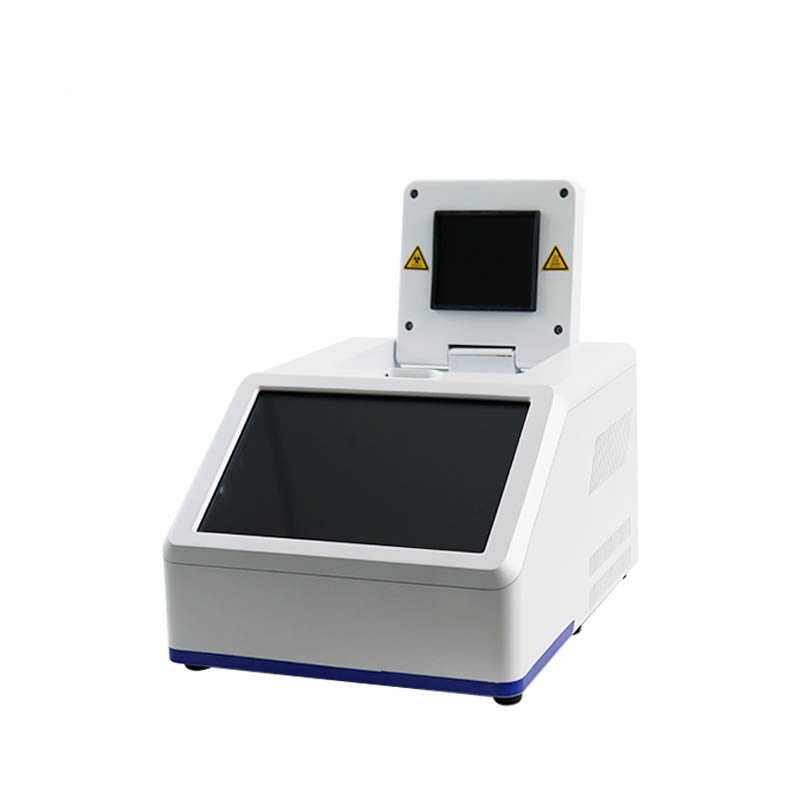
Pine wood nematode rapid detection device is a professional device utilizing molecular biology techniques. It integrates the processes of pine wood nematode isolation, DNA extraction, and quantitative fluorescence PCR detection to achieve rapid and automated detection of this harmful organism. The instrument automatically analyzes and displays results, and prints reports, eliminating the need for manual interpretation. It is used for forestry quarantine and infected wood screening.
Pine wood nematode rapid detection device is a laboratory instrument based on molecular detection technology, specifically designed for the qualitative and quantitative analysis of pine wood nematodes. Pine wood nematodes are devastating pathogens that cause pine wilt disease and lead to the large-scale death of pine forests. Traditional morphological identification methods are time-consuming, labor-intensive, and highly dependent on skilled personnel. This device aims to achieve rapid, accurate, and standardized detection, serving forestry quarantine, disease monitoring, and infected wood clearing.
The core technical principle of this detection instrument is quantitative fluorescence PCR. This is a molecular biology technique that monitors the amount of target DNA in real-time during the PCR amplification process using fluorescence signals, thereby quantifying the initial template. Primers and fluorescent probes are designed specifically for the DNA sequence of the pine wood nematode, enabling the instrument to highly specifically identify whether the sample contains the genetic material of the pine wood nematode and to estimate its relative content.
A complete detection process mainly includes three automated or highly integrated steps. The first step is the isolation and sample preparation of pine wood nematodes. Operators place suspected infected pine wood shavings or drilled wood core samples into the homogenization or centrifugation device provided with the equipment. Some highly integrated systems can automatically complete the crushing of the sample and the preliminary enrichment of nematodes, providing pre-processed samples for the next extraction step.
The second step is DNA extraction and purification. The pre-processed sample is transferred to the nucleic acid extraction module. This module usually employs automated methods such as magnetic bead method or centrifugal column method, automatically extracting high-purity total DNA from complex samples through a series of procedures including lysis, binding, washing, and elution. This includes any pine wood nematode DNA that may be present. This step removes impurities that inhibit subsequent PCR reactions and is a crucial pre-processing step.
The third step is quantitative fluorescence PCR detection and result analysis. The purified DNA solution is automatically or manually added to a detection cartridge or microplate containing specific primers, probes, and reaction system, and then placed in the instrument's temperature-controlled detection chamber. The device performs heating and cooling cycles according to a preset program, driving DNA amplification, and monitoring the fluorescence intensity after each cycle in real time. After the entire process is completed, the instrument's internal software automatically determines the positive or negative result of the sample based on the fluorescence curve and the set threshold, and can calculate the initial template copy number based on the standard curve. The results are displayed directly on the touchscreen, and a standard format detection report can be printed using a connected printer.
The main features of this device are efficiency, convenience, and objective results. It integrates or serializes the multi-step process that previously required transfer between multiple laboratory instruments and operation by different professionals, significantly shortening the detection time and allowing the entire process from sample to report to be completed within a few hours. The "speed" is reflected in the integration and automation of the process. The "no manual interpretation required" feature is particularly important; the instrument makes objective judgments based on algorithms and set thresholds, eliminating interpretation errors caused by differences in experience among different personnel, and ensuring the standardization and reproducibility of the detection results.
In practical applications, Pine wood nematode rapid detection device is mainly used in two areas. First, it is used for forest pest and disease surveys and epidemic monitoring, enabling rapid screening of a large number of samples collected in the field to promptly understand the distribution and spread dynamics of the epidemic. Second, it is used for quarantine in the timber circulation process, allowing for rapid on-site or laboratory inspection of imported and exported pine wood and its products to prevent the spread of diseases through human transportation. It provides direct technical basis and data support for forestry departments to formulate prevention and control strategies, delineate epidemic areas, and evaluate the effectiveness of control measures.
In summary, Pine wood nematode rapid detection device is a specific application equipment of molecular detection technology in the field of forest pest and disease control. By automating the integration of sample processing, nucleic acid amplification, and result analysis, it achieves rapid, specific, and objective detection of pine wood nematodes, improving the technological level and response speed of forestry quarantine work, and is an important technical tool for protecting forest resources.
Operating on the principle of the ultrasonic Doppler effect, this portable Doppler flow meter is suitable for monitoring rivers, open channels, and pipelines. It features high precision, low power consumption, and ease of maintenance, enabling the simultaneous collection of flow velocity, wate...
EL (Electroluminescence) detection, a non-destructive testing method, works as follows: When a forward bias is applied to a photovoltaic (PV) module, electrons and holes diffuse to the P and N regions, respectively. The radiative recombination of charge carriers generates photons, resulting in the e...
Instruments for measuring water flow velocity are specialized devices used to determine the speed of water in rivers, canals, pipelines, and other bodies of water. They fall into categories such as mechanical propeller, electromagnetic, and ultrasonic Doppler types. Modern portable flow meters...
Handheld anemometers measure wind speed and direction using the ultrasonic time-of-flight method. Multiple built-in ultrasonic probes calculate wind field data by measuring the time difference of sound wave propagation in the wind direction. The device has no moving mechanical parts, zero star...


 Skype
Skype
 whatsapp
 mail
mail