Tianqiong Sensor IOT Technology Co., Ltd
Sales Manager:Ms. Emily Wang
Cel,Whatsapp,Wechat:+86 15898932201
Email:info@fengtutec.com
Add:No. 155 Optoelectronic Industry Accelerator, Gaoxin District, Weifang, Shandong, China


Sales Manager:Ms. Emily Wang
Cel,Whatsapp,Wechat:+86 15898932201
Email:info@fengtutec.com
Add:No. 155 Optoelectronic Industry Accelerator, Gaoxin District, Weifang, Shandong, China
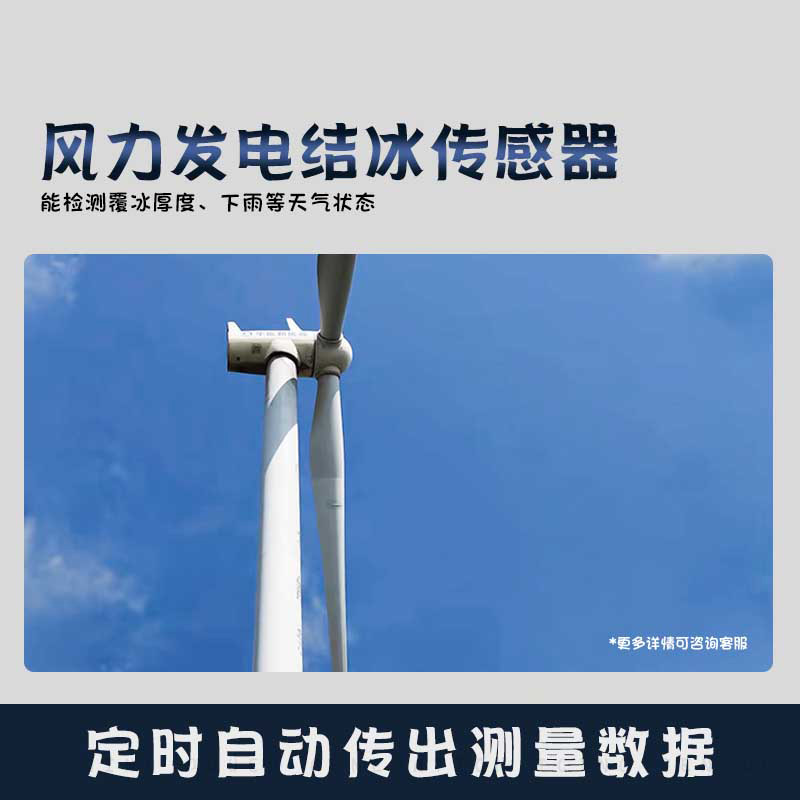
Model:FT-JB3H
Brand:tianqiong
1.Product Introduction of Detecting Ice on Wind-turbine Blades
Detecting Ice on Wind-turbine Blades can measure the degree of ice formation directly on the rotor blades using temperature sensors and surface acoustic wave sensors.Detecting Ice on Wind-turbine Blades uses microwave detection technology to monitor the icing information in the sensitive area of the sensor based on the difference between feedback information of different substances such as ice, water, and air based on the microwave signal, and calculate the icing thickness based on the signal strength and the distribution information of the icing in the sensor area.This product is generally installed on the blades of a wind turbine.By measuring the ice covering on this sensor, the ice covering at the current blade position can be determined equally.
2.Detecting Ice on Wind-turbine Blades technical indicators
1.Detection resolution: 0.01mm
(1) Maximum measured thickness: 30.00mm
(3) Communication method: Wireless 433
(4) Air rate: 10K
(5) Communication Agreement: See Communications Section
(6) Communication distance:>100 meters (accessible)
(7) Power supply method: embedded battery
(8) Standby time:>72 hours
(9) Working temperature: -40℃~65℃
(10) Protection level: IP66
(11) Weight: ≤210g
3.Detecting Ice on Wind-turbine Blades product features
(1) Can detect weather conditions such as ice thickness and rain.
(2) It has functions such as temperature detection, battery voltage detection, and charging voltage detection.
(3) Automatically transmit measurement data at regular intervals.
(4) The equipment is lightweight and flexible, and is easy to fit tightly on the blades.
(5) Recharge the battery with a photovoltaic charging module.
(6) The sensor thickness is less than 15mm
(7) Install in different positions of the blade and tower
(8) Powered by solar energy
(9)Lora wireless communication
(10) Use the same coating as the blade
(11) Combined with the information of micro weather stations
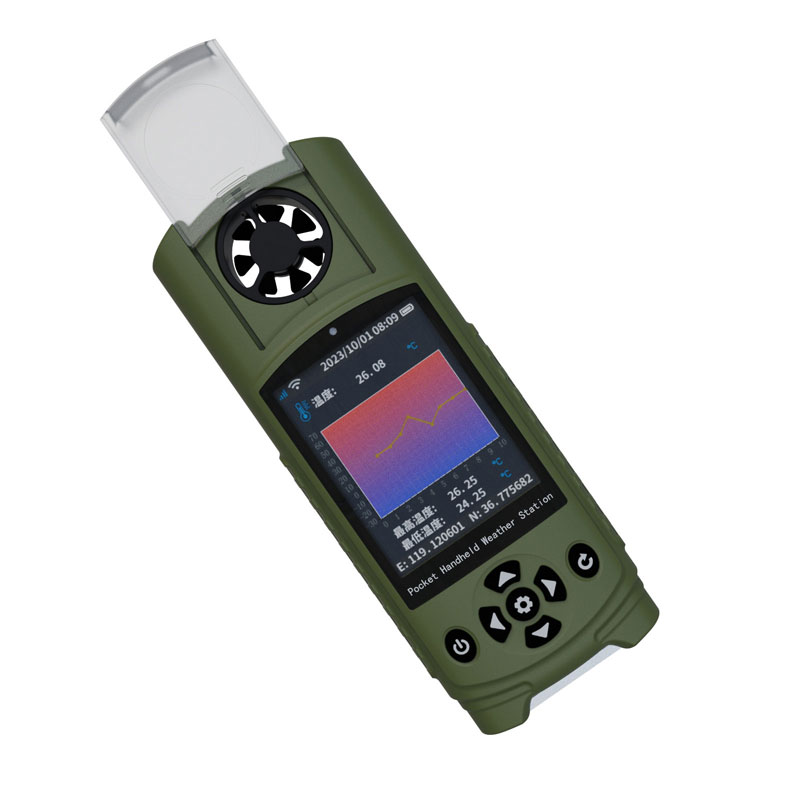
The FT - SQ2A Handheld Weather Station by TianQiong measures wind speed and direction using the ultrasonic time - difference method. It comes with its own display screen, which can display the detected data in real - time. The station is encased in an ABS engineering plastic shell, which is lightwei...
The online water quality monitoring system, based on IoT technology, consists of units such as flow stabilization and venting, analytical monitoring sensors, system control, and remote communication. It integrates sensors for residual chlorine, pH, water temperature, turbidity, and conductivit...
During ship navigation, when encountering waters with unknown water depth conditions, ship drivers face potential risks such as reef striking and stranding, which seriously threaten navigation safety. In such cases, a Portable Ultrasonic Water Depth Meter can be used.The Portable Ultrasonic Water De...
The construction of hydrological monitoring station networks in irrigation districts utilizes microwave radar technology to measure water level, flow velocity, flow rate, and rainfall in channels in a non-contact manner. This method is unaffected by silt and floating debris, providing high-pre...


 Get a Free Quote
 Skype
Skype
 whatsapp
 mail
mail