Tianqiong Sensor IOT Technology Co., Ltd
Sales Manager:Ms. Emily Wang
Cel,Whatsapp,Wechat:+86 15898932201
Email:info@fengtutec.com
Add:No. 155 Optoelectronic Industry Accelerator, Gaoxin District, Weifang, Shandong, China


Sales Manager:Ms. Emily Wang
Cel,Whatsapp,Wechat:+86 15898932201
Email:info@fengtutec.com
Add:No. 155 Optoelectronic Industry Accelerator, Gaoxin District, Weifang, Shandong, China
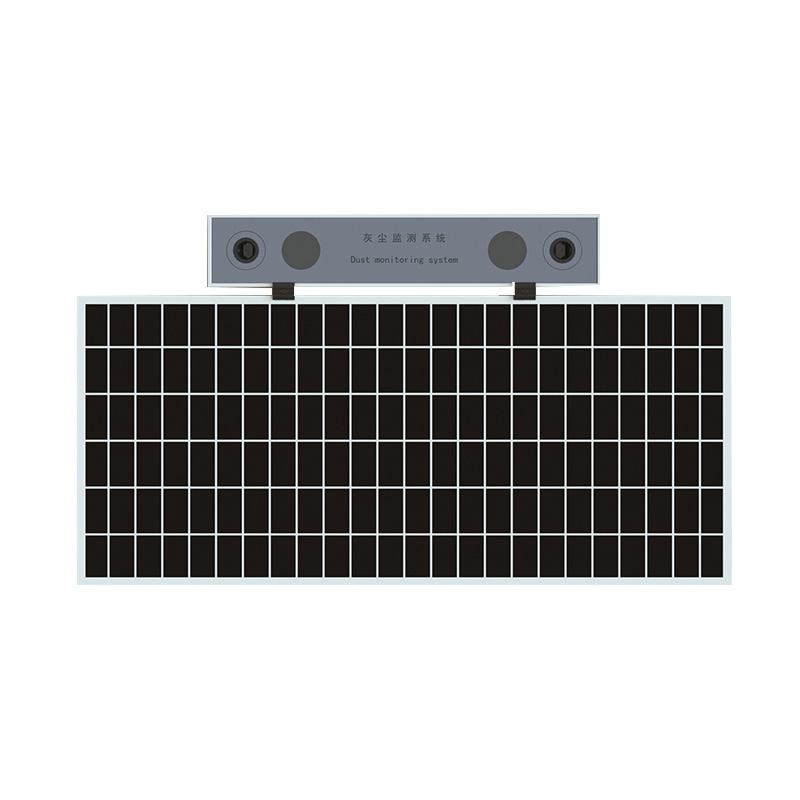
Model:FT-HS1
Brand:tianqiong
1.Photovoltaic module dust Product Overview
Photovoltaic module dust reduces PV module power output and is optimized by monitoring the photovoltaic panels in the photovoltaic array to reduce dust accumulation.Pollutants on the glass of solar modules are one of the main problems that rapidly affect photovoltaic power plants, which will reduce power generation efficiency and cost-effectiveness.Using blue light pollutant light closed-loop measurement (OMBP) technology, it can be easily installed into new or existing photovoltaic arrays and integrated into power station management systems.The device is mounted on the frame of the photovoltaic panel.By continuously measuring the transmission loss caused by contaminants on the glass, the reduction in sunlight reaches the solar module is calculated.
By measuring the ratio of pollutants (SR), it is converted into loss of power generation in real time.This allows operation and maintenance personnel to know when the contaminants have reached the critical point and it is necessary to start the cleaning process.The product does not require maintenance, it simply cleans the same way when cleaning the surrounding components.
Because large photovoltaic power stations have different pollution rates throughout the park, multi-point measurement is required in the IEC 61724-1 standard.Compared to traditional systems, the cost of procurement, installation and maintenance is much lower, making it more economical, so that cleaning can be planned at the time and place of need.
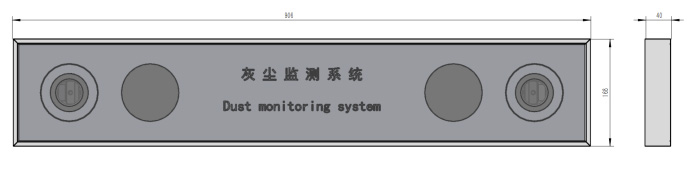
2.Photovoltaic module dust product appearance size
3.The main functions and features of Photovoltaic module dust
Main functions: Dust monitoring system, mainly used for dust monitoring and use of photovoltaic equipment, helping photovoltaic equipment to achieve real-time monitoring and remote monitoring of dust.When the surface of the photovoltaic panel is insufficient, users are reminded to clean it in time to reduce energy losses and improve power generation efficiency.
Product Features: Photovoltaic module dust is equipped with a high sensitivity sensor, which can accurately monitor the dust condition on the surface of photovoltaic panels, has dustproof design and easy installation and no maintenance required, and can operate stably in harsh environments.
Equipment Description: Photovoltaic module dust is a device used to monitor the dust coverage of photovoltaic panels.It is mainly used to improve photovoltaic power generation efficiency and maintain photovoltaic systems.The main functions and product features make it an important auxiliary equipment in photovoltaic power generation systems, helping users to clean photovoltaic panels in time, improve power generation efficiency, and extend the service life of photovoltaic systems.
4.Photovoltaic module dust Technical Parameters
| Product model parameters | HS1 |
| Power supply voltage | DC 12V |
| Average power | 1W |
| Instantaneous maximum power | 2.5W |
| Finish measurement range | 50%~100% |
| Resolution | 0.5% |
| Accuracy | 1% |
| Operating temperature | -50℃~+80℃ |
| Working humidity | 30%-70% |
| Storage temperature | -20~65℃ |
| Protection level | IP65 |
| Product weight | 3.65KG |
| Product volume | 906*168*40mm |
| Output method | RS485 |
| Communication protocol | Modbus |
| Baud rate | Default 9600, adjustable |
| Housing material | Aluminum profile |
| Power cord length | 20m |
| Communication line length | 20m |
5.Photovoltaic module dust Instructions
Connect the device according to the wiring instructions (except for the power input and 485 communication output ports, the other port peripherals are connected at the factory).After connecting the 12V power supply, you can use the host or collector to communicate.
6.Photovoltaic module dust Equipment Installation
Preparation before installation:
Dust monitoring system equipment, dust monitoring solar connector A*4, dust monitoring solar connector B*4, screw and nut M8*70 kit*4.
Installation brief description:
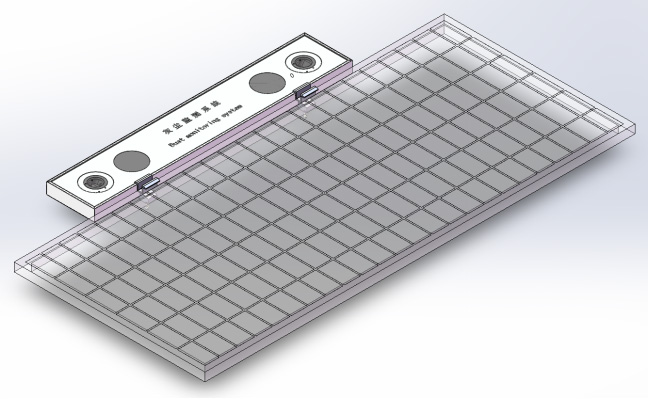
The equipment needs to be installed with photovoltaic panels.After the installation is ready, the dust monitoring equipment is placed parallel to the solar photovoltaic panels.The glass side of the equipment faces the light-receiving surface of the solar panel.The dust monitoring solar connector A is placed in an inverted shape and is placed at the bottom of the middle of the solar panel and the dust monitoring system equipment.The dust monitoring solar connector B is placed.Use M8 screws and nuts to penetrate and tighten.Repeat the steps to fix the installation on multiple points.
In a certain farmland, the LED electronic display of "standard agrometeorological stations" real-time presents data such as soil water content, salinity, and ground temperature, providing key basis for farmers' scientific planting. The new-generation standard agrometeorological station...
Water quality micro monitoring station, also known as a riverbank automatic water quality monitoring station, is a highly integrated, low-cost intelligent online water quality monitoring system. It integrates multiple high-precision water quality sensors and data acquisition and transmission modules, enabling continuous and automatic monitoring of key parameters such as pH, dissolved oxygen, turbidity, conductivity, and temperature. It is suitable for the high-frequency, high-density monitoring needs of environmental protection, water conservancy, and water affairs sectors....
As environmental pollution becomes increasingly complex, the limitations of traditional air monitoring methods are gradually becoming apparent. The national ambient air monitoring network has a limited number of stations and high costs, and the method of using points to represent the whole area resu...
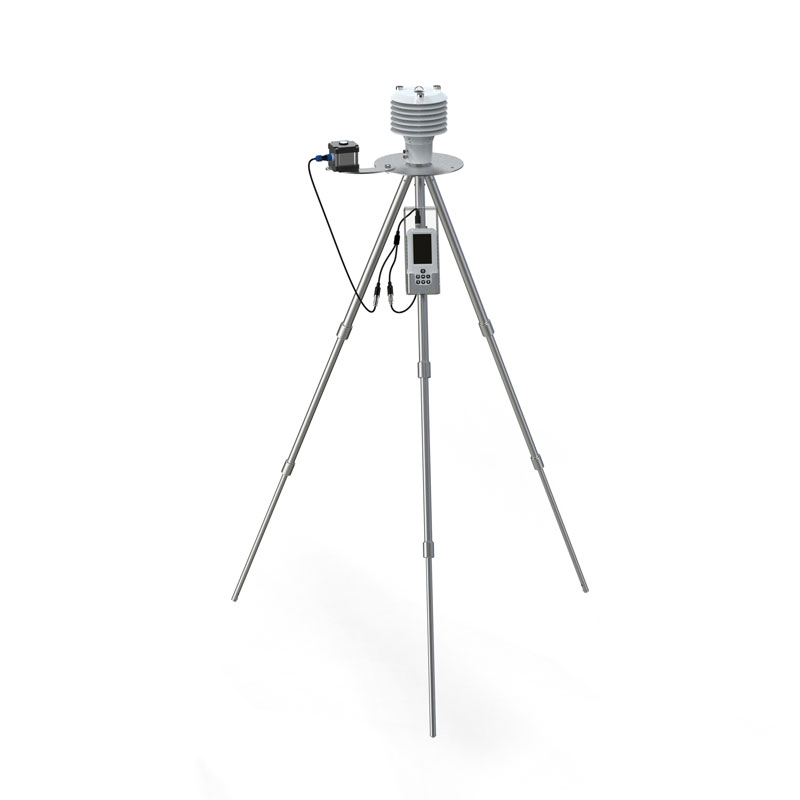
This lightweight, portable weather station is equipped with precision sensors and a smart chip. It is easy to operate and can simultaneously collect multiple meteorological and location data, making it suitable for various fire emergency and outdoor disaster monitoring scenarios....


 Get a Free Quote
 Skype
Skype
 whatsapp
 mail
mail