Tianqiong Sensor IOT Technology Co., Ltd
Sales Manager:Ms. Emily Wang
Cel,Whatsapp,Wechat:+86 15898932201
Email:info@fengtutec.com
Add:No. 155 Optoelectronic Industry Accelerator, Gaoxin District, Weifang, Shandong, China


Sales Manager:Ms. Emily Wang
Cel,Whatsapp,Wechat:+86 15898932201
Email:info@fengtutec.com
Add:No. 155 Optoelectronic Industry Accelerator, Gaoxin District, Weifang, Shandong, China
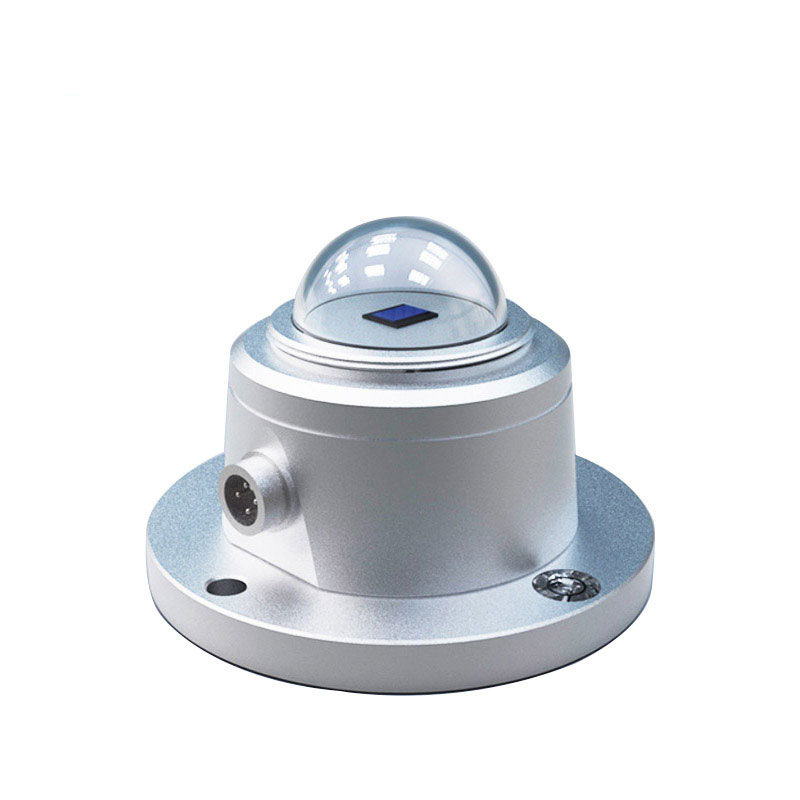
Model:FT-FS1
Brand:tianqiong
1.Photosynthetic Active Radiation Sensor Technical Indicators
Photosynthetic Active Radiation Sensor measures photosynthetic active radiation, which generates photosynthetic activity in plants and microorganisms.
Power supply: DC12V
Power consumption: 0.036W
Working environment: -20~65℃
Communication interface: RS485
Operating current: 3mA@DC12V
Minimum data interval: 0.5S
2.Photosynthetic Active Radiation Sensor parameters
Measurement elements: Irradiance
Measurement range: 0-2000W/m²
Resolution: 1W/m²
Response time: ≤10S
Accuracy: <±3%
Annual stability: ≤±3%
Zero point drift: ≤6 W/m²
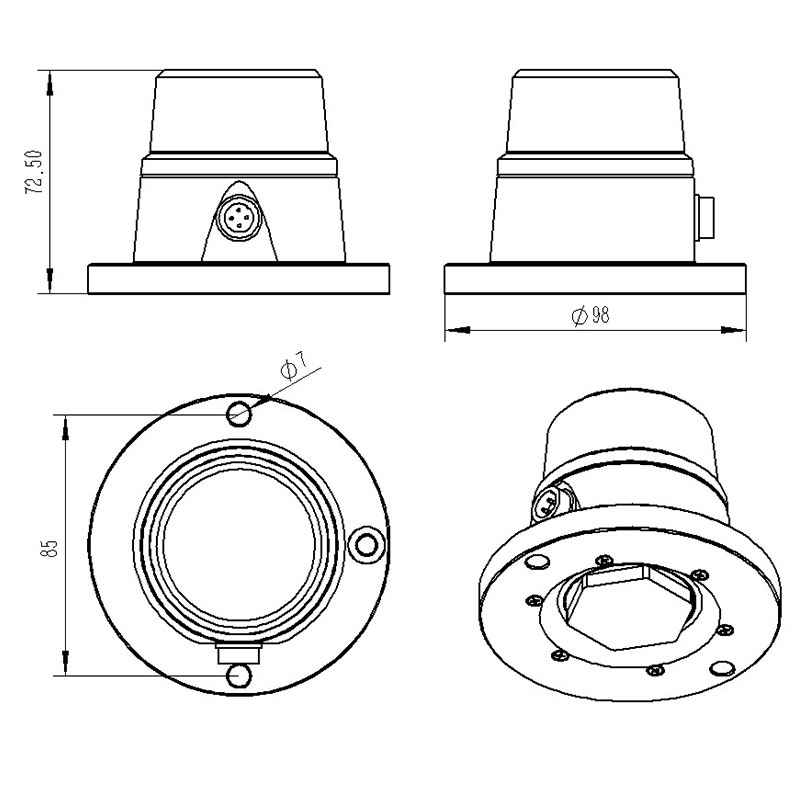
3.Photosynthetic Active Radiation Sensor Product Size Diagram
As the name suggests, an air quality sensor monitors carbon monoxide (CO), sulfur dioxide (SO₂), nitrogen dioxide (NO₂), and ozone (O₃). CO mainly comes from incomplete combustion of fuels, such as automobile exhaust and industrial waste gas emissions. SO₂ is mostly produced by the combustion of...
The Portable Weather Station (7-inch Android Touchscreen) is a device specifically designed for various meteorological monitoring scenarios. With "portability and practicality" as its core design concept, it features a lightweight build and a foldable, telescopic structure. It requires no...
FT-FY1 Model Negative Ion Detector is a high-precision professional instrument for air negative ion detection and analysis. Regarded as a preferred tool for real-time measurement of atmospheric negative oxygen ion concentration, it is widely used in various fields including environmental monitoring,...
As night fell, I was flying through the darkness as usual. Suddenly, I spotted a beam of light that lured insects ahead. Driven by instinct, my companions and I flew towards the light source without hesitation. Later I came to know that it was actually a nightmare from which there was no escape. Tha...


 Get a Free Quote
 Skype
Skype
 whatsapp
 mail
mail