Tianqiong Sensor IOT Technology Co., Ltd
Sales Manager:Ms. Emily Wang
Cel,Whatsapp,Wechat:+86 15898932201
Email:info@fengtutec.com
Add:No. 155 Optoelectronic Industry Accelerator, Gaoxin District, Weifang, Shandong, China


Sales Manager:Ms. Emily Wang
Cel,Whatsapp,Wechat:+86 15898932201
Email:info@fengtutec.com
Add:No. 155 Optoelectronic Industry Accelerator, Gaoxin District, Weifang, Shandong, China
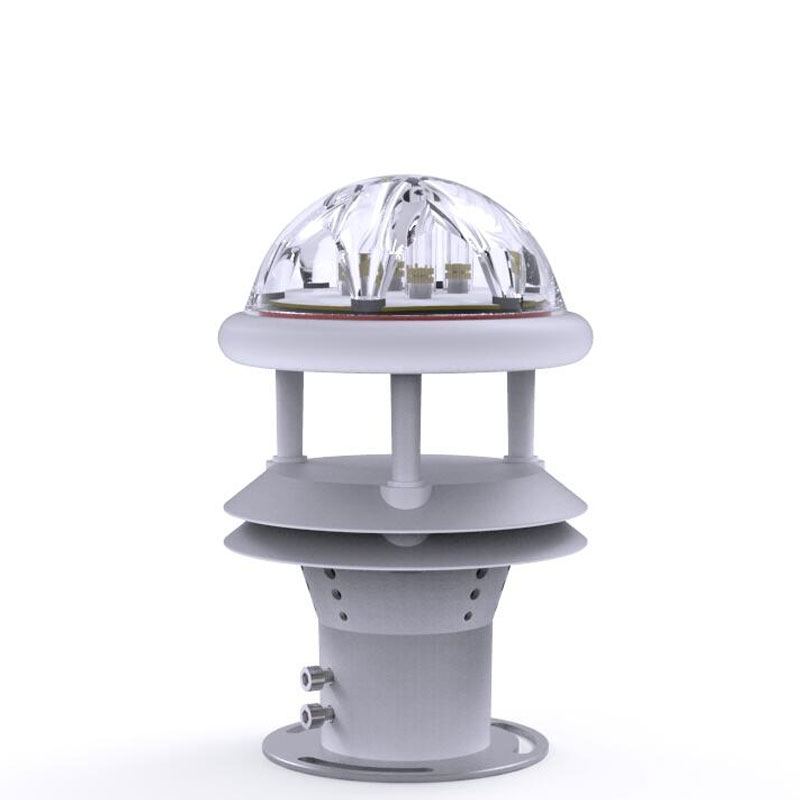
Model:FT-G1
Brand:tianqiong
1.Introduction to Optical Rain Gauge Products
Optical Rain Gauge uses an infrared beam to sense water hitting its outer surface, detecting the size of raindrops and providing the user with information about the intensity of the rainfall.Optical Rain Gauge uses three-channel narrowband infrared detectors and pure sinusoidal AC signal source.It has the advantages of high accuracy, strong ambient light resistance, maintenance-free, and compatible with other optical sensors (light, ultraviolet radiation, total radiation).It can be widely used in meteorological, agricultural, municipal, transportation and other industries.The sensor is designed with a low power consumption and can be used in unattended observation stations in the field.
2.Optical Rain Gauge product features
Optical Rain Gauge uses a pure sinusoidal infrared light source, a built-in narrowband filter, and a rain-sensitive surface of 78 square centimeters.It can measure rainfall with high accuracy and be free from high-intensity sunlight and other lights.The high light transmittance rain cover does not affect direct sunlight and is compatible with other built-in optical sensors, such as light, total radiation, ultraviolet sensors, etc.(Invention Patent, Patent No.ZL 2022 1 1306149.3)
3.Optical Rain Gauge technical parameters
1.Supply voltage: DC12V
2.Sensor power consumption: 0.12W
3.Current: 10ma DC12V
4.Rainfall resolution: 0.01mm
5.Rain intensity range: 0-4mm/min
6.Measurement accuracy: ≤±4%
7.Working environment: -40~85℃, 0~100%RH
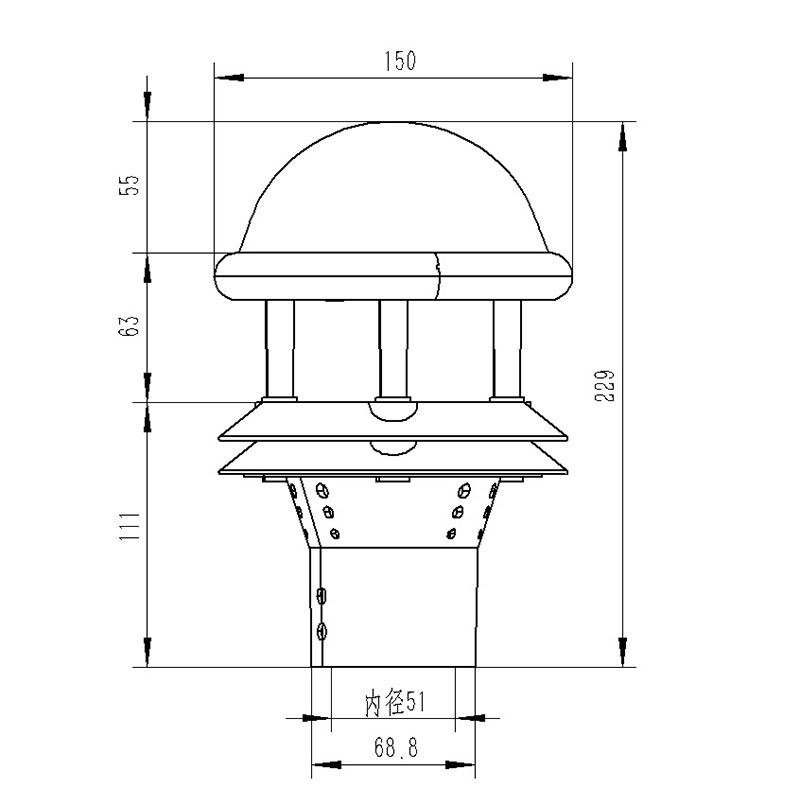
4.Optical Rain Gauge product size diagram
5.Precautions for Optical Rain Gauge
1.The radius of 1 meter around the sensor level is not blocked to avoid the influence of water droplets.
2.The above sensor installation position should avoid obstruction of trees, and the oblique direction should also avoid obstruction of shade.
3.To ensure measurement accuracy, the sensor should be installed horizontally
The Ultrasonic Wind Speed Direction Sensor achieves measurement based on the characteristics of ultrasonic waves propagating in the air. It accurately calculates the wind speed and direction by measuring the time difference of ultrasonic waves propagating in different directions. This non-mechanical...
Hospital water quality monitoring can accurately monitor key parameters of water bodies online, such as residual chlorine, pH, and water temperature. It supports multi-sensor expansion configurations, retains and exports historical monitoring and alarm data, and connects to various devices usi...
Meteorology encompasses a wide range of elements, such as rain, ice, wind, frost, clouds, and temperature, among others. In the power system, "micro-meteorology" is different from what is described in meteorology. Power micro-meteorology refers to the meteorological conditions in a small s...
These portable anemometers are easy to operate, equipped with precision sensors to measure wind speed, direction, and average wind speed. An internal storage chip stores long-term monitoring data, making them suitable for field meteorological monitoring across various industries....


 Get a Free Quote
 Skype
Skype
 whatsapp
 mail
mail