Tianqiong Sensor IOT Technology Co., Ltd
Sales Manager:Ms. Emily Wang
Cel,Whatsapp,Wechat:+86 15898932201
Email:info@fengtutec.com
Add:No. 155 Optoelectronic Industry Accelerator, Gaoxin District, Weifang, Shandong, China


Sales Manager:Ms. Emily Wang
Cel,Whatsapp,Wechat:+86 15898932201
Email:info@fengtutec.com
Add:No. 155 Optoelectronic Industry Accelerator, Gaoxin District, Weifang, Shandong, China
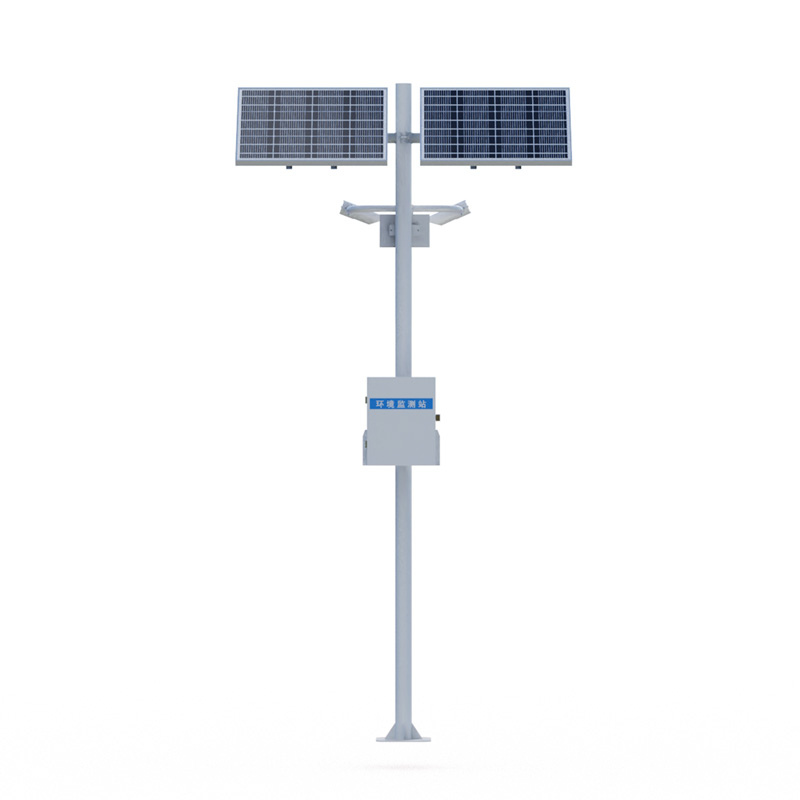
Model:FT-NJD50
Brand:tianqiong
1.Visibility monitoring station product introduction
visibility monitoring station is a specialized remote automated meteorological device designed to measure atmospheric visibility, which reflects atmospheric turbidity.The NJD50 Visibility monitoring station consists of several Visibility monitoring stations distributed along the expressway.It automatically monitors the visibility, current weather phenomena, etc.along the expressway, and promptly transmits the monitoring information to the monitoring for reference for the traffic control system.It can issue warning information in a timely manner under harsh weather conditions, and informs managers and drivers in various ways to improve the driving level of the expressway.In addition, it can also be added at any time according to the actual needs of users: temperature, humidity, wind, pressure and rain integrated meteorological stations, laser remote sensing road condition detectors, etc.to achieve multi-factor meteorological observation.
Visibility monitoring station system composition: visibility sensor, collector, pole bracket, power supply system, cloud platform
2.Visibility monitoring station product features
1.Visibility meter: consists of main components such as light emitter, light receiver and microprocessor controller.The transmitter emits infrared pulsed light, and the receiver simultaneously detects the pulse light intensity of forward scattered aerosol particles in the atmosphere.All measurement information is collected by the microprocessor controller and converted into meteorological optical range through a special mathematical model algorithm.
2.Standard GPRS wireless transmission
3.Free choice of two power supply methods: solar power supply and mains power supply
3.Visibility monitoring station technical parameters
Visibility: Principle of measurement aerosol pre-scattering, 0-50km (≤2km ±2%2km~10km ±5%>10km ±10%) resolution 1m
| Main parameters | Parameter range | Resolution | error |
| Range | 50km | 1m | ≤2km ±2%2km~10km ±5%>10km ±10% |
| Repeatability | ≤4% | ||
| Weather phenomena | Fog, rain, snow, mixed precipitation, sunny | ||
| Weather phenomenon recognition rate | ≥95% | ||
| Operating temperature | -40~60℃ | ||
| Working humidity | 0~100%RH | ||
| Working power supply | 12~24V | ||
| Power consumption | 1W | ||
| size | 610x230x360mm (Length x Width x Height) | ||
| weight | ≤10kg | ||
4.Introduction to the Visibility monitoring station cloud platform
1.CS architecture software platform, supports direct observation of mobile phones and PC browsers without additional software installation.
2.Support multiple accounts and multiple devices to log in
3.Support real-time data display and historical data display dashboard
4.Cloud server and cloud data storage are stable and reliable, easy to expand, and load balancing.
5.Support SMS alarm and threshold settings
6.Support map display and viewing device information.
7.Support data curve analysis
8.Support data export table form
9.Supports data forwarding, HJ-212 protocol, TCP forwarding, http protocol, etc.
10.Support data post-processing function
11.Support external running of javascript scripts
The weather stations used in the agricultural field are called Agricultural Weather Stations. In order to better serve agricultural production, in addition to the conventional meteorological elements, Agricultural Weather Stations will also focus on increasing the monitoring of soil-related elements...
The Handheld Weather meter is extremely lightweight with an ergonomic design that can be held and operated with one hand. It can real-time monitor five core meteorological elements: wind speed, wind direction, temperature, humidity, and atmospheric pressure. Its rugged housing design can withstand c...
Rat Bait Station utilizes the Internet of Things (IoT) and intelligent recognition technology to achieve 24/7 rodent activity data collection and remote control management....
Digital Weather Station is a highly integrated, low-power, and rapidly deployable high-precision automatic meteorological observation device. It provides real-time monitoring of nine key meteorological elements—including wind speed, wind direction, temperature, humidity, atmospheric pressure,...


 Get a Free Quote
 Skype
Skype
 whatsapp
 mail
mail