Tianqiong Sensor IOT Technology Co., Ltd
Sales Manager:Ms. Emily Wang
Cel,Whatsapp,Wechat:+86 15898932201
Email:info@fengtutec.com
Add:No. 155 Optoelectronic Industry Accelerator, Gaoxin District, Weifang, Shandong, China


Sales Manager:Ms. Emily Wang
Cel,Whatsapp,Wechat:+86 15898932201
Email:info@fengtutec.com
Add:No. 155 Optoelectronic Industry Accelerator, Gaoxin District, Weifang, Shandong, China
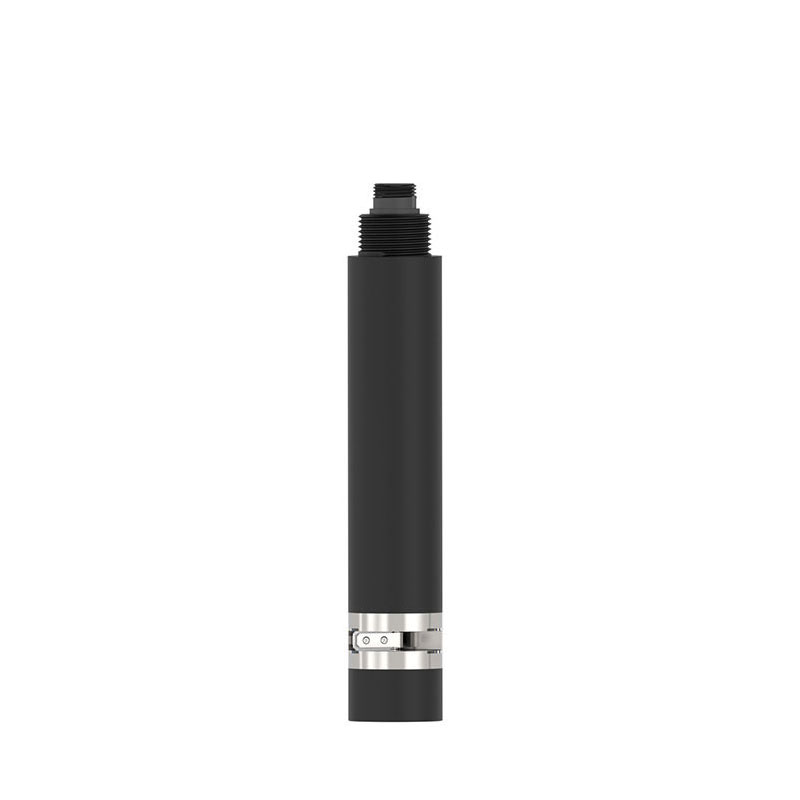
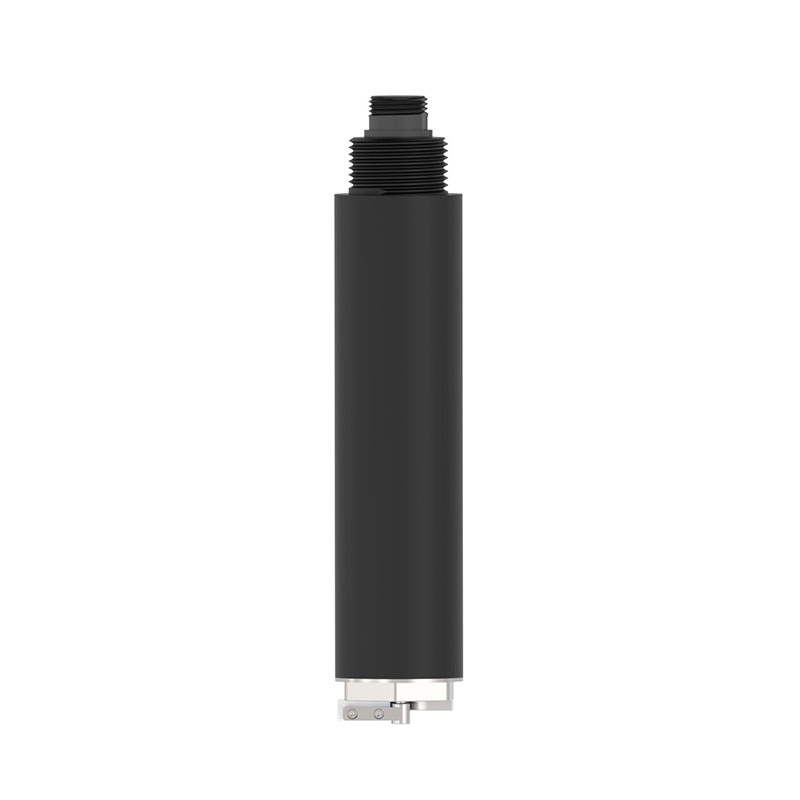
Model:FT-S18S
Brand:tianqiong
1.Biochemical oxygen demand sensor Working Principle
Biochemical oxygen demand sensor uses optical measurement principles to monitor the biological oxygen demand in water bodies in real time and accurately.Biochemical oxygen demand sensor employs a dual-light source for measurement: one for COD and one for turbidity.
Because dissolved organic matter in water absorbs ultraviolet light, the COD value can be measured by the transmittance of the light source. The turbidity measurement function automatically compensates for turbidity. Simultaneously, temperature is collected for temperature compensation. The BOD value is calculated from the COD value.
2.Biochemical oxygen demand sensor Technical parameters
| Measurement principle | UV254 absorption method Dual-source measurement |
| COD range | Default 0 to 1000 mg/L |
| BOD range | Default 0 to 400 mg/L |
| Resolution | 0.1mg/L |
| Precision | ±5%, ±0.3℃ |
| NTU Range | Default 0-400NTU |
| Resolution | 0.1NTU |
| Temperature compensation | Automatic temperature compensation |
| Self-cleaning function | Equipped with an automatic cleaner to prevent biofouling and light window contamination, ensuring stable long-term monitoring; the automatic cleaning time and frequency can be set, with a power consumption of 0.7W. |
| Output method | RS-485 (Modbus/RTU) |
| Storage temperature | -5-+65℃ |
| Work environment | 0~50℃,≤0.2MPa |
| Installation method | Immersion mounting, 3/4 NPT mounting thread |
| Cable length | 5m |
| Power supply | DC: 12V-24V |
| Protection level | IP68 |
| Calibration method | Two-point calibration |
| Case material | ABS+316L stainless steel |
3.Biochemical oxygen demand sensor Size/Installation
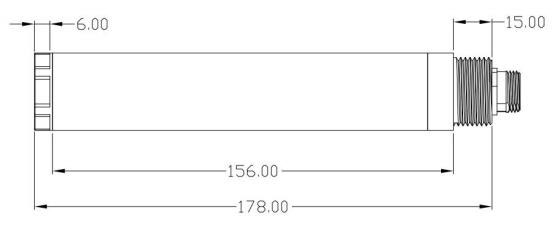
1.Biochemical oxygen demand sensor Dimensions
2.Biochemical oxygen demand sensor Wiring Diagram
The cable is a 5-core shielded cable:
Red wire—Power wire; Black wire—Ground wire; Green wire—485A; White wire—485B
3. Biochemical oxygen demand sensor Installation
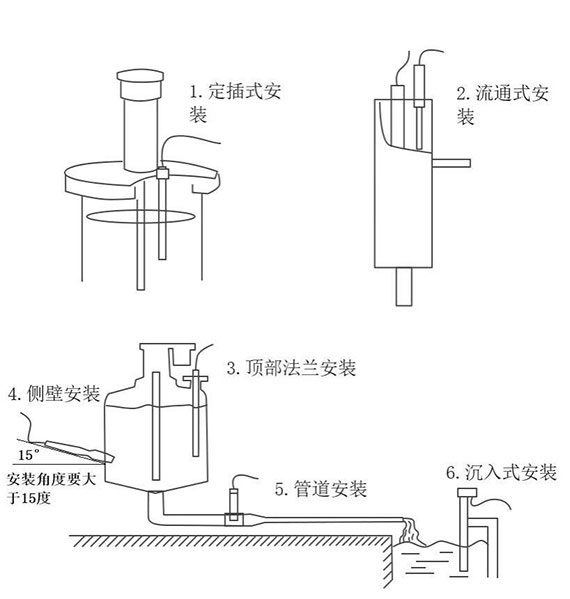
Note: The sensor must not be installed upside down; it should be installed at an angle of at least 15 degrees.
4.Biochemical oxygen demand sensor Maintenance and Care
Sensor Maintenance:
If the sensor needs cleaning, use warm water and a suitable amount of detergent.
Caution:
Avoid strong vibrations that could damage the front transparent glass. Do not scratch it with hard objects.
5.Biochemical oxygen demand sensor User Calibration
The sensor undergoes rigorous calibration at the factory and generally does not require user calibration. If user calibration was performed, the factory reset command can be executed to restore it.
5.1 Zero-Point Calibration
Immerse the sensor in a container using distilled or purified water. After 30 seconds of stable readings, perform turbidity and COD zero-point calibrations according to the communication commands.
5.2 Slope Calibration
Immerse the sensor in a solution container with a known turbidity value. After 30 seconds of stable readings, perform turbidity slope calibration according to the communication commands.
Immerse the sensor in a solution container with a known COD value. After 30 seconds of stable readings, perform COD slope calibration according to the communication commands.
A Cellular Weather Station is a highly integrated, portable meteorological observation device capable of real-time monitoring of multiple environmental and meteorological parameters, providing flexible data support for field monitoring, emergency response, scientific research, education, and other f...
The Portable Weather Station is a highly integrated, low-power, and rapidly deployable device designed for high-precision automated meteorological observation. It supports wireless data transmission and allows for quick, calibration-free deployment. With a total weight of no more than 5 kilogr...
Ultrasonic weather station uses non-contact sensing technology to accurately monitor weather conditions and leverages 4G wireless transmission to provide borderless data services for smart agriculture....
In the photovoltaic field, "black heart" is a serious quality issue, manifested as the luminous intensity of some areas inside the photovoltaic module being significantly lower than the normal level, presenting black or dark areas. This indicates that the performance of the battery cells i...


 Get a Free Quote
 Skype
Skype
 whatsapp
 mail
mail