Tianqiong Sensor IOT Technology Co., Ltd
Sales Manager:Ms. Emily Wang
Cel,Whatsapp,Wechat:+86 15898932201
Email:info@fengtutec.com
Add:No. 155 Optoelectronic Industry Accelerator, Gaoxin District, Weifang, Shandong, China


Sales Manager:Ms. Emily Wang
Cel,Whatsapp,Wechat:+86 15898932201
Email:info@fengtutec.com
Add:No. 155 Optoelectronic Industry Accelerator, Gaoxin District, Weifang, Shandong, China
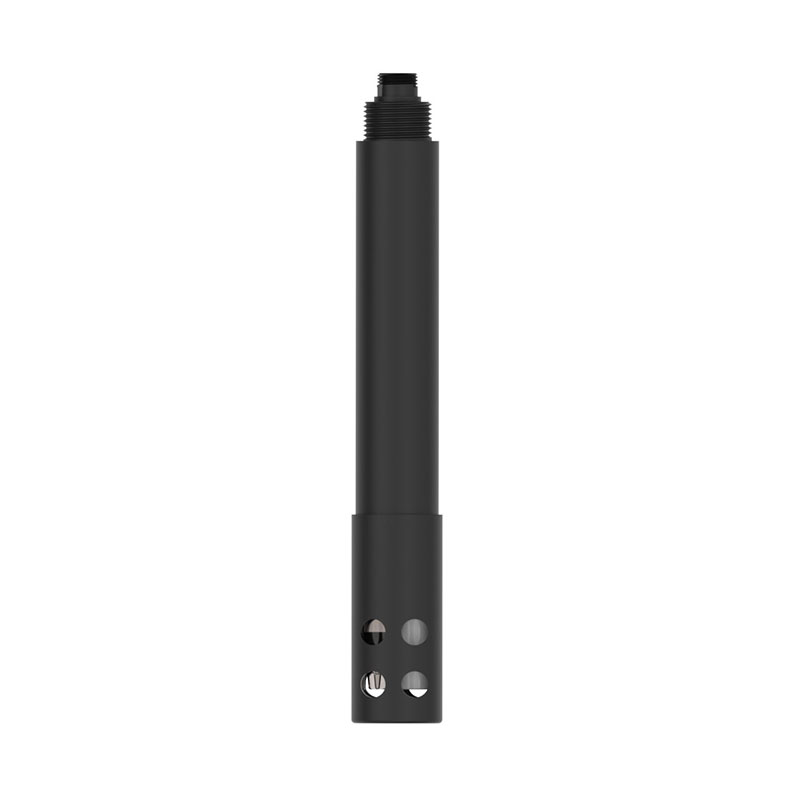
Model:FT-S14
Brand:tianqiong
1.Description of Chloride Ion Sensor application environment
Chloride Ion Sensor uses an Inductively Selective Electrode (ISE) to determine the concentration of chloride (CL) in solution. It is used in natural water, surface water, groundwater and aquaculture.The S14 Chloride Ion Sensor uses ion selective electrodes to test free chloride ions in water.It is fast, simple and economical, and can meet the measurement requirements of chloride ions in most industrial environment applications.
Signal output: RS-485 (MODBUS-RTU)
2.Chloride Ion Sensor technical parameters
| Measurement principle | Ion selection method |
| Output method | RS-485 (MODBUS-RTU) |
| Range | 0-3500.0mg/L |
| Resolution | 0.1mg/L |
| Accuracy | ±5%; ±0.3℃ |
| Housing material | ABS |
| Cable length | 5m |
| Power supply voltage | DC12-24V (0.4W@12V) |
| Calibration method | Two-point calibration |
| Measurement environment | 0-50℃ (no freezing) |
| Waterproof grade | IP68 |
| Installation method | Immersive mounting, NPT3/4 thread |
3.Chloride Ion Sensor Maintenance and Maintenance
In order to obtain the most stable results, it is recommended to soak the ion selection electrode in a standard solution (usually 100ppm) for 10-15 minutes before measurement until the reading is stable.
In order to obtain high-precision results, it is recommended to repeat these steps: remove the electrode from the standard solution, clean, suck dry, and then immerse it in the standard solution (soak for at least 2 minutes to obtain a stable reading) to ensure that the electrode is properly wetted and pretreated.
When the electrode is used for the first time or after long-term storage, it is necessary to soak in the standard solution overnight or even 48 hours to obtain a stable reading.After the pretreatment, spray the electrode with deionized water and carefully suck it dry with absorbent paper instead of drying it.
Place the sensor vertically when not in use, and do not place it horizontally for a long time.
The electrodes should be kept dry when the sensor is not in use for a long time.
In the era of great health, the intelligent health care industry is thriving, and people are paying increasing attention to a healthy living environment. Negative oxygen ions, known as the "vitamin of the air," are becoming the focus of the intelligent health care field. The Negative oxyge...
Pool and Spa Water Quality Monitoring provides 24/7 online monitoring of core parameters including pool water temperature, pH, residual chlorine, turbidity, dissolved oxygen, and ORP. Data recording is accurate and traceable, supporting sensor expansion, data export, and alarms for exceeding l...
Combustion is a common energy conversion method.During combustion, flue gas is emitted. Analyzing its composition—primarily components like oxygen, carbon monoxide (CO), and carbon dioxide (CO₂)—helps determine if combustion is complete and calculate combustion efficiency.The level of combustion...
This lightweight, portable weather station is equipped with precision sensors and a smart chip. It is easy to operate and can simultaneously collect multiple meteorological and location data, making it suitable for various fire emergency and outdoor disaster monitoring scenarios....


 Get a Free Quote
 Skype
Skype
 whatsapp
 mail
mail