Tianqiong Sensor IOT Technology Co., Ltd
Sales Manager:Ms. Emily Wang
Cel,Whatsapp,Wechat:+86 15898932201
Email:info@fengtutec.com
Add:No. 155 Optoelectronic Industry Accelerator, Gaoxin District, Weifang, Shandong, China


Sales Manager:Ms. Emily Wang
Cel,Whatsapp,Wechat:+86 15898932201
Email:info@fengtutec.com
Add:No. 155 Optoelectronic Industry Accelerator, Gaoxin District, Weifang, Shandong, China
time:2026-03-20 11:33:35 source:Weather Station viewed:294 time
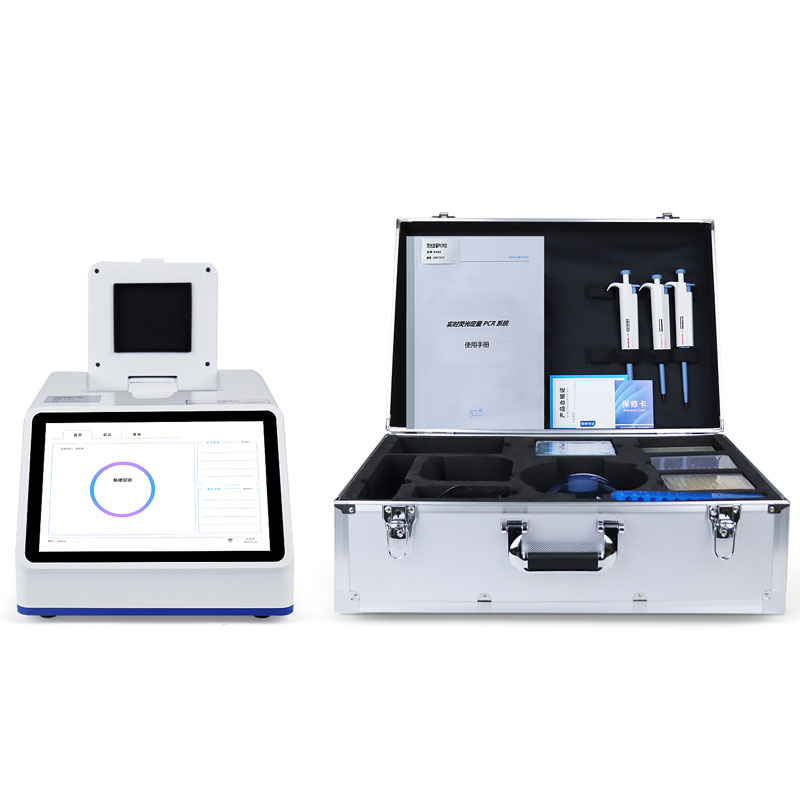
Transgene detection is a food testing device based on real-time quantitative fluorescence PCR technology, capable of performing qualitative detection of animal-derived ingredients such as pork, beef, mutton, chicken, and duck. By extracting DNA from meat samples and subjecting it to amplification analysis, the device can complete the authentication of meat products within 30 to 60 minutes, making it suitable for on-site testing requirements in food safety regulation as well as production and distribution stages.
Transgene detection employs real-time quantitative fluorescence PCR technology as its core detection principle, utilizing specific primers and probes to amplify and identify DNA sequences present in meat samples. The detection process begins with the homogenization of the sample and the extraction of DNA; after adding primers and probes to a reaction tube, the tube is placed into the instrument for PCR amplification. The device monitors the amplification process in real-time via fluorescence signals to generate amplification curves, ultimately determining—based on the intensity of the fluorescence signals—whether the sample contains specific animal-derived ingredients.
In terms of detection scope, the device can identify ingredients derived from a wide range of common livestock and poultry, including pigs, cattle, sheep, horses, donkeys, chickens, and ducks; certain models are also capable of detecting markers from sources such as geese, mice, and foxes. The limit of detection typically reaches a mass fraction of 0.5%—meaning it can detect 0.5 grams of a target ingredient within a 100-gram sample. Regarding detection sensitivity, select models are capable of identifying even single-copy DNA templates, with a linear detection range spanning from 1 to 10^10 copies.
The device's operational workflow features integrated automation; the all-in-one real-time fluorescence PCR instrument consolidates nucleic acid extraction, amplification, and detection functions into a single unit. Operators need only complete three simple steps: sample loading, instrument setup, and result reading. A single test run allows for the simultaneous analysis of up to 16 different markers, reducing the total detection time from the several hours typically required by traditional methods to less than one hour. This technological system is applicable not only to fresh meat products but also retains its detection capabilities for foods that have undergone high-temperature processing.
The device features a built-in touchscreen display (approximately 10 inches in size) and runs on either an Android or a dedicated proprietary operating system, supporting advanced functions such as amplification curve analysis, standard curve quantification, and melting curve analysis. Data can be exported to a computer via a USB interface; supported export formats include XLS, CSV, DOCX, and PDF, facilitating the generation of inspection reports. Certain models feature Wi-Fi, Bluetooth, and 4G modules, enabling the remote uploading and traceability of inspection data.
Device dimensions typically range from 270 to 385 millimeters in length, with a weight of approximately 4 to 7.3 kilograms. Their portable design meets the dual requirements of both stationary laboratory use and on-site field inspections. The devices operate on a 220V mains power supply or via a power adapter, with the maximum operating power for select models reaching 550 watts.
This technology provides technical support for combating meat adulteration. Future development directions include establishing a database of food-derived ingredients and integrating with blockchain technology to ensure the traceability and immutability of inspection data.
Pine wood nematode rapid detection device is a professional device utilizing molecular biology techniques. It integrates the processes of pine wood nematode isolation, DNA extraction, and quantitative fluorescence PCR detection to achieve rapid and automated detection of this harmful organism. The instrument automatically analyzes and displays results, and prints reports, eliminating the need for manual interpretation. It is used for forestry quarantine and infected wood screening....
Many critical defects in solar cells, such as tiny microcracks, are completely hidden inside the cells and cannot be detected by the naked eye or even ordinary cameras. These defects can seriously affect the power generation efficiency and lifespan of the modules. Therefore, EL (Electroluminescence)...
In a certain farmland, the LED electronic display of "standard agrometeorological stations" real-time presents data such as soil water content, salinity, and ground temperature, providing key basis for farmers' scientific planting. The new-generation standard agrometeorological station...
The microclimate of farmland refers to the small-scale climatic environment formed by the interaction among the surface air layer, soil layer and crop population in the farmland. It is reflected by the values of agricultural meteorological elements such as radiation, air temperature and humidity, wi...


 Skype
Skype
 whatsapp
 mail
mail