Tianqiong Sensor IOT Technology Co., Ltd
Sales Manager:Ms. Emily Wang
Cel,Whatsapp,Wechat:+86 15898932201
Email:info@fengtutec.com
Add:No. 155 Optoelectronic Industry Accelerator, Gaoxin District, Weifang, Shandong, China


Sales Manager:Ms. Emily Wang
Cel,Whatsapp,Wechat:+86 15898932201
Email:info@fengtutec.com
Add:No. 155 Optoelectronic Industry Accelerator, Gaoxin District, Weifang, Shandong, China
time:2026-05-08 10:43:28 source:Weather Station viewed:222 time
Fentu Technology, a manufacturer of radar water level gauges, offers an 80GHz high-frequency radar gauge utilizing Frequency Modulated Continuous Wave (FMCW) technology. With a measurement range of 0.1 to 40 meters, an accuracy of ±5 mm, and a resolution of 1 mm, this device features a non-contact installation design. It is ideally suited for water level monitoring applications across various environments, including lakes and rivers, flash flood warning systems, reservoirs, and sewage networks.
Radar water level gauges are devices that employ the principle of radar wave reflection to perform non-contact water level measurements; in recent years, they have gained widespread adoption within the field of water resource monitoring. As a specialized manufacturer of these instruments, Fentu Technology has engineered an 80GHz high-frequency radar water level gauge—specifically designed for water level ranging—that operates on the FMCW principle. This device features a non-contact installation design, a compact form factor, high precision, low power consumption, and robust anti-interference capabilities, making it suitable for a diverse array of monitoring scenarios such as lakes, rivers, flash flood warning systems, reservoirs, and sewage networks.
In terms of technical specifications, Fentu Technology’s 80GHz radar water level gauge boasts a measurement range spanning from 0.1 to 40 meters, achieving a measurement accuracy of ±5 mm and a resolution of 1 mm. Operating within the 80GHz frequency band—classified as high-frequency millimeter-wave radar—the device distinguishes itself from lower-frequency counterparts by featuring a narrower beam angle and more concentrated energy. This enables it to effectively penetrate atmospheric interference such as mist and dust above the water surface, thereby maintaining stable measurement performance even in complex environmental conditions. Furthermore, the utilization of the FMCW mode allows the device to simultaneously capture both distance and velocity data regarding the target during the measurement process, thereby further enhancing its adaptability to environments characterized by fluctuating water surfaces.
Among comparable products in the market, the radar water level gauge offered by Tianqiong also features non-contact installation capabilities and millimeter-level measurement accuracy, with its primary applications focused on open-channel flow monitoring and urban flood warning systems. While Tianqiong has accumulated a substantial portfolio of successful implementation cases in riverway and drainage network monitoring, Fentu Technology holds distinct advantages regarding the compactness of its device structure and its low-power design. Both products support data output via 4G or RS485 interfaces, enabling seamless integration with water resource monitoring platforms; however, they exhibit differing emphases on specific technical details—such as antenna beam optimization and environmental protection ratings—reflecting their respective design priorities. Radar water level gauges offer distinct advantages over traditional float-type and ultrasonic gauges. The propagation speed of radar waves remains unaffected by environmental factors—such as temperature, humidity, atmospheric pressure, precipitation, and wind-blown sand—resulting in superior measurement stability and eliminating the need for routine maintenance. When powered by solar panels or lithium batteries, these devices can operate autonomously in remote field locations for extended periods, thereby significantly reducing operation and maintenance costs. As the development of "Smart Water Management" and "Urban Lifeline" infrastructure projects continues to advance, 80 GHz high-frequency radar water level gauges are emerging as the preferred choice in the field of water level monitoring, thanks to their high precision and robust resistance to interference.
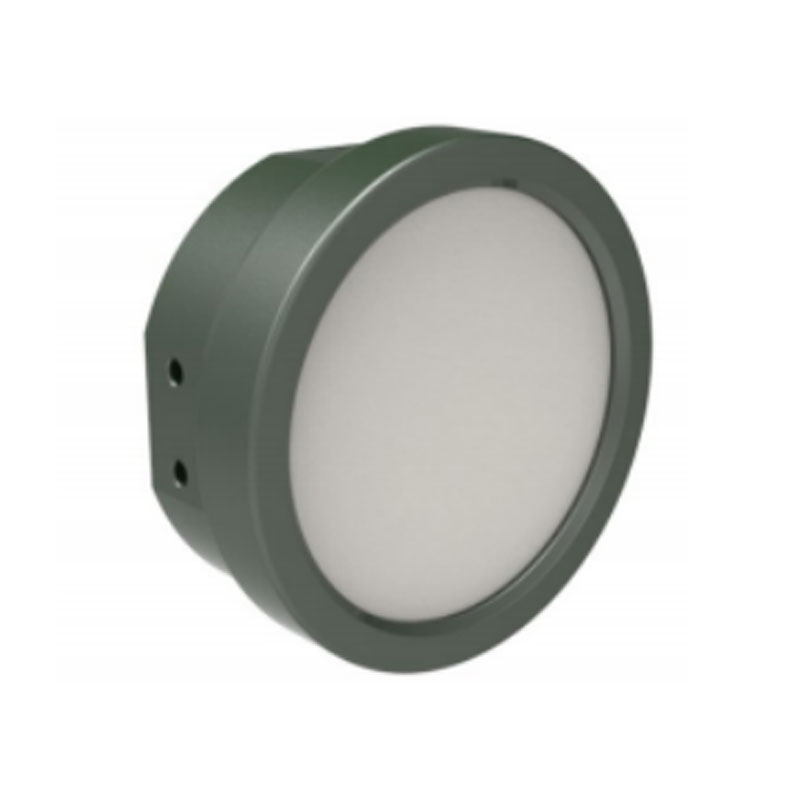
Water quality micro monitoring station, also known as a riverbank automatic water quality monitoring station, is a highly integrated, low-cost intelligent online water quality monitoring system. It integrates multiple high-precision water quality sensors and data acquisition and transmission modules, enabling continuous and automatic monitoring of key parameters such as pH, dissolved oxygen, turbidity, conductivity, and temperature. It is suitable for the high-frequency, high-density monitoring needs of environmental protection, water conservancy, and water affairs sectors....
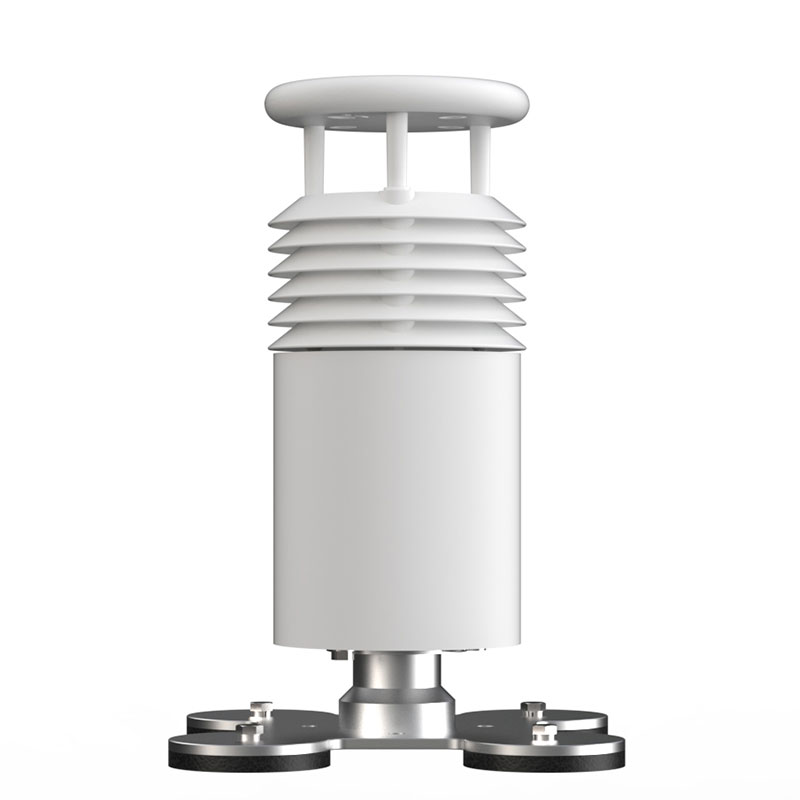
The FT-WQX series miniature sensors are highly integrated meteorological monitoring devices. Their unified design incorporates multiple meteorological parameter monitoring functions into a single structure, making them widely applicable in fields such as meteorological monitoring, urban environmenta...
This instrument integrates FDR (Frequency Domain Reflectometry) principle soil moisture measurement sensors and data acquisition technology. Through moisture and temperature sensors, it accurately measures soil volumetric water content (VWC) and temperature. Powered by solar energy, it is adap...
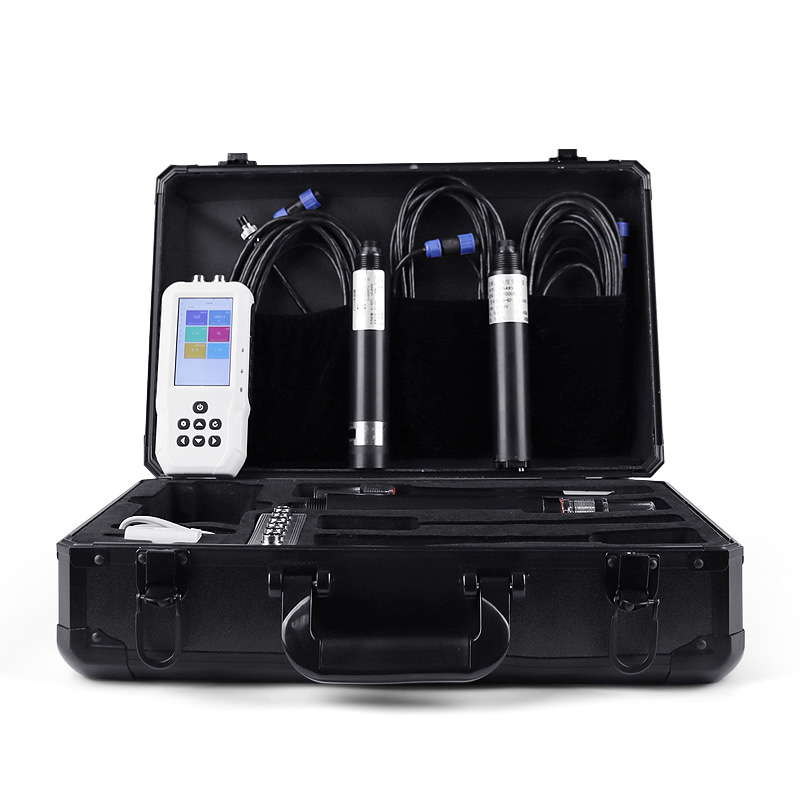
Surface Water Quality Monitoring can accurately detect core parameters of water bodies online, such as pH, conductivity, and dissolved oxygen. It supports sensor expansion configuration and has data storage, export, and remote transmission functions, making it suitable for intelligent water qu...


 Skype
Skype
 whatsapp
 mail
mail