Tianqiong Sensor IOT Technology Co., Ltd
Sales Manager:Ms. Emily Wang
Cel,Whatsapp,Wechat:+86 15898932201
Email:info@fengtutec.com
Add:No. 155 Optoelectronic Industry Accelerator, Gaoxin District, Weifang, Shandong, China


Sales Manager:Ms. Emily Wang
Cel,Whatsapp,Wechat:+86 15898932201
Email:info@fengtutec.com
Add:No. 155 Optoelectronic Industry Accelerator, Gaoxin District, Weifang, Shandong, China
time:2026-11-02 10:24:39 source:Weather Station viewed:1 time
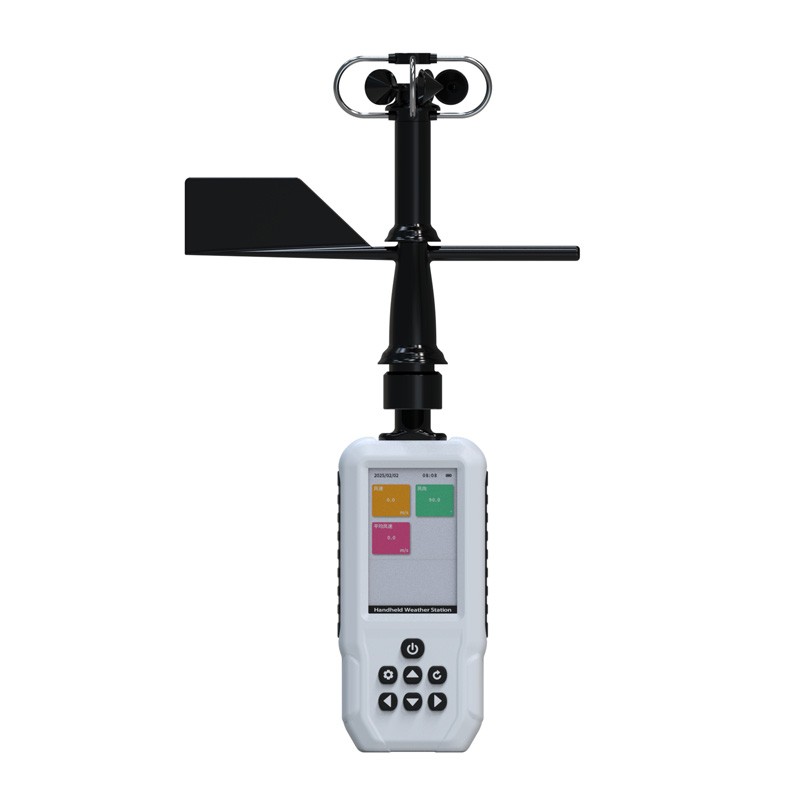
A handheld anemometer is a portable, easy-to-operate meteorological observation instrument. It integrates precision sensors with an intelligent chip to accurately measure key wind parameters: wind speed, wind direction, and average wind speed. Both wind speed and average wind speed can be measured within a range of 0 to 60 m/s, with an accuracy of ±0.3 m/s and a resolution of 0.01 m/s. Wind direction is measured across a full 360-degree range, with an accuracy of ±3 degrees and a resolution of 0.1 degrees. The device features a high-capacity internal FLASH memory chip capable of storing at least one year’s worth of meteorological data. Equipped with a Type-C interface, it allows users to connect directly to a computer to retrieve stored records, facilitating the export, organization, and analysis of wind data. The device is ideal for applications requiring on-site wind parameter acquisition—such as meteorological inspections, agricultural and forestry monitoring, environmental protection assessments, and field research—and can be operated and used to lock data with just one hand, eliminating the need for tedious manual recording.
In terms of practical operation, the sensor performs a self-check upon startup, and the LCD screen displays real-time wind speed and direction values. During measurement, the device should be placed in an open, well-ventilated area, ensuring that no obstructions—such as buildings or people—interfere with the airflow reaching the sensor. For scenarios requiring the measurement of average wind speed, the device can sample continuously over a set period and calculate the mean. A data-locking function allows the user to "freeze" the current reading, making it easier to record values even when they fluctuate. The memory capacity is designed for long-term field use; even with frequent daily measurements, a full year’s worth of data can be retained without the need to regularly clear the storage space. The use of a universal Type-C interface simplifies data export, as a standard data cable is sufficient for connection—no specialized card readers or adapters are required. The device is typically powered by either standard batteries or an internal lithium battery, and its low-power design ensures it can operate continuously throughout an entire workday. In terms of technical specifications, the wind speed measurement range—from 0 to 60 meters per second—covers everything from light breezes to strong gusts. A resolution of 0.01 meters per second allows the device to capture subtle fluctuations in airflow, which is particularly useful for users who need to observe gradual changes in wind speed. With a wind direction accuracy of ±3° and a resolution of 0.1°, the device offers a high level of precision for a handheld instrument, meeting the requirements for general wind direction monitoring. The average wind speed is typically calculated based on samples taken over a specific time window; when used alongside instantaneous wind speed readings, this provides a more comprehensive picture of the wind conditions at a given location. The device is designed with portability in mind—it is lightweight and features a simple, intuitive button layout. Upon startup, it defaults to the measurement interface, and users can easily navigate between different parameters.
It is important to note that the wind speed sensor may lose accuracy over time due to the accumulation of dust or debris; regular cleaning of the sensor surface is essential to ensure data reliability. The device should be stored away from high-temperature or high-humidity environments. If it is not going to be used for an extended period, it is recommended to remove the batteries to prevent leakage that could damage the internal circuitry. When using the device in the field, ensure the Type-C port remains clean and dry to prevent dirt or sand from compromising the connection. The device is not designed for extreme weather conditions; therefore, outdoor measurements should be suspended during thunderstorms or in environments with strong electromagnetic interference. For users who need to analyze data, the exported files are typically saved in a standard format, allowing them to be opened in spreadsheet software on a computer to examine trends in wind speed and direction over time.
Regarding its range of applications, this handheld anemometer is well-suited for monitoring microclimates in agriculture—for instance, by recording wind speed variations across different fields to help determine the optimal timing for irrigation or pesticide application. In environmental monitoring, it can be used in conjunction with other equipment to assess local airflow and dispersion patterns. For field research or educational demonstrations, the device’s clear LCD display and data-hold function facilitate on-site explanations and the recording of data. Compared to stationary weather stations, handheld anemometers offer the advantage of enabling immediate measurements upon arrival at a site—eliminating the need for mounting structures or complex wiring—which makes them ideal for temporary, mobile observation tasks. Furthermore, their built-in storage capacity and communication interfaces allow for the centralized management of scattered data, effectively preventing errors that might otherwise occur during the manual transcription of paper-based records. In short, this device serves as an excellent field tool for wind observation, striking an optimal balance between portability, measurement accuracy, and ease of data management.
As environmental pollution becomes increasingly complex, the limitations of traditional air monitoring methods are gradually becoming apparent. The national ambient air monitoring network has a limited number of stations and high costs, and the method of using points to represent the whole area resu...
Based on IoT technology, Monitor water quality integrates flow stabilization and venting, analysis and testing, system control, and remote communication units. It monitors indicators such as pH, temperature, turbidity, conductivity, dissolved oxygen, COD, ammonia nitrogen, and suspended solids...
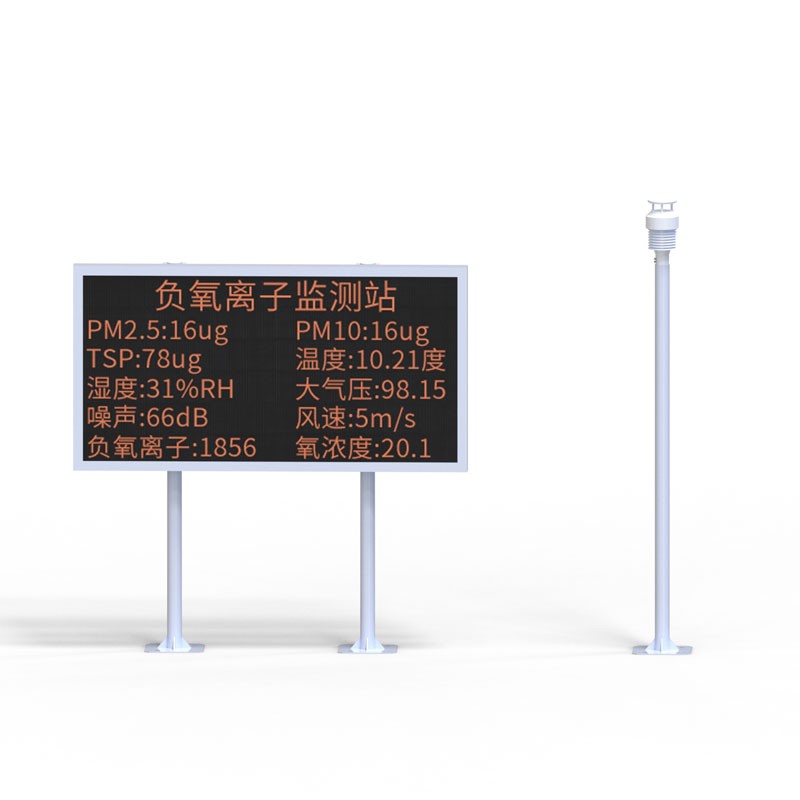
Negative Oxygen Ion Monitoring Station FT-FZ1 is an environmental monitoring device used to measure and display the concentration of negative oxygen ions in the air.The function of FT-FZ1 is to automatically monitor the concentration of negative oxygen ions in the air around the clock. Negative oxyg...
The EL series of DC power supply is an important equipment in the testing link of the photovoltaic industry.It is specially used to provide power support for EL (Electroluminescence) testing of photovoltaic modules. In the production process of photovoltaic modules, EL testing is a key means to dete...


 Skype
 whatsapp
 mail