Tianqiong Sensor IOT Technology Co., Ltd
Sales Manager:Ms. Emily Wang
Cel,Whatsapp,Wechat:+86 15898932201
Email:info@fengtutec.com
Add:No. 155 Optoelectronic Industry Accelerator, Gaoxin District, Weifang, Shandong, China


Sales Manager:Ms. Emily Wang
Cel,Whatsapp,Wechat:+86 15898932201
Email:info@fengtutec.com
Add:No. 155 Optoelectronic Industry Accelerator, Gaoxin District, Weifang, Shandong, China
time:2025-09-01 08:53:28 source:Weather Station viewed:517 time
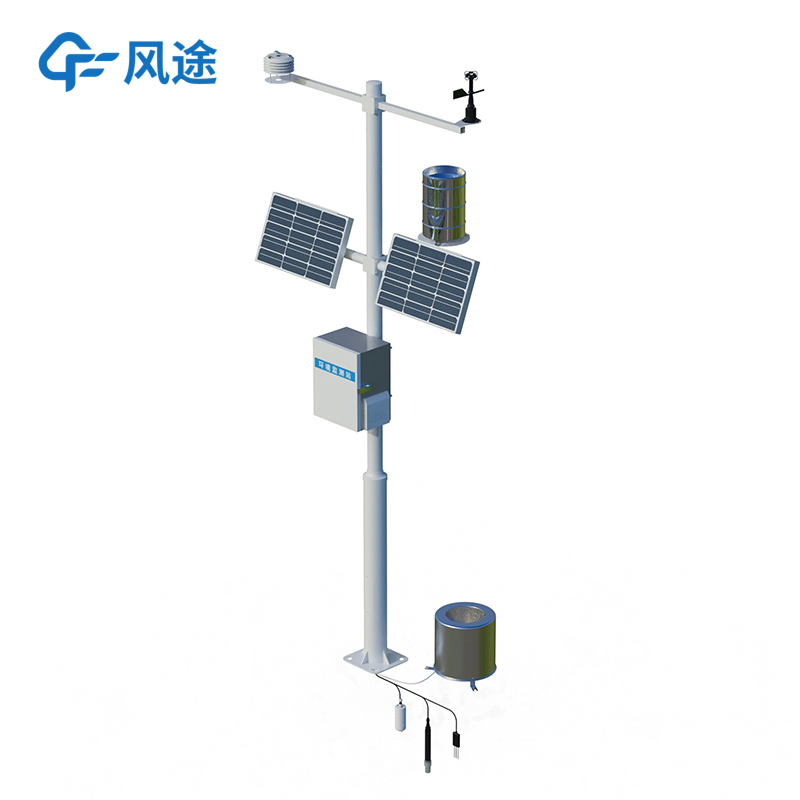
A farmland weather station is a specialized meteorological monitoring device designed specifically for agricultural production. Its core function is to collect, analyze, and transmit meteorological data in real time, providing a scientific basis for agricultural activities. The hardware includes various types of sensors, which can accurately monitor air temperature and humidity, sunlight, precipitation, wind speed and direction, soil temperature and humidity, etc. Some high-end devices can also monitor carbon dioxide concentration and leaf surface temperature.
During the operation of the device, the sensors convert analog signals into digital signals. After being filtered by the data processing module, these digital signals are transmitted to the cloud platform via communication technologies such as 4G and 5G. Users can view data and analysis reports on computers or mobile phones, and can also set thresholds. When indicators are abnormal, the system will automatically issue an early warning. Every early morning, exclusive agricultural groups receive three-day weather forecasts, such as light to moderate rain in 24-48 hours and clearing up after 72 hours, or warnings for wind prevention, helping growers arrange summer field management.
In summer, staff conduct comprehensive maintenance and overhaul of the instruments. They regularly check the device's sensitivity, data transmission stability, and component wear every month, identify potential problems in advance, ensure data accuracy, and lay the foundation for disaster prevention and mitigation.
In practical applications, weather stations can assist in formulating planting plans, such as adjusting irrigation based on soil humidity and modifying greenhouse measures according to sunlight and temperature. In the face of complex summer weather, combined with regional climate conditions, weather stations monitor precipitation, air temperature, and other factors 24 hours a day, formulate daily, weekly, monthly, and annual forecasts, and release them online. In the long run, centering on the concept of "precise monitoring, accurate forecasting, and meticulous services", weather stations continuously improve equipment and technologies, enhance service capabilities, provide support for disaster prevention and mitigation, promote the transformation of agriculture towards "data-driven" development, and make "farming in line with weather conditions" a normal practice in modern agriculture.
Designed for water source applications, this 5-parameter automatic water quality analyzer enables the online monitoring of five core indicators: water temperature, pH, conductivity, dissolved oxygen, and ammonia nitrogen. Leveraging precision sensing and detection technologies, it performs rea...
Water quality monitoring equipment is an integrated device based on Internet of Things (IoT) technology, capable of synchronously monitoring water conductivity, pH, dissolved oxygen, ammonia nitrogen, turbidity, and water temperature online. This system supports automatic data acquisition and transmission, and is suitable for long-term continuous monitoring in drinking water distribution networks and secondary water supply systems....
In low-temperature and snowy weather, bridge icing is a serious problem. Bridge icing not only affects the stability of the bridge structure and shortens its service life, but also poses a great threat to the safety of passing vehicles and pedestrians, and is extremely likely to cause traffic accide...
The microclimate of farmland refers to the small-scale climatic environment formed by the interaction among the surface air layer, soil layer and crop population in the farmland. It is reflected by the values of agricultural meteorological elements such as radiation, air temperature and humidity, wi...


 Skype
Skype
 whatsapp
 mail
mail