Tianqiong Sensor IOT Technology Co., Ltd
Sales Manager:Ms. Emily Wang
Cel,Whatsapp,Wechat:+86 15898932201
Email:info@fengtutec.com
Add:No. 155 Optoelectronic Industry Accelerator, Gaoxin District, Weifang, Shandong, China


Sales Manager:Ms. Emily Wang
Cel,Whatsapp,Wechat:+86 15898932201
Email:info@fengtutec.com
Add:No. 155 Optoelectronic Industry Accelerator, Gaoxin District, Weifang, Shandong, China
time:2026-03-18 13:48:56 source:Weather Station viewed:286 time
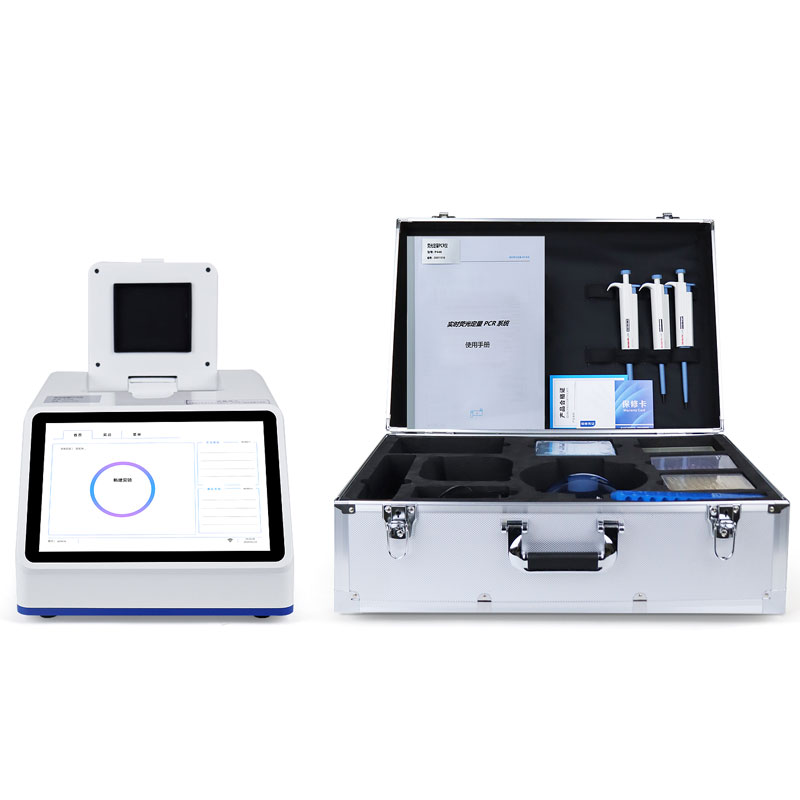
Rapid Meat Authenticity Detector is a specialized device that utilizes real-time fluorescence PCR technology to detect animal-derived ingredients. It enables the rapid qualitative identification of various meats—including pork, beef, lamb, horse, donkey, duck, and chicken. The device is user-friendly and intuitive, requiring no specialized technical training to operate; it employs precise DNA analysis to quickly determine whether meat products have been adulterated, thereby providing reliable technical support for food safety regulation.
Rapid Meat Authenticity Detector is a detection instrument specifically designed to verify the authenticity of meat, with the primary objective of addressing the issue of adulteration in meat and meat products. Employing real-time quantitative fluorescence PCR technology, the device analyzes the DNA components within meat samples to accurately identify the specific animal-derived ingredients present. Compared to traditional methods—such as sensory evaluation or chemical analysis—this molecular biology-based detection technique significantly reduces the testing turnaround time and enhances detection efficiency.
The operational principle of Rapid Meat Authenticity Detector is based on Polymerase Chain Reaction (PCR) technology. The detection process consists of four stages: Sample Preparation—where the meat sample is homogenized and its DNA is extracted; PCR Reaction—where specific primers, probes, and the extracted sample DNA are added to a reaction tube and placed within the detector for nucleic acid amplification; Real-time Detection—where the instrument monitors the DNA amplification process in real-time via fluorescence signals, generating an amplification curve; and Data Analysis—where the authenticity of the meat is determined by analyzing the fluorescence signal intensity and the characteristics of the amplification curve to identify the presence of specific DNA sequences within the sample.
In terms of detection scope, Rapid Meat Authenticity Detector covers the identification of animal-derived ingredients in a wide range of common meats. The device is capable of testing for pork, beef, lamb, horse, donkey, duck, chicken, and various other meats. Certain models offer expanded capabilities, allowing for the detection of ingredients such as goose meat, as well as those derived from rodents or foxes. The device is suitable for analyzing various sample types—including fresh meat, frozen meat, and processed meat products—thereby meeting the diverse testing requirements of different operational environments. The detection process is typically completed within 30 to 60 minutes, while certain models utilizing isothermal amplification technology can yield results in as little as 45 minutes. Ease of operation is a key feature of the Rapid Meat Authenticity Detector. The device typically features a built-in high-definition capacitive touchscreen running on the Android operating system, offering a clean, intuitive interface and clear software-guided workflows. Users need only follow the on-screen prompts to collect samples, load them into the instrument, and initiate the analysis to quickly obtain results—eliminating the need for complex specialized technical training. Compact and lightweight, the instrument boasts a portable design that facilitates easy transport for on-site testing in the field. It is equally suitable for operation within a laboratory setting or for use in outdoor scientific experiments.
In terms of application scenarios, the Rapid Meat Authenticity Detector is widely utilized within the field of food safety regulation. The device enables market regulatory authorities to conduct rapid on-site testing at supermarkets, farmers' markets, and food service establishments. Meat processing enterprises can leverage the equipment for raw material acceptance inspections and outgoing quality control. Furthermore, testing agencies can employ the device to provide clients with professional services for the identification of meat-derived ingredients. The device's data output functionality supports the direct export of experimental results in both graphical and tabular formats. It can generate detailed data reports—encompassing experimental conditions, data coordinates and tables, data analysis parameters, and more—and supports a variety of file formats, including XLS, CSV, DOCX, and PDF.
The high-precision handheld 6-element weather station is a mobile weather observation instrument that integrates precision sensors and smart chips to simultaneously measure wind speed, wind direction, average wind speed, temperature, humidity, and atmospheric pressure. It has built-in large-ca...
Operating on the principle of the ultrasonic Doppler effect, this portable Doppler flow meter is suitable for monitoring rivers, open channels, and pipelines. It features high precision, low power consumption, and ease of maintenance, enabling the simultaneous collection of flow velocity, wate...
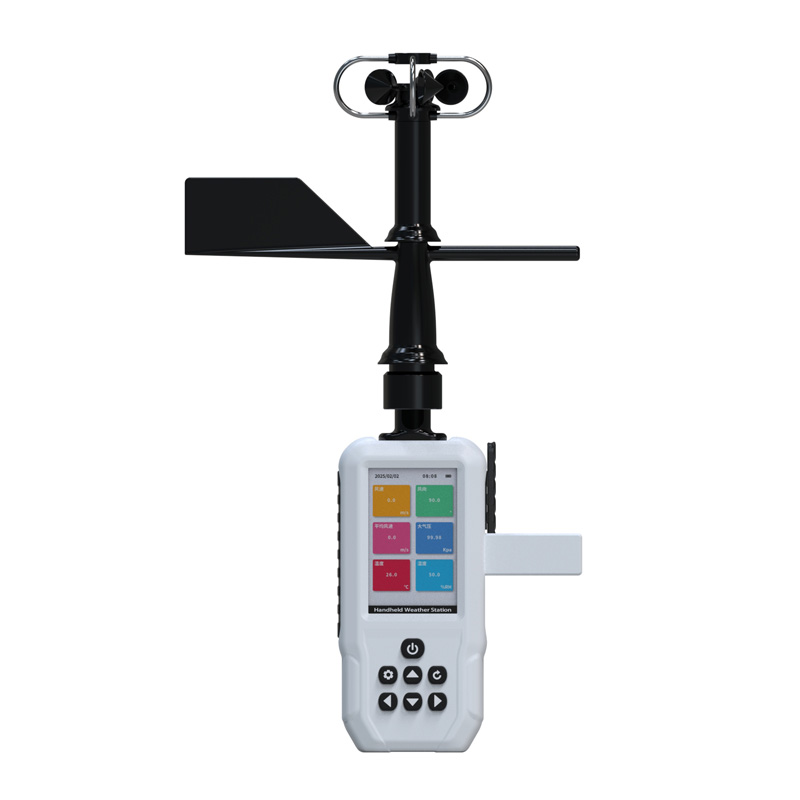
High-precision handheld 6-element weather station is a portable meteorological observation device that integrates wind speed, wind direction, average wind speed, temperature, humidity, and atmospheric pressure monitoring. It utilizes high-precision sensors and is specifically designed for mobile meteorological monitoring, offering ease of carrying and operation....
Handheld Weather Station is a portable observation device integrating multiple meteorological elements. It can simultaneously measure and display five parameters: wind direction, wind speed, atmospheric pressure, temperature, and humidity. It is suitable for meteorological monitoring, outdoor...


 Skype
Skype
 whatsapp
 mail
mail