Tianqiong Sensor IOT Technology Co., Ltd
Sales Manager:Ms. Emily Wang
Cel,Whatsapp,Wechat:+86 15898932201
Email:info@fengtutec.com
Add:No. 155 Optoelectronic Industry Accelerator, Gaoxin District, Weifang, Shandong, China


Sales Manager:Ms. Emily Wang
Cel,Whatsapp,Wechat:+86 15898932201
Email:info@fengtutec.com
Add:No. 155 Optoelectronic Industry Accelerator, Gaoxin District, Weifang, Shandong, China
time:2025-04-11 09:54:34 source:Weather Station viewed:490 time
In the field of meteorological monitoring, refined monitoring has become a trend. As an important part of refined monitoring, micro-meteorological monitoring is dedicated to obtaining more accurate and detailed meteorological information. It focuses on the changes of meteorological elements within a small local area and can provide detailed meteorological data for numerous industries.
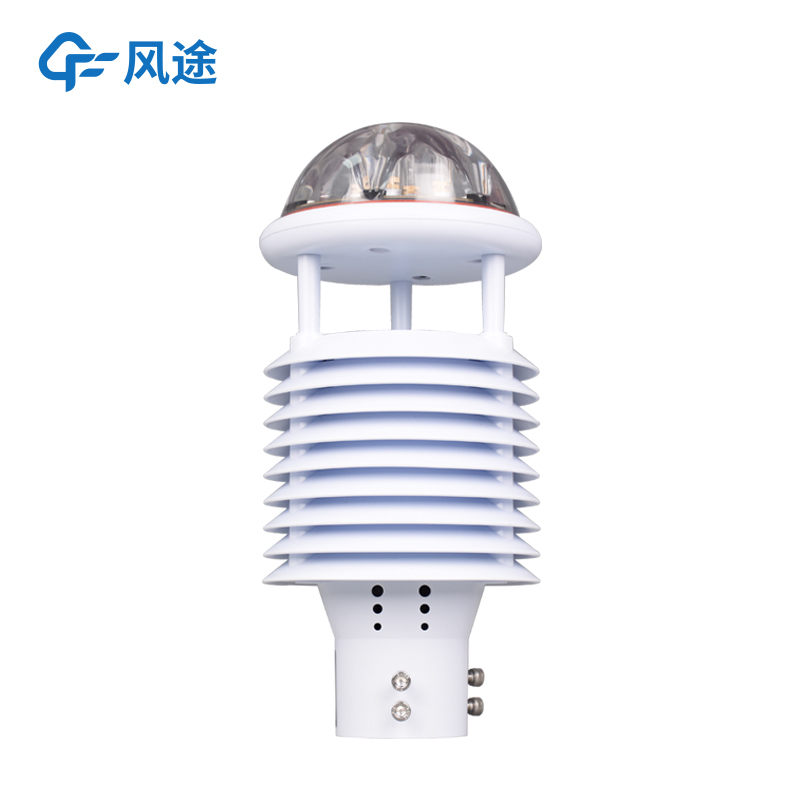
Although traditional meteorological monitoring stations can provide meteorological data over a large area, for the meteorological changes in small local areas, such as urban blocks, specific valleys in mountainous areas, and small agricultural parks, their monitoring accuracy and coverage are insufficient. The All-in-One Weather Sensors is a device that was born to meet the needs of micro-meteorological monitoring. It integrates the measurement functions of multiple meteorological parameters and can simultaneously and real-timely monitor key meteorological elements such as temperature, humidity, air pressure, wind speed, and wind direction. Compared with traditional distributed sensors, it has obvious advantages.
The integrated design is one of its core advantages. It integrates the functions that originally required multiple independent devices for measurement into a compact body. In the past, when constructing a meteorological monitoring system, it was necessary to install a temperature sensor, a humidity sensor, an anemometer and wind vane, etc. separately. Not only was the installation cumbersome, but it was also difficult to synchronize and calibrate the data among various devices. The All-in-One Weather Sensors has solved these problems, simplified the installation and debugging process, and reduced the equipment cost and maintenance workload. Due to its compact structure, it reduces the occupied space, and it is more convenient to install in scenarios with limited space, such as urban rooftops and small scientific research sites.
The All-in-One Weather Sensors also has excellent scalability and can flexibly add other functional modules according to the needs of different application scenarios. For example, in the field of environmental monitoring, an air quality monitoring module can be added to real-timely monitor the concentrations of pollutants in the air, such as PM2.5, PM10, sulfur dioxide, and nitrogen oxides, and comprehensively understand the air quality status of the region. This scalability enables the sensor to adapt to complex and diverse application requirements and provides customized solutions for various fields.
The All-in-One Weather Sensors supports multiple communication methods. For example, serial port communications such as RS485 and RS232 can be easily connected to the existing data acquisition system; it can also be connected to the Ethernet to achieve high-speed data transmission and remote network access; it also supports wireless communications, such as Bluetooth, 3G/4G, etc., getting rid of the constraints of cables. In remote areas, mobile monitoring platforms, or places where it is difficult to lay cables, data transmission can also be easily achieved.
In addition, the manufacturer can customize the measurement parameter range, data output format, appearance size, etc. of the sensor according to the special needs of customers. For example, in the monitoring of high-altitude and low-temperature environments, a sensor that can adapt to extreme low temperatures can be customized; for scientific research projects with special requirements for the data format, the data output method can be adjusted according to the needs.
Currently, the situation of urban atmospheric pollution is becoming increasingly complex, and traditional methods for monitoring atmospheric pollution sources are facing numerous challenges. The existing national control monitoring system for ambient air has problems such as a small number of monito...
The water quality online monitoring micro-station integrates units for water sampling and distribution, analysis, and quality control. Core parameters—including total phosphorus, total nitrogen, chemical oxygen demand (COD), permanganate index, and ammonia nitrogen—are determined in strict a...
Designed for water source applications, this 5-parameter automatic water quality analyzer enables the online monitoring of five core indicators: water temperature, pH, conductivity, dissolved oxygen, and ammonia nitrogen. Leveraging precision sensing and detection technologies, it performs rea...
The Rainfall Real-time Monitoring System is a tool that comprehensively uses sensing, transmission, and data analysis technologies to conduct real-time and accurate monitoring of rainfall, widely applied in meteorological forecasting, flood control and disaster reduction, water resource management,...


 Skype
Skype
 whatsapp
 mail
mail