Tianqiong Sensor IOT Technology Co., Ltd
Sales Manager:Ms. Emily Wang
Cel,Whatsapp,Wechat:+86 15898932201
Email:info@fengtutec.com
Add:No. 155 Optoelectronic Industry Accelerator, Gaoxin District, Weifang, Shandong, China


Sales Manager:Ms. Emily Wang
Cel,Whatsapp,Wechat:+86 15898932201
Email:info@fengtutec.com
Add:No. 155 Optoelectronic Industry Accelerator, Gaoxin District, Weifang, Shandong, China
time:2026-02-24 11:40:25 source:Weather Station viewed:382 time
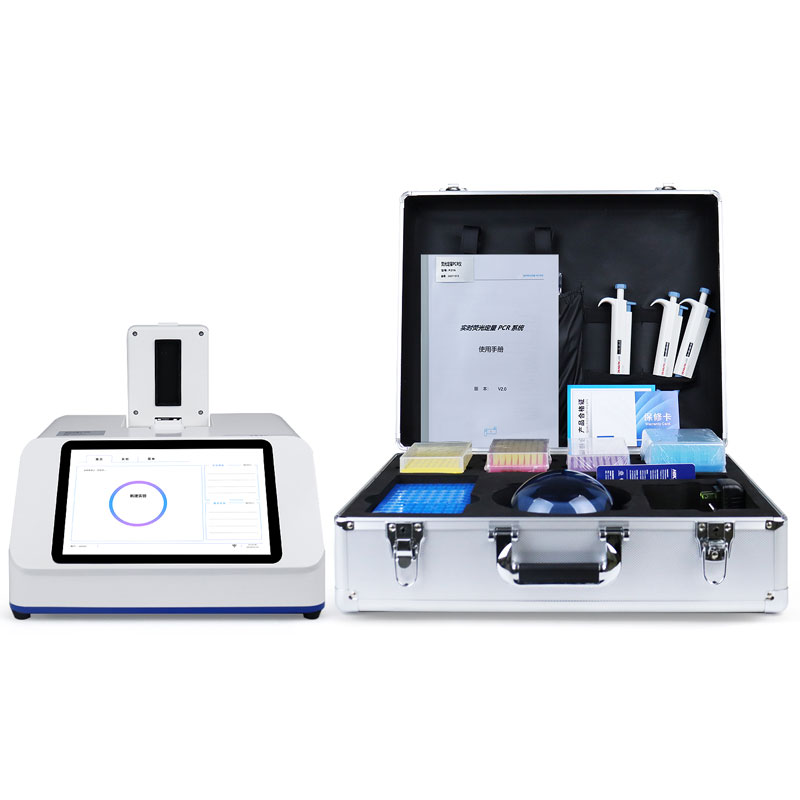
African swine fever laboratory diagnostics is equipped with two independent detection channels and a total of 16 reaction wells, enabling simultaneous processing of two samples for parallel testing. This device is used for the quantitative and rapid diagnosis of livestock diseases such as African swine fever, porcine reproductive and respiratory syndrome (PRRS), and pseudorabies. It is widely used in farms, slaughterhouses, food processing enterprises, and regulatory testing institutions such as livestock bureaus, improving the accuracy of virus detection results.
The prevention and control of major animal diseases such as African swine fever is directly related to the safety of the pig industry and the stability of market supply. Rapid and accurate pathogen detection is a key means to block the spread of epidemics in the breeding, slaughtering, processing, and distribution stages. African swine fever laboratory diagnostics, as a molecular diagnostic device specifically designed for the livestock field, provides efficient on-site testing solutions for various users through optimized hardware configuration and detection processes.
The core design of this detector is reflected in its dual-channel parallel detection architecture. The device has two completely independent optical detection channels, each with 8 reaction wells, for a total of 16 reaction well positions. This structure allows operators to run two different tests simultaneously or process two identical samples for parallel comparison. In practice, a single experiment can complete the amplification and detection of 16 samples, significantly improving throughput and meeting the needs of batch sample screening in slaughterhouses or daily monitoring in farms.
The equipment is based on the principle of real-time fluorescence quantitative polymerase chain reaction (qPCR), using real-time monitoring of the amplification process through fluorescence signal accumulation to achieve quantitative analysis of the target nucleic acid. For African swine fever virus (ASFV), the instrument uses specific primers and probes to accurately identify viral nucleic acids from samples such as pig blood, tissue, saliva, or environmental swabs. The instrument has built-in detection programs for multiple animal diseases, covering not only ASFV but also common swine diseases such as classical swine fever (CSF), porcine reproductive and respiratory syndrome (PRRS), and pseudorabies, reducing equipment procurement costs with its versatility.
The accuracy of the test results is the core evaluation indicator for this type of equipment. The dual-channel 16-well design itself ensures accuracy: the two independent channels can run positive and negative controls separately, monitoring the effectiveness of the detection process in real time; parallel sample testing eliminates random errors. The equipment is equipped with a high-precision temperature control system and optical detection module, ensuring temperature uniformity and fluorescence acquisition stability that meet the requirements for quantitative analysis. The accompanying nucleic acid extraction and amplification reagents have been optimized and validated to further reduce the risk of false negatives and false positives.
In terms of application scenarios, this detector covers multiple links in the livestock industry chain. Farms use it for entry pig quarantine, regular disease monitoring, and screening for abnormal deaths; slaughterhouses use it for rapid pathogen screening during pre-slaughter quarantine and post-slaughter inspection; food processing enterprises use it for random sampling of raw meat to ensure product safety; and agricultural and rural affairs bureaus and animal husbandry and veterinary stations use it as mobile testing equipment for origin quarantine and market supervision. Some models support a portable design for vehicle-mounted use, meeting the needs of emergency field testing.
The operation process is designed to balance professionalism and convenience. A touchscreen guides users through program settings, and pre-stored standard curves eliminate the need for preparing standards for each experiment. After testing, the system automatically analyzes the fluorescence curve, providing quantitative results and positive/negative determinations. Data can be exported to a computer or directly connected to a printer for report output. For non-professional laboratory environments, the closed reagent design and simple operating procedures reduce the risk of contamination. Key maintenance points for daily use of the equipment: Optical components require regular cleaning and calibration, and the temperature control module should be periodically verified. The software system can be upgraded online to update the detection program and data analysis algorithm in a timely manner. Accompanying reagents must be stored under specified conditions and used within their expiration date.
As African swine fever prevention and control becomes routine, the requirements for testing capabilities in the breeding and distribution sectors are constantly increasing. The dual-channel 16-well detector balances throughput and accuracy, helping users establish independent testing capabilities, shorten sample delivery and testing waiting times, and enable rapid isolation and eradication measures in the event of an outbreak, minimizing economic losses.
Handheld Anemometer is a portable meteorological observation instrument. Its wind speed measurement range is 0–30 m/s with an accuracy of ±0.3 m/s and a resolution of 0.01 m/s. Wind direction measurement range is 16 azimuths with an accuracy of ±1 azimuth. The instrument uses a three-cup ro...
The Handheld Weather meter is extremely lightweight with an ergonomic design that can be held and operated with one hand. It can real-time monitor five core meteorological elements: wind speed, wind direction, temperature, humidity, and atmospheric pressure. Its rugged housing design can withstand c...
With the accelerated pace of current urban construction and the frequent occurrence of abnormal climates, the pressure on drainage facilities has increased dramatically, and traditional waterlogging drainage methods are insufficient to withstand waterlogging caused by heavy rainfall. Against this ba...
The FT-YC03 Online Dust Monitoring System is an intelligent monitoring device that integrates multiple sensing and transmission technologies, designed for monitoring dust and noise pollution. It is widely used in environmental supervision and other fields.In the process of urbanization and ind...


 Skype
Skype
 whatsapp
 mail
mail