Tianqiong Sensor IOT Technology Co., Ltd
Sales Manager:Ms. Emily Wang
Cel,Whatsapp,Wechat:+86 15898932201
Email:info@fengtutec.com
Add:No. 155 Optoelectronic Industry Accelerator, Gaoxin District, Weifang, Shandong, China


Sales Manager:Ms. Emily Wang
Cel,Whatsapp,Wechat:+86 15898932201
Email:info@fengtutec.com
Add:No. 155 Optoelectronic Industry Accelerator, Gaoxin District, Weifang, Shandong, China
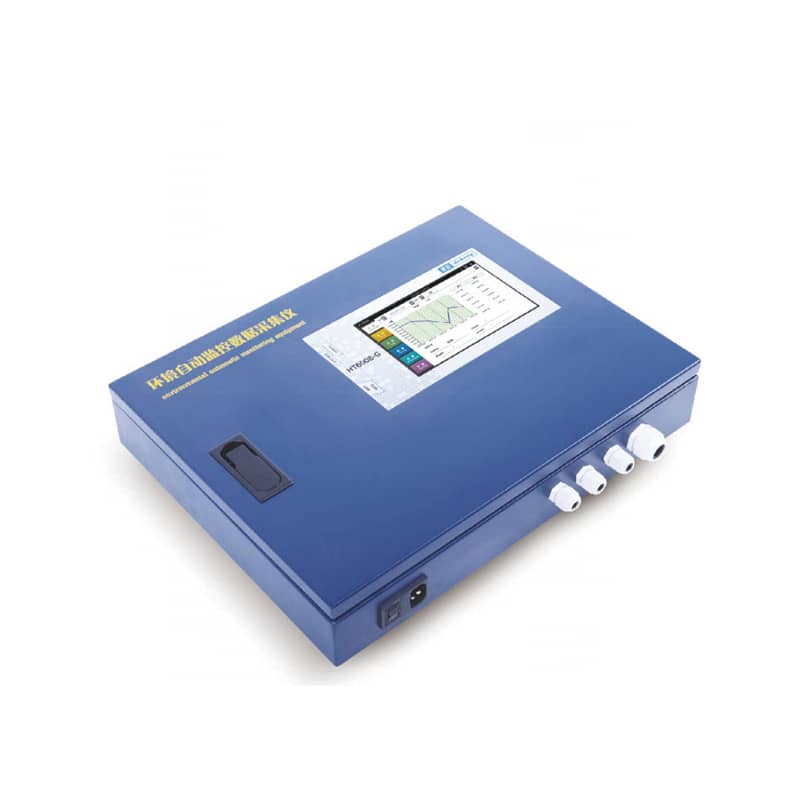
Model:FT-SCY1
Brand:tianqiong
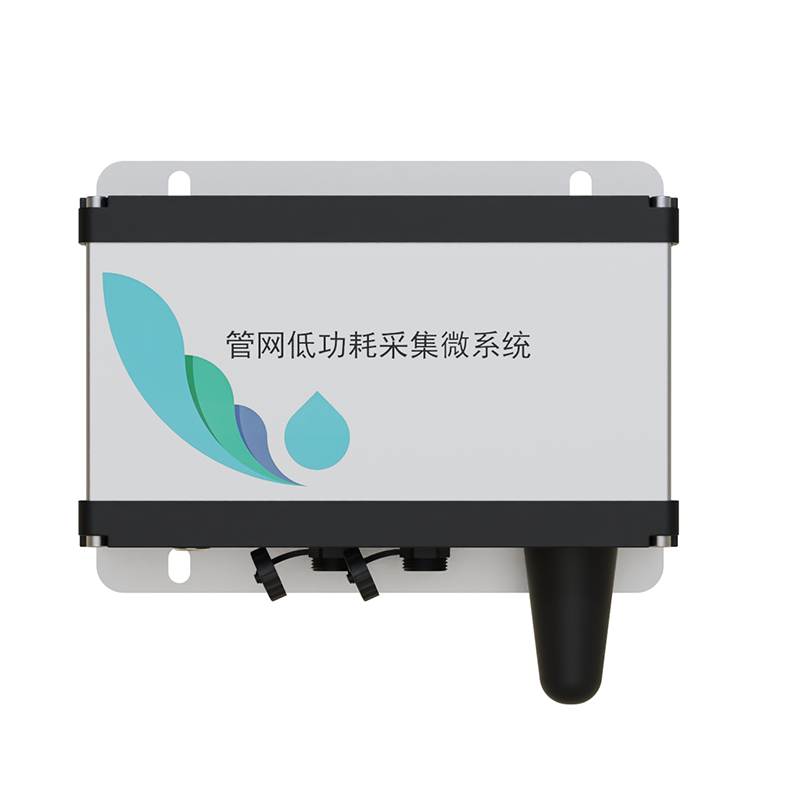
Data Acquisition Systems are important tools for collecting and processing data from various sources and are used in the field of pollution source monitoring.Automatic online monitoring (monitoring) of pollution sources Data Acquisition Systems is widely used in monitoring fields such as pollution source monitoring, surface water monitoring, air quality monitoring, regional environmental noise monitoring, atmospheric environmental pollution sources, surface water pollution sources, groundwater pollution sources, marine environmental pollution sources, soil environmental pollution sources, radioactive environmental pollution sources and other monitoring fields.
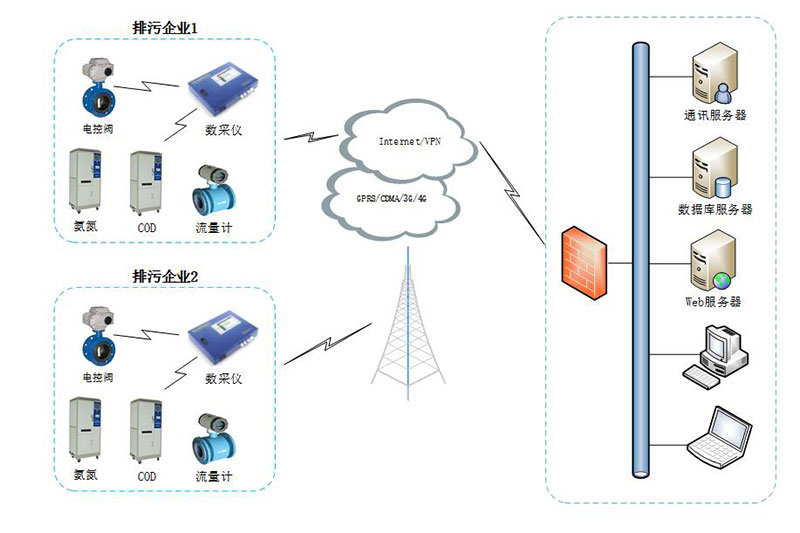
The data collector is installed at the wastewater and exhaust gas emission ports of pollution sources (or other environmental monitoring points, such as noise monitoring points, VOC monitoring points, etc.), and collects data from various monitoring equipment such as flowmeters, chemical oxygen demand (COD) monitors and flue gas continuous emission monitoring systems (CEMS) in real time, and transmits the data to the Environmental Protection Bureau server through wireless networks (GRPS/3G/4G, etc.) or wired networks.Managers use access to the monitoring system software installed on the Environmental Protection Bureau server to view data, statistical analysis and other operations.
1.Data Acquisition Systems implementation standards
"Standard for Online Automatic Monitoring (Monitoring) System Data Transmission Standards" (HJ/T 212-2005)
"Technical Requirements for Online Automatic Monitoring (Monitoring) Data Acquisition Device of Pollution Sources" (HJ477-2009)
"Standard for Data Transfer of Online Pollutant Monitoring (Monitoring) Systems" (HJ 212-2017)
"Technical Specifications for Installation of Water Pollution Source Online Monitoring System (CODCr, NH3-N, etc.)" HJ353-2019 and can be modified according to the specific parameters of each region to meet regional needs as appropriate.
This product has passed China Environmental Protection Product Certification, Certificate No.: CCAEPI-EP-2019-814
This product has obtained a computer software copyright registration certificate, registration number: 2016SR396179
This product has obtained the national utility model invention patent, patent number: ZL201720267588.6
This product has obtained a national design patent, patent number: ZL201930089947.8
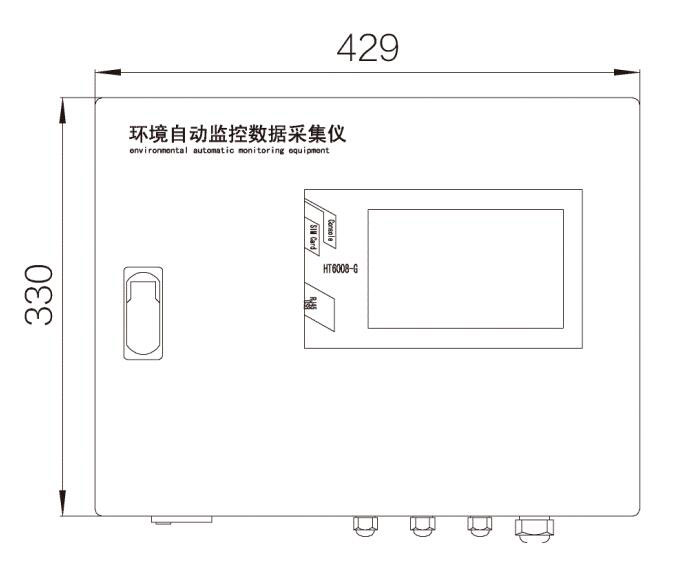
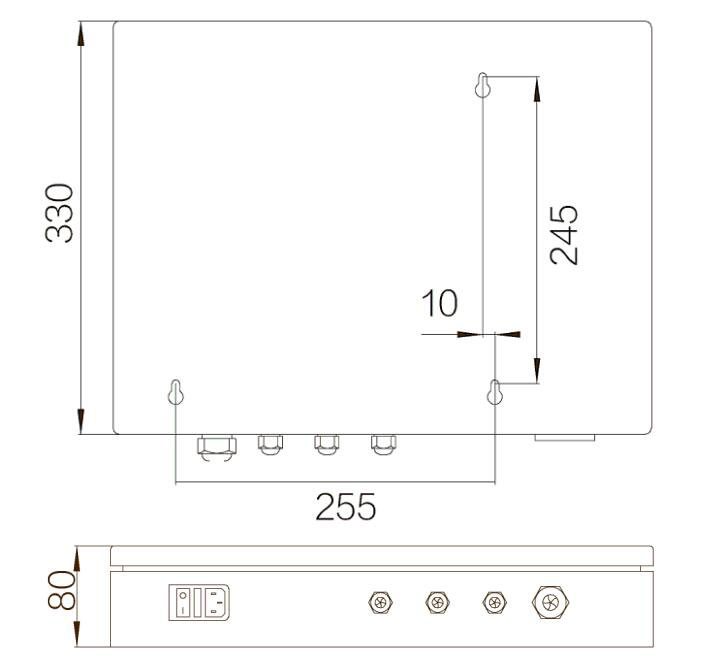
2.Data Acquisition Systems size
3.Functional features of Data Acquisition Systems
Strong computing power
It adopts ARM core, with a main frequency of 800MHz and a maximum of 1000Mhz, providing strong power for data computing.
Excellent interactive experience
Equipped with a 7.0″ TFT full touch display with a resolution of WVGA 800×480, it provides excellent visual experience and convenient touch experience.
Ten years of data backup
Supports up to 32G SD card storage, and can store up to ten years of historical data.
Multiple network solutions
It supports various networking methods such as GPRS/CDMA/3G/4G/Ethernet, and users can flexibly form networks according to the actual situation on site.
Massive communication protocols
Matching more than 600 types of domestic and foreign online monitoring equipment can achieve rapid docking between equipment.At the same time, the communication protocol can be customized and developed according to the actual needs of the customer on-site.
Multi-center data transmission
It supports simultaneous transmission of data from up to ten centers and supports interruption transmission of breakpoints, which can meet the needs of self-built, parks, districts, counties, cities, provinces and countries to connect to the simultaneous networking of multi-level environmental protection platforms.
Remote upgrade
The software can be upgraded remotely online through the network to reduce the workload of operation and maintenance personnel and improve the efficiency of daily operation and maintenance.
Easy to install
The wiring port adopts screw-free spring terminal design, which can achieve rapid installation on site, saving time and effort.
Quick configuration
No need for computer connection operation, you can complete all operations such as viewing, setting, debugging, and diagnosis through the touch screen.
4.Data Acquisition Systems application topology diagram
5.Data Acquisition Systems Technical Specifications
| CPU | model | ARM Cortex-A8 |
| Main frequency | 800MHz Up to 1000MHz | |
| Memory | 512M Nand 512M RAM | |
| Display unit | LCD screen | 7″TFT Touch Screen 800×480 WVGA |
| External storage | SD card | 16G supports up to 32G |
| CF card | × | |
| USB | 2×USB 2.0 | |
| Communication Network | Wireless access method | GPRS/CDMA/3G/4G |
| Wired access method | 2×Ethernet | |
| Communication interface | Serial communication | 6×RS232 1×RS485 Extended 4 RS485 |
| Analog input | 8-channel differential 4~20mA / 0~20mA / 0~5V | |
| Switch input | 8 routes | |
| Switch output | 8-way dry nodes | |
| Transmission Standard | Data transmission standard for online automatic monitoring (monitoring) pollution sources (HJ 212-2005) Data transmission standard for online monitoring (monitoring) of pollutants (HJ 212-2017) | |
| Battery capacity | 12V 5Ah | |
| External dimensions | 430mm×330mm×80mm | |
| Working environment | humidity | 20%~90% |
| temperature | -10~60℃ | |
| System parameters | Accuracy | ≤0.2% |
| Electromagnetic compatibility | IEC Level 3 | |
| power supply | AC220V±20% 50Hz | |
| Power consumption | ≤10W | |
| Backup power supply | 12V 5AH | |
The Snow Level Sensor is a high-precision, high-reliability environmental monitoring device based on ultrasonic distance measurement principles, specifically designed for automated and continuous measurement of snow depth.Its working mechanism is based on the "time difference method" in ph...
FT-WQX5 5-in-1 Compact Weather Sensor is an efficient tool in the field of environmental monitoring, capable of simultaneously monitoring five key meteorological parameters: ambient temperature, relative humidity, wind speed, wind direction, and atmospheric pressure.The instrument adopts an integrat...
FT-FY1 Model Negative Ion Detector is a high-precision professional instrument for air negative ion detection and analysis. Regarded as a preferred tool for real-time measurement of atmospheric negative oxygen ion concentration, it is widely used in various fields including environmental monitoring,...
In the water conservancy and water services industry, water regime monitoring is a fundamental task. Especially during summer when natural disasters occur frequently, monitoring enables disaster prediction and provides data support for formulating flood prevention and relief plans. With the applicat...


 Get a Free Quote
 Skype
Skype
 whatsapp
 mail
mail