Tianqiong Sensor IOT Technology Co., Ltd
Sales Manager:Ms. Emily Wang
Cel,Whatsapp,Wechat:+86 15898932201
Email:info@fengtutec.com
Add:No. 155 Optoelectronic Industry Accelerator, Gaoxin District, Weifang, Shandong, China


Sales Manager:Ms. Emily Wang
Cel,Whatsapp,Wechat:+86 15898932201
Email:info@fengtutec.com
Add:No. 155 Optoelectronic Industry Accelerator, Gaoxin District, Weifang, Shandong, China
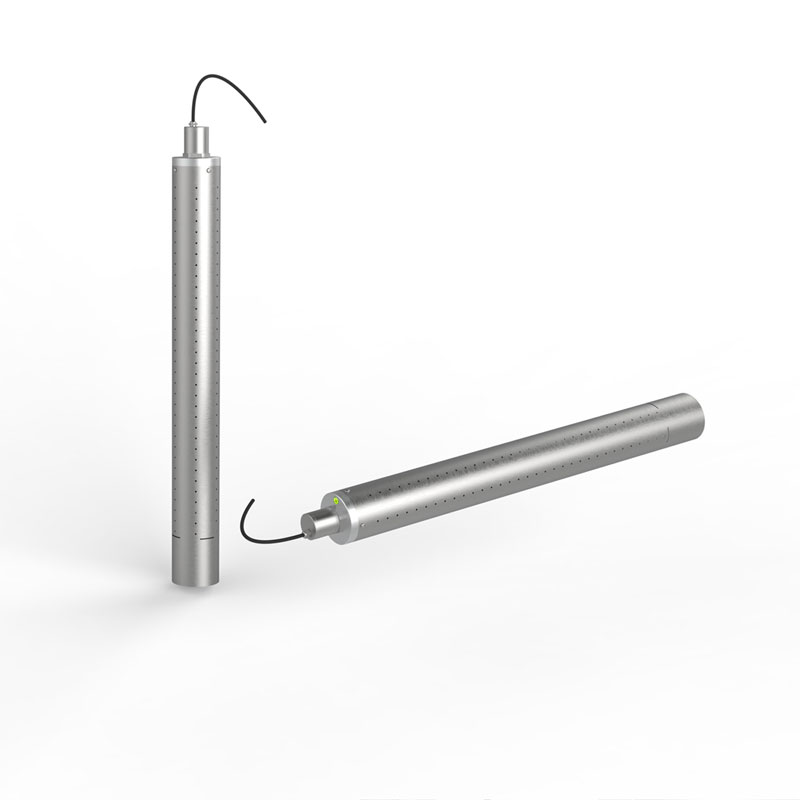
Model:FT-LSY1
Brand:tianqiong
1、Dam seepage monitoring Product Introduction
Dam seepage monitoring measures water level and flow changes for leakage monitoring to detect and manage water leakage sites through dams and foundations.Dam seepage monitoring is a high-precision instrument for measuring flow in open channels. Combining a magnetostrictive level sensor with a standard hydraulic weir structure, it is suitable for agricultural irrigation, hydrological monitoring, urban drainage, and industrial wastewater treatment, enabling continuous, stable, and unattended measurement of water flow in open channels. This equipment can be widely used in various open channel environments such as canals, troughs, and irrigation ditches, and is suitable for measuring fluids such as clean water, rainwater, and general industrial wastewater. The equipment operates on a 12V DC power supply, with an operating temperature range of 0℃ to +60℃ and humidity less than 95%. It has an IP65 or higher protection rating, enabling long-term operation in harsh outdoor environments with high humidity, dust, and strong sunlight. To ensure measurement accuracy and system stability, it is recommended to install the equipment in a location free from severe vibration, strong electromagnetic interference, and easy to maintain.
2、Dam seepage monitoring Technical parameters
| Measurement range | 0~600mm |
| Sensitivity | 0.01mm |
| Measurement accuracy | ≤0.1%F.S |
| Working voltage | DC12V (0.5W@12V) |
| Output signal | RS485-MODBUS protocol |
| Protection level | IP67 |
| Case material | 304 Stainless Steel |
| Dimensions | Φ89×850mm |
Microclimate refers to the small - scale climatic characteristics of the near - surface atmosphere and the upper layer of soil, which are caused by the specific structural features of the underlying surface. These characteristics are usually reflected in individual meteorological values and sometime...
As environmental pollution becomes increasingly complex, the limitations of traditional air monitoring methods are gradually becoming apparent. The national ambient air monitoring network has a limited number of stations and high costs, and the method of using points to represent the whole area resu...
Magnetostrictive static levels are high-precision measuring devices based on the magnetostrictive principle and communicating vessel technology. They enable multi-point relative settlement monitoring with high accuracy, strong stability, and no need for periodic calibration, making them widely...
IoT Water Quality Monitoring Station system consists of six parts: a water quality sensor, a data acquisition unit, a communication system, a power supply system, an overall support frame, and a water quality monitoring platform. It can simultaneously monitor multiple water quality elements, i...


 Get a Free Quote
 Skype
Skype
 whatsapp
 mail
mail