Tianqiong Sensor IOT Technology Co., Ltd
Sales Manager:Ms. Emily Wang
Cel,Whatsapp,Wechat:+86 15898932201
Email:info@fengtutec.com
Add:No. 155 Optoelectronic Industry Accelerator, Gaoxin District, Weifang, Shandong, China


Sales Manager:Ms. Emily Wang
Cel,Whatsapp,Wechat:+86 15898932201
Email:info@fengtutec.com
Add:No. 155 Optoelectronic Industry Accelerator, Gaoxin District, Weifang, Shandong, China
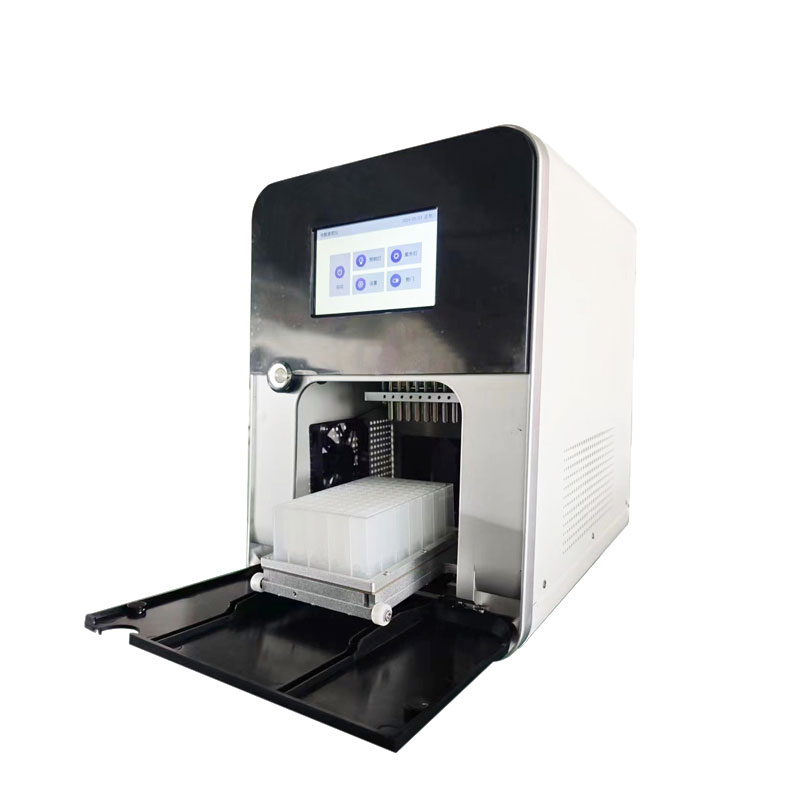
Model:FT-T160
Brand:tianqiong
Nucleic acid extractor Product Overview:
Nucleic acid extractor is used for sample homogenization, automated DNA and RNA extraction, and can isolate DNA or RNA from 1-16 samples simultaneously.Nucleic acid extractor utilizes the magnetic bead method to extract nucleic acids. By selecting the appropriate reagent kit, it can automatically isolate and purify high-purity nucleic acids from various sample materials such as blood, tissue, and cells. It boasts strong compatibility (compatible with pre-packaged extraction kits and single-dose reagents), fast extraction speed, high extraction recovery rate, and ease of operation, making it a powerful "assistant" for molecular biology laboratory testing. It can be widely used in scientific research, molecular diagnostics, animal and plant disease detection, and other fields.
Nucleic acid extractor Product Features:
● Flexible and adaptable throughput
For different extraction throughput requirements, users can flexibly choose between single-use reagents or pre-packaged reagents, avoiding reagent and consumable waste.
● Stable results
The cyclic magnetic bead separation ensures high yield and purity of nucleic acid extraction.
● Safe and reliable
Features such as a UV disinfection box and anti-aerosol fan effectively prevent cross-contamination and ensure experimental safety.
● Simple design, compact and portable
The compact size and battery power support make it suitable for automated extraction in various environments, including field and laboratory settings.
Nucleic acid extractor Technical Specifications:
Instrument Methodology: Magnetic bead adsorption (magnetic bead transfer method)
Sample Types: Pharyngeal swabs, whole blood, plasma, serum, genital secretions, urine, exfoliated cells, etc.
Sample Volume: 20-1000 µl
Magnetic Bead Recovery Rate: >95%
Instrument Structure: Mainly composed of magnetic separation module, incubation stage module, electronic control, and casing; optional ultrasonic module
Experimental Procedure: User programmable
Reagent Kit: Single test, pre-packaged
Throughput: 1-16T
Display: 5-inch
Contamination Prevention: UV lamp sterilization and fan ventilation system
Operating Environment: Temperature: 10-30℃, Humidity: ≤70%
Power Supply: 220V~240V, 50/60Hz
Dimensions: 336*251*363 mm (L*W*H)
Net Weight: Less than 14 KG
4G version high-precision handheld 8-element weather station can simultaneously and accurately measure eight meteorological elements. Its 4G module allows for easy replacement of the IoT SIM card. The compact and lightweight design allows for one-handed operation, making it suitable for variou...
This lightweight, portable weather station is equipped with precision sensors and a smart chip. It is easy to operate and can simultaneously collect multiple meteorological and location data, making it suitable for various fire emergency and outdoor disaster monitoring scenarios....
The weather stations used in the agricultural field are called Agricultural Weather Stations. In order to better serve agricultural production, in addition to the conventional meteorological elements, Agricultural Weather Stations will also focus on increasing the monitoring of soil-related elements...
The online water quality monitoring system, based on IoT technology, consists of units such as flow stabilization and venting, analytical monitoring sensors, system control, and remote communication. It integrates sensors for residual chlorine, pH, water temperature, turbidity, and conductivit...


 Get a Free Quote
 Skype
Skype
 whatsapp
 mail
mail