Tianqiong Sensor IOT Technology Co., Ltd
Sales Manager:Ms. Emily Wang
Cel,Whatsapp,Wechat:+86 15898932201
Email:info@fengtutec.com
Add:No. 155 Optoelectronic Industry Accelerator, Gaoxin District, Weifang, Shandong, China


Sales Manager:Ms. Emily Wang
Cel,Whatsapp,Wechat:+86 15898932201
Email:info@fengtutec.com
Add:No. 155 Optoelectronic Industry Accelerator, Gaoxin District, Weifang, Shandong, China
time:2025-12-12 11:00:42 source:Weather Station viewed:496 time
Water quality micro monitoring station, also known as a riverbank automatic water quality monitoring station, is a highly integrated, low-cost intelligent online water quality monitoring system. It integrates multiple high-precision water quality sensors and data acquisition and transmission modules, enabling continuous and automatic monitoring of key parameters such as pH, dissolved oxygen, turbidity, conductivity, and temperature. It is suitable for the high-frequency, high-density monitoring needs of environmental protection, water conservancy, and water affairs sectors.
The core design concept of Water quality micro monitoring station is high integration and miniaturization. It integrates the analytical instruments, sampling units, control units, and data transmission modules of traditional large-scale water stations into a compact chassis, resulting in a small overall footprint. It can be directly installed on the banks of rivers, lakes, and reservoirs or in small station buildings. Its core monitoring capability comes from the integrated multi-parameter water quality sensor probes, typically using electrode methods and optical methods to measure the basic physicochemical indicators of water bodies in real time, such as pH value, dissolved oxygen content, turbidity, conductivity, and temperature. These five parameters are the most basic and direct indicators for assessing the health status, pollution level, and ecological function of water bodies.
The system operates with automation and intelligence. Through built-in miniature sampling pumps or direct immersion measurement, the system automatically completes water sample collection or in-situ measurements according to a set cycle. Sensor data is processed and stored by an intelligent data acquisition controller and uploaded in real-time to the monitoring center's cloud platform via wireless communication methods such as 4G and NB-IoT. The platform software can visualize the data, analyze trends, generate alarms for exceeding limits, and generate reports. Some advanced systems also have basic data quality control and preliminary analysis and diagnostic functions.
The main application value of Water quality micro monitoring station lies in its deployment flexibility and economy. It primarily targets two scenarios: First, high-density deployment of monitoring networks over vast water areas. Because its cost is far lower than traditional large-scale station-style water monitoring stations, environmental protection departments can densely deploy at multiple sections of a river or reservoir to form a refined sensing network, accurately grasping the distribution and diffusion of pollution. Second, routine monitoring of decentralized, small-scale water bodies or discharge outlets. For example, in scenarios such as township river sections, rural drinking water sources, and industrial park stormwater outlets, it can achieve effective supervision with relatively low investment, filling monitoring gaps.
In practical use, the maintenance and management of Water quality micro monitoring station is relatively simple, but it still needs to follow regulations. Regular sensor calibration and cleaning are necessary to prevent biological adhesion or debris interference from affecting data accuracy. In low-temperature regions during winter, anti-freezing measures for the equipment must be considered. Its monitoring data can serve as an important basis for water environment management and early warning, but for more complex water quality indicators (such as heavy metals and organic matter), supplementary laboratory analysis or larger monitoring equipment is still required.
Currently, the technological development of Water quality micro monitoring station focuses on improving sensor stability, reducing energy consumption, and deepening data application. With the development of IoT and AI technologies, its monitoring parameters are gradually expanding, and data analysis capabilities are evolving from simple data display to intelligent applications such as pollution source tracing and trend prediction. As an important component of the modern water environment monitoring system, Water quality micro monitoring station, with its low cost, ease of deployment, and rapid response, is becoming an indispensable basic tool for achieving refined and grid-based water environment management.
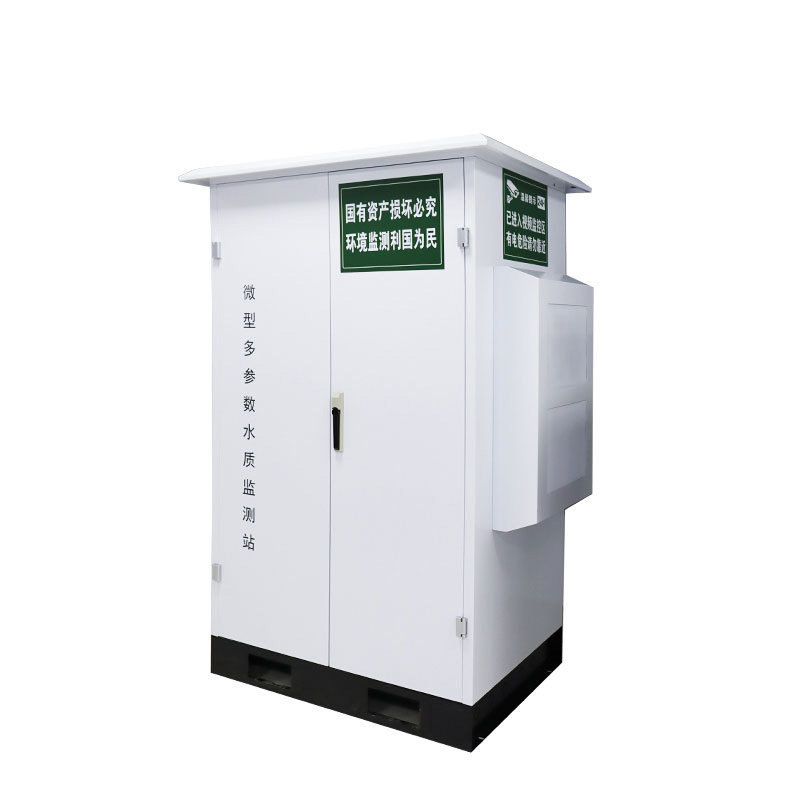
Water quality micro monitoring station is a miniaturized, integrated, and intelligent online water quality monitoring system. This device integrates five measurement modules—total phosphorus, total nitrogen, chemical oxygen demand, permanganate index, and ammonia nitrogen—as well as conventi...
Within the meteorological observation system, meteorological stations encompass various types such as National Climate Observatories, National Reference Climate Stations, National Basic Meteorological Stations, National Meteorological Observation Stations, and Regional Automatic Meteorological Stati...
The electronic weather instrument is a portable multi-element meteorological observation equipment that integrates wind speed, wind direction, temperature, humidity, air pressure, altitude and other sensors. It has a built-in large-capacity storage chip and Type-C communication interface. It c...
Based on microwave radar technology, the system measures water level, flow velocity, flow rate, and rainfall in channels non-contactly. It is unaffected by temperature, sediment, or floating debris, making it suitable for rivers, irrigation canals, and flood control early warning systems....


 Skype
Skype
 whatsapp
 mail
mail