Tianqiong Sensor IOT Technology Co., Ltd
Sales Manager:Ms. Emily Wang
Cel,Whatsapp,Wechat:+86 15898932201
Email:info@fengtutec.com
Add:No. 155 Optoelectronic Industry Accelerator, Gaoxin District, Weifang, Shandong, China


Sales Manager:Ms. Emily Wang
Cel,Whatsapp,Wechat:+86 15898932201
Email:info@fengtutec.com
Add:No. 155 Optoelectronic Industry Accelerator, Gaoxin District, Weifang, Shandong, China
time:2026-06-12 13:33:23 source:Weather Station viewed:137 time
Based on microwave radar technology, the system measures water level, flow velocity, flow rate, and rainfall in channels non-contactly. It is unaffected by temperature, sediment, or floating debris, making it suitable for rivers, irrigation canals, and flood control early warning systems.
The hydrological station monitoring system is a fully automated online hydrological monitoring system based on microwave radar technology. It can simultaneously measure water level, flow velocity, flow rate, and rainfall in channels. The system uses K-band planar radar technology to measure water flow velocity and water level non-contactly, and calculates and outputs real-time cross-sectional flow and cumulative flow based on built-in software algorithms. Compared to traditional contact-based hydrological monitoring methods, this system does not require immersing sensors in water, completely avoiding the problem of sensors being blocked or damaged by sediment or floating debris. The measurement process is also unaffected by temperature changes, river pollutants, and floating debris. Traditional hydrological monitoring often uses manual or automatic stations, some of which suffer from low measurement efficiency, instability, delayed information response, and poor real-time performance. This system's non-contact measurement method effectively solves these problems.
In terms of core monitoring capabilities, the hydrological station monitoring system can simultaneously output four key hydrological parameters: water level, flow velocity, flow rate, and rainfall. Water level measurement calculates the distance between the sensor and the water surface using the radar wave reflection principle. Flow velocity measurement utilizes the Doppler effect to obtain the surface velocity of the water body, combining this with the cross-sectional area to calculate real-time flow rate. The rainfall module can simultaneously collect precipitation data, providing complete meteorological input for hydrological analysis. The system features low power consumption, compact size, high reliability, and easy maintenance. It can be installed on supports or bridges along riverbanks, offering flexible installation options without requiring large-scale infrastructure construction within the river channel. Powered by solar energy, the system is suitable for long-term operation at remote field stations without mains power. Its built-in data storage module can store a large amount of historical monitoring records.
Regarding data transmission and early warning, the hydrological station monitoring system supports multiple communication methods, including 4G, GPRS, and fiber optics, enabling real-time uploading of collected hydrological data to a remote monitoring center. The monitoring platform analyzes, stores, and visualizes the data, generating water level change curves, flow rate statistics reports, and rainfall analysis charts. Users can set warning thresholds for water level, flow rate, or rainfall according to actual needs. Once the monitored data exceeds the safe range, the system will automatically send alarm SMS messages or push warning information to preset mobile phone numbers. This system can be widely used in various scenarios such as river hydrological monitoring, irrigation canal metering, underground drainage network monitoring, and flood control early warning, providing reliable data support for water conservancy management, agricultural irrigation scheduling, and urban waterlogging prevention and control.
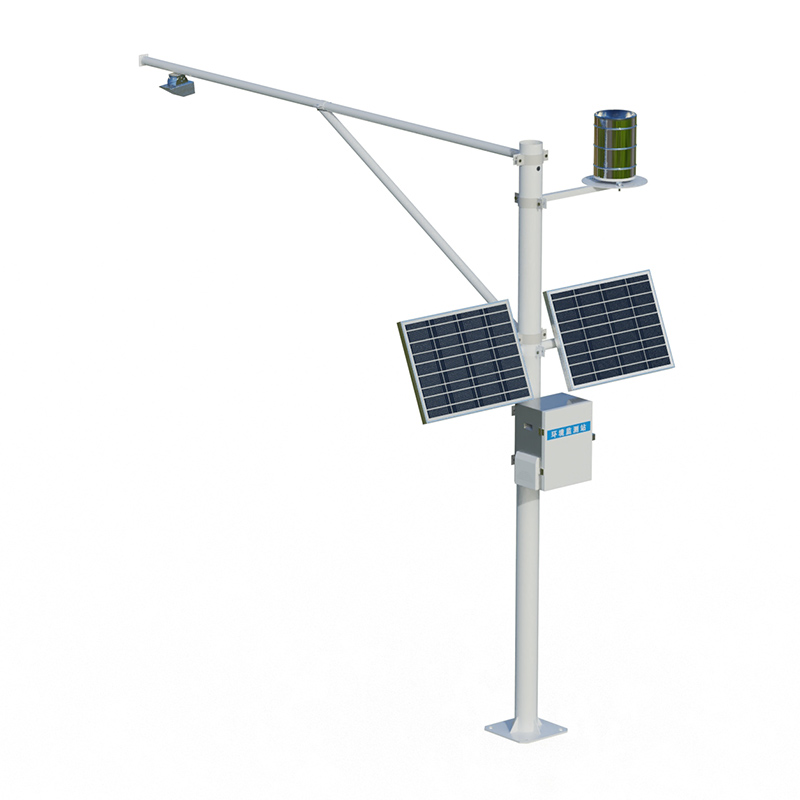
In the road traffic environment safety monitoring system, the Laser Snow Depth Monitor, especially in areas with frequent snowfall in winter, can accurately and real-time monitor the depth of snow on the road surface. It provides key data for traffic management departments, helping to ensure road sa...
Micro Weather Station is a highly integrated, low-power, quick-installation, and easy-to-use high-precision automatic meteorological observation device for field monitoring. The device consists of meteorological sensors, a data acquisition terminal, a solar power system, and a support frame. N...
outdoor Weather Station features a handle, power supply, display screen, and wireless transmission module. It integrates three core technologies: ultrasonic sensing, multi-module integration, and smart IoT, making it suitable for various emergency short-term meteorological observations and mob...
While traditional environmental air quality monitoring stations (national and provincial control points) provide accurate data with legal validity, their high construction and operational costs result in insufficient spatial distribution density. This sparse layout primarily serves regional macro ai...


 Skype
Skype
 whatsapp
 mail
mail