Tianqiong Sensor IOT Technology Co., Ltd
Sales Manager:Ms. Emily Wang
Cel,Whatsapp,Wechat:+86 15898932201
Email:info@fengtutec.com
Add:No. 155 Optoelectronic Industry Accelerator, Gaoxin District, Weifang, Shandong, China


Sales Manager:Ms. Emily Wang
Cel,Whatsapp,Wechat:+86 15898932201
Email:info@fengtutec.com
Add:No. 155 Optoelectronic Industry Accelerator, Gaoxin District, Weifang, Shandong, China
time:2026-06-24 10:25:16 source:Weather Station viewed:67 time
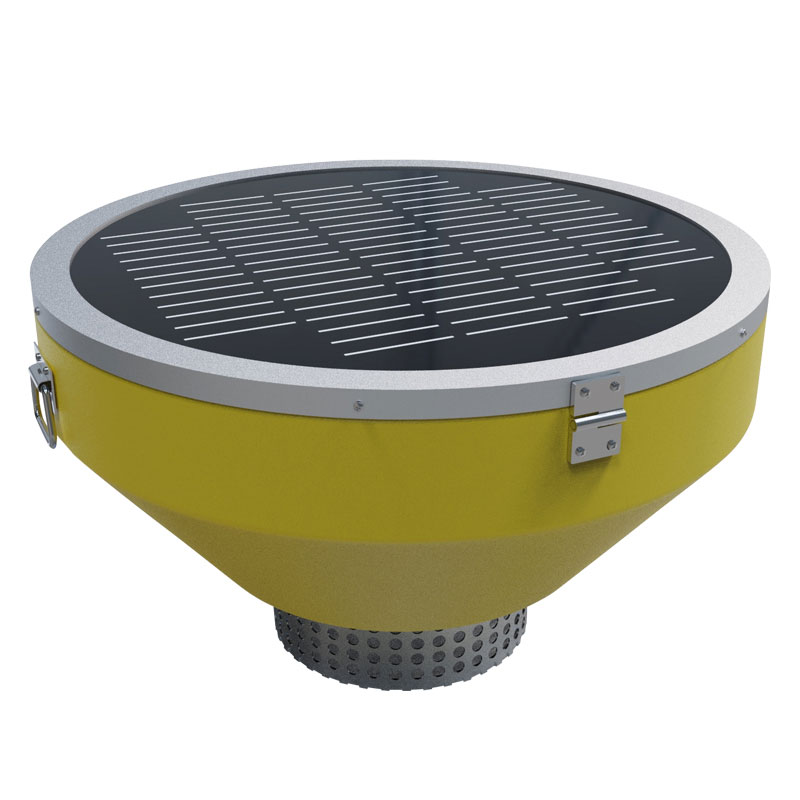
IoT Water Quality Monitoring Station system consists of six parts: a water quality sensor, a data acquisition unit, a communication system, a power supply system, an overall support frame, and a water quality monitoring platform. It can simultaneously monitor multiple water quality elements, including water temperature, pH, dissolved oxygen, conductivity, ammonia nitrogen, turbidity, and COD. The data acquisition unit features data acquisition, timed data storage, and standard communication functions.
IoT Water Quality Monitoring Station system is an unattended water quality monitoring system integrating data acquisition, storage, transmission, and management. It consists of six parts: a water quality sensor, a data acquisition unit, a communication system, a power supply system, an overall support frame, and a water quality monitoring platform. The system can simultaneously monitor multiple water quality elements, including water temperature, pH, dissolved oxygen, conductivity, ammonia nitrogen, turbidity, COD, and chlorophyll. The data acquisition unit features data acquisition, a real-time clock, timed data storage, parameter setting, and standard communication functions.
Regarding sensor configuration, the temperature sensor has a range of -50 to 80℃ with an accuracy of ±0.5℃; the pH sensor has a range of 0 to 14 with an accuracy of ±0.1pH; the dissolved oxygen sensor has a range of 0 to 20 mg/L with an accuracy of ±3%; the conductivity sensor has a range of 1 μs/cm to 200 ms/cm with an accuracy better than 1%; and the turbidity sensor has a range of 0 to 2000 NTU. The COD sensor has a range of 0.75 to 370 mg/L with an accuracy of ±2%; and the ammonia nitrogen sensor has a range of 0.1 to 1000 mg/L. Some models support extended parameters such as turbidity 0 to 1000 NTU (scattered light method, accuracy ±1%), suspended solids 0 to 2000 mg/L (scattered light method, accuracy ±5%), and chlorophyll 0 to 400 ug/L (fluorescence method, R²>0.999).
The communication system supports multiple networking methods, providing standard wired interfaces (RS485, RS232, USB) and wireless communication modules (GPRS, 4G/5G, NB-IoT, LoRa, WiFi, satellite, etc.). Data can be transmitted to the IoT cloud platform via the MQTT protocol. The system has a built-in high-capacity FLASH storage chip, supporting timed data storage and power-off protection. The power supply system offers multiple options including AC mains, DC, and solar power. Solar charging management utilizes MPPT automatic power point tracking technology. The equipment uses a full stainless steel or painted metal bracket and a field protective case, providing corrosion resistance, anti-interference capabilities, and an IP66 protection rating.
The cloud platform adopts a client-server architecture, supporting direct access from mobile phones and PC browsers without requiring additional software installation. The platform supports multi-account and multi-device login, real-time and historical data display, data curve analysis, map display of device information, SMS alarms, and threshold settings. IoT Water Quality Monitoring Station can be widely used for long-term online monitoring in scenarios such as aquaculture, wastewater treatment, reservoirs, rivers, surface water, groundwater, water sources, and sewage discharge outlets.
The Handheld Weather meter is extremely lightweight with an ergonomic design that can be held and operated with one hand. It can real-time monitor five core meteorological elements: wind speed, wind direction, temperature, humidity, and atmospheric pressure. Its rugged housing design can withstand c...
The Portable el detector is an important device used to detect various defects in photovoltaic (PV) cell modules. It can accurately detect defects such as hidden cracks, fragments, and poor soldering in PV cell modules. These internal defects can seriously affect the service life and long-term power...
Portable Weather Station integrates meteorological monitoring with flexible mobile platforms, providing convenient and efficient meteorological data monitoring services for various scenarios.Designed to be compact and small in size, it is easy to install on special vehicles such as emergency rescue...
Meteorological disasters often cause severe losses to agriculture. Among the numerous agrometeorological disasters, drought, flood, frost, and dry-hot wind are relatively common.Drought is a disaster caused by long-term lack of rain or little rain, which leads to soil water shortage and dry air, res...


 Skype
Skype
 whatsapp
 mail
mail