Tianqiong Sensor IOT Technology Co., Ltd
Sales Manager:Ms. Emily Wang
Cel,Whatsapp,Wechat:+86 15898932201
Email:info@fengtutec.com
Add:No. 155 Optoelectronic Industry Accelerator, Gaoxin District, Weifang, Shandong, China


Sales Manager:Ms. Emily Wang
Cel,Whatsapp,Wechat:+86 15898932201
Email:info@fengtutec.com
Add:No. 155 Optoelectronic Industry Accelerator, Gaoxin District, Weifang, Shandong, China
time:2026-05-27 10:57:03 source:Weather Station viewed:211 time
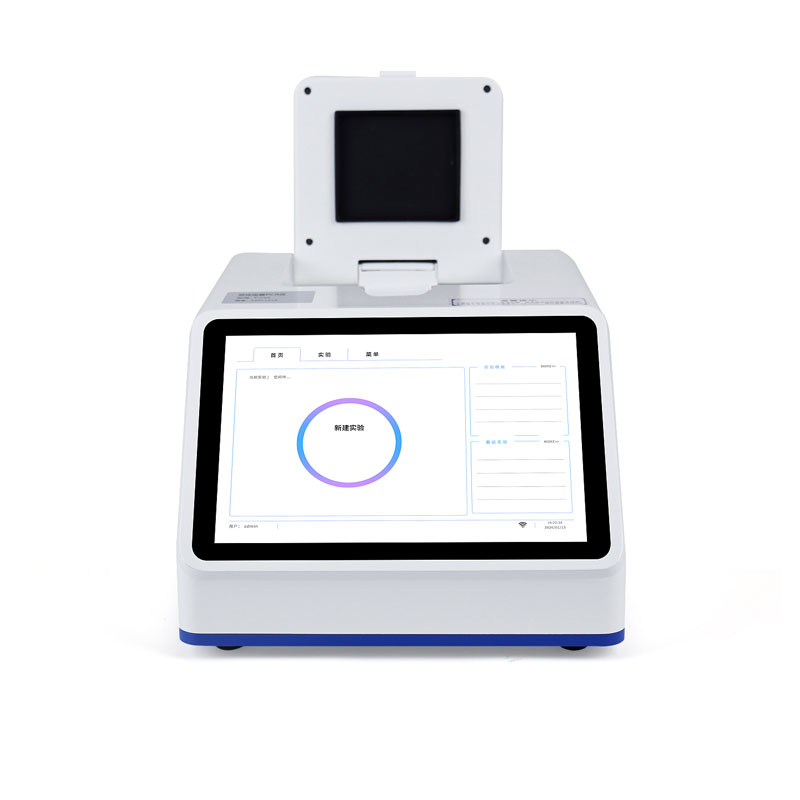
fluorescence quantitative PCR instrument is a four-channel 16-well quantitative PCR instrument running on an Android operating system. It has a temperature control range of 4℃ to 99℃ and a heated lid temperature of 30℃ to 108℃, making it suitable for molecular diagnostics, pathogen detection, and food safety testing.
fluorescence quantitative PCR instrument is a molecular biology analysis instrument that combines real-time quantitative PCR technology with a high-precision optical detection system. Based on the DNA amplification principle of PCR, this device adds fluorescent dyes or fluorescently labeled probes to the PCR reaction system and monitors changes in fluorescence signals in real time during thermal cycling, thereby performing qualitative and quantitative analysis of target nucleic acids. When the target DNA fragment is present in the reaction system, the fluorescence signal intensity increases exponentially with PCR amplification. The instrument plots an amplification curve by collecting the fluorescence signal at the end of each cycle, ultimately calculating the initial copy number of the target gene in the sample. The fluorescence quantitative PCR instrument has a detection sensitivity down to the single-copy gene level, capable of amplifying trace amounts of DNA template millions of times after dozens of PCR cycles, making it suitable for the precise detection of targets with extremely low abundance.
In terms of hardware configuration, the four-channel 16-well quantitative PCR instrument is a mainstream low-throughput portable model on the market. This type of device uses a semiconductor heating and cooling module for temperature control, covering a temperature range of 4℃ to 99℃ with a temperature control accuracy of ±0.01℃ and temperature uniformity within ±0.3℃ between wells. The heated lid temperature is set to 105℃ by default and can be adjusted within the range of 30℃ to 108℃, effectively preventing evaporation of the reaction solution during the high-temperature denaturation stage. Regarding the fluorescence detection channel configuration, the four-channel model can simultaneously detect four different wavelengths of fluorescent dyes or probes, including FAM, HEX, ROX, and Cy5, supporting multiplex PCR detection needs. The optical system uses a long-life LED light source combined with a high-sensitivity photodiode or CMOS imaging device, enabling fluorescence signal acquisition to complete the scanning of all 16 sample wells in one second, reflecting the PCR amplification process in real time.
fluorescence quantitative PCR instrument has a wide range of applications in molecular diagnostics, food safety, and scientific research. In clinical diagnostics, the equipment can be used for nucleic acid detection of pathogens, including rapid screening and diagnosis of infectious diseases such as influenza virus, COVID-19, and hepatitis B virus. In the field of food safety, it ensures food compliance by detecting pathogens and genetically modified ingredients in food. The instrument weighs between 5.6 kg and 7.1 kg, has a small overall size, supports vehicle-mounted power supply, and can be deployed in mobile laboratories, on-site rapid testing sites, and primary healthcare institutions without relying on large laboratory infrastructure.
Within the meteorological observation system, meteorological stations encompass various types such as National Climate Observatories, National Reference Climate Stations, National Basic Meteorological Stations, National Meteorological Observation Stations, and Regional Automatic Meteorological Stati...
The Anemometer for Drones is a specialized device designed for low-altitude meteorological monitoring, with its core technology operating on the principle of ultrasonic resonance. This principle works as follows: the ultrasonic generator inside the device emits sound waves of a specific frequency. W...
African swine fever virus detection is a portable quantitative fluorescence PCR device, comprising a 4-channel, 16-well PCR instrument and a portable accessory case. Designed for conducting viral detection assays, it can be operated within a laboratory setting or deployed for field-based scien...
Negative oxygen ions exert physiological effects on the human nervous system and blood circulation. Their concentration directly reflects air quality and serves as a key indicator for air quality assessment. The Negative Oxygen Ion Monitoring Station is specially designed to monitor this core indica...


 Skype
Skype
 whatsapp
 mail
mail