Tianqiong Sensor IOT Technology Co., Ltd
Sales Manager:Ms. Emily Wang
Cel,Whatsapp,Wechat:+86 15898932201
Email:info@fengtutec.com
Add:No. 155 Optoelectronic Industry Accelerator, Gaoxin District, Weifang, Shandong, China


Sales Manager:Ms. Emily Wang
Cel,Whatsapp,Wechat:+86 15898932201
Email:info@fengtutec.com
Add:No. 155 Optoelectronic Industry Accelerator, Gaoxin District, Weifang, Shandong, China
time:2026-11-09 10:09:38 source:Weather Station viewed:1 time
Shandong Fengtu IoT Technology Co., Ltd. is a specialized manufacturer of hydrological station equipment. Its radar-based hydrological monitoring systems utilize K-band planar radar technology to perform non-contact, simultaneous measurements of water level, flow velocity, discharge (flow rate), and rainfall within channels. These devices are characterized by low power consumption, a compact footprint, high reliability, and ease of maintenance. The measurement process remains unaffected by factors such as temperature, sediment, pollutants, or floating debris, making the equipment well-suited for flow monitoring in rivers, irrigation canals, underground drainage networks, and flood warning systems.
As a manufacturer of hydrological station equipment, Fengtu prioritizes long-term operational stability in field environments. Traditional contact-based sensors are prone to entanglement or clogging in channels with high sediment loads or dense floating debris, necessitating frequent maintenance. In contrast, Fengtu’s radar systems are mounted above the water surface. They calculate surface flow velocity and water level by transmitting and receiving microwave signals; an internal algorithm then converts these data—based on pre-configured cross-sectional geometric parameters—into real-time and cumulative flow rates. This approach eliminates issues related to the corrosion of submerged components or the accumulation of debris. The equipment maintains stable output even during flood seasons, when water may be highly turbid, or during dry seasons, when flow velocities are low.
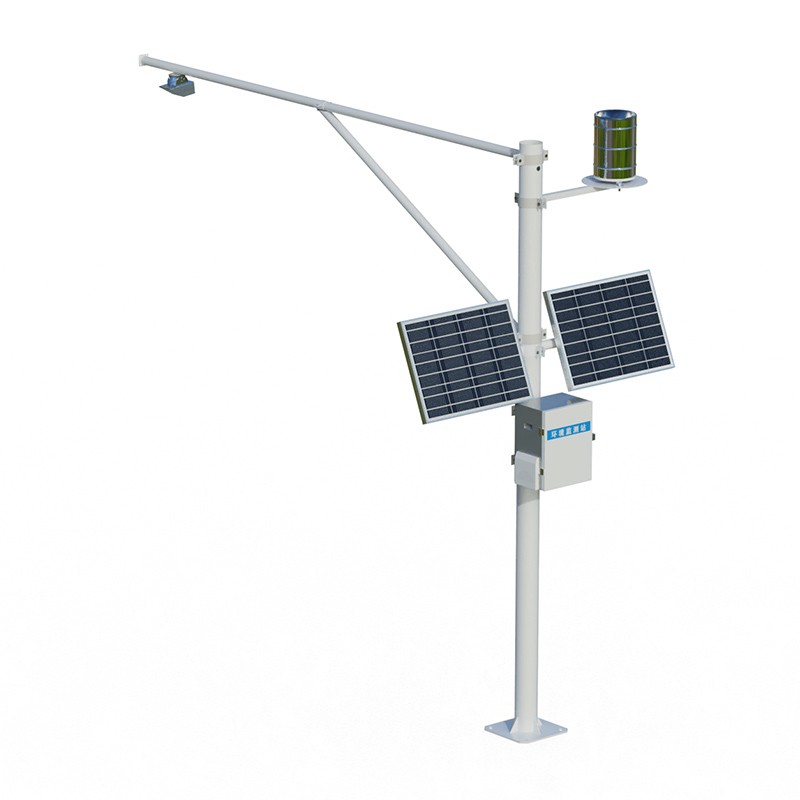
From an application perspective, the product suite offered by this manufacturer provides a comprehensive range of measurement parameters. The simultaneous acquisition of water level and flow velocity data ensures that flow calculations do not rely solely on empirical formulas, resulting in more reliable and valuable cross-sectional flow data. The integration of rainfall data provides a basis for comparing local precipitation with river conditions, which is critical for flood early-warning systems. The equipment supports solar power supply and wireless data transmission, allowing for flexible installation on bridge sides or channel embankments. This eliminates the need for constructing cofferdams in the riverbed, thereby minimizing the impact of site installation on the natural flow of water. These systems are applicable for measuring flow velocity, water level, discharge, and rainfall across diverse environments—including rivers, lakes, tidal zones, reservoir sluice gates, underground drainage networks, and irrigation channels—and can also support water treatment operations, such as urban water supply and sewage monitoring. For field hydrological stations requiring long-term deployment, maintenance costs are a critical factor to consider during equipment selection. Radar sensors with planar antennas contain no moving mechanical parts; their surfaces require only periodic cleaning—such as the removal of accumulated dust or cobwebs—to maintain signal quality. The equipment’s robust protection rating meets the requirements for field deployment, ensuring continuous operation even in environments characterized by significant temperature fluctuations or high humidity. Monitoring data is transmitted via telemetry terminals to a management platform, allowing personnel in control rooms to view flow hydrographs and rainfall bar charts. This reduces the need for manual on-site surveys during flood seasons, thereby lowering safety risks.
The selection of a hydrological equipment vendor should ultimately be guided by the specific characteristics of the cross-section and the intended use of the data. The radar-based monitoring solution from Fengtu offers a non-contact, low-maintenance method for flow measurement in settings such as open channels, rivers, and pipeline outlets. The resulting data can be directly applied to tasks such as calculating pollutant discharge into rivers, measuring water diversion and distribution in irrigation districts, or supporting flood control operations. The equipment’s configuration interface remains open, enabling users to adjust calculation coefficients based on the actual geometry of the channel cross-section, ensuring that monitoring results are more accurately aligned with site-specific hydraulic conditions.
electronic weather station is a handheld multi-element meteorological observation device that simultaneously measures wind speed, wind direction, temperature, humidity, air pressure, altitude, thermal index, wet-bulb temperature, dew point, wind chill, wave height, and GNSS positioning. With b...
Small Handheld Portable Weather Station This device integrates laboratory-grade meteorological monitoring technology into a handheld unit. Equipped with ultrasonic sensors, multi-module integration, and smart IoT capabilities, it allows for direct on-site data reading, local storage, and transmissio...
As the name suggests, an air quality sensor monitors carbon monoxide (CO), sulfur dioxide (SO₂), nitrogen dioxide (NO₂), and ozone (O₃). CO mainly comes from incomplete combustion of fuels, such as automobile exhaust and industrial waste gas emissions. SO₂ is mostly produced by the combustion of...
Modular Weather Station is a high-precision, automated meteorological observation device that integrates the measurement of multiple parameters—including wind speed, wind direction, temperature, humidity, atmospheric pressure, PM2.5, PM10, and noise—into a single unit. Characterized by its c...




 Skype
 whatsapp
 mail