Tianqiong Sensor IOT Technology Co., Ltd
Sales Manager:Ms. Emily Wang
Cel,Whatsapp,Wechat:+86 15898932201
Email:info@fengtutec.com
Add:No. 155 Optoelectronic Industry Accelerator, Gaoxin District, Weifang, Shandong, China


Sales Manager:Ms. Emily Wang
Cel,Whatsapp,Wechat:+86 15898932201
Email:info@fengtutec.com
Add:No. 155 Optoelectronic Industry Accelerator, Gaoxin District, Weifang, Shandong, China
time:2026-04-29 10:40:36 source:Weather Station viewed:267 time
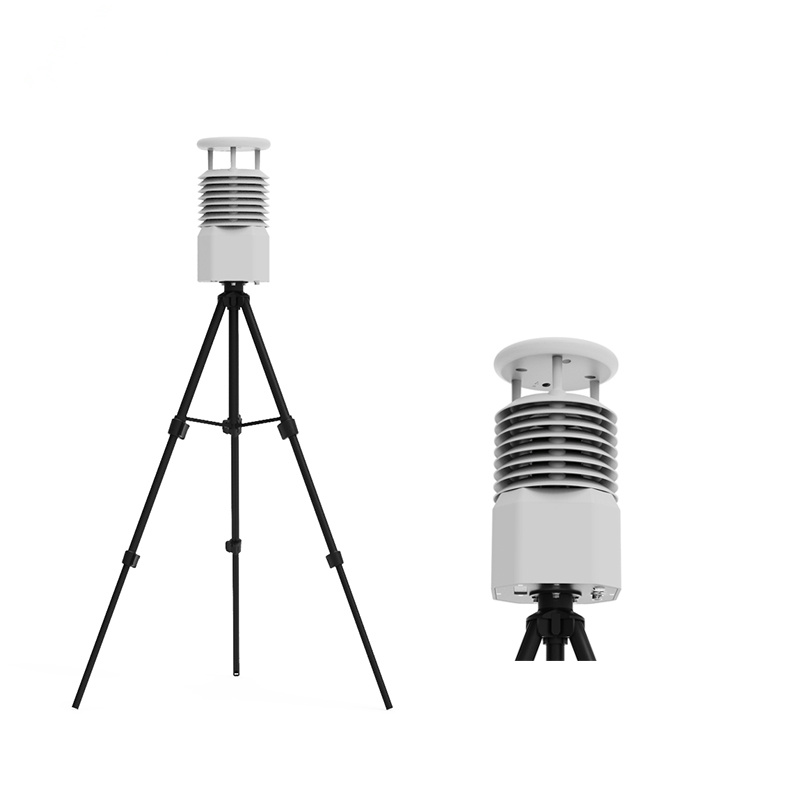
Modular Weather Station is a high-precision, automated meteorological observation device that integrates the measurement of multiple parameters—including wind speed, wind direction, temperature, humidity, atmospheric pressure, PM2.5, PM10, and noise—into a single unit. Characterized by its compact size, low power consumption, and rapid installation capabilities, it is ideally suited for field monitoring applications across sectors such as agriculture, environmental protection, and scientific research.
In scenarios ranging from smart agriculture and precision irrigation to grid-based environmental monitoring and scientific field expeditions, the accurate acquisition of localized meteorological and environmental data has long been a fundamental requirement. Traditional, large-scale meteorological stations typically occupy a significant footprint and, once fixed in place, are difficult to relocate; consequently, they often fail to meet the demands for rapid deployment across diverse environmental settings. Modular Weather Station offers a highly integrated solution to address this challenge. This device consolidates a comprehensive array of meteorological and environmental parameters—including wind speed, wind direction, temperature, humidity, atmospheric pressure, as well as PM2.5, PM10, and noise levels—into a single unit via an integrated sensor array. The device features a compact structure, with the total weight of the unit typically kept within 3 to 5 kilograms; certain models are even lightweight enough to be held in one hand. It supports a variety of deployment methods, including tripod mounting on the ground, fixed installation on a pole, or direct placement within a vehicle's trunk.
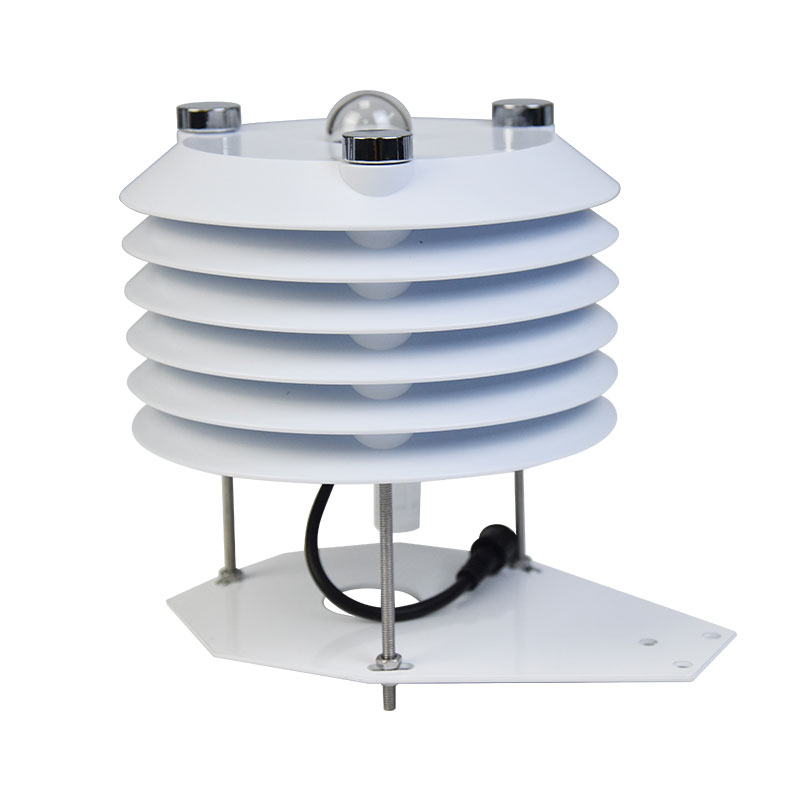
In terms of technical architecture, a complete Modular Weather Station system typically comprises four main components: a multi-parameter integrated sensor unit, a data logger, a solar power supply system, and a mounting bracket. Wind speed and direction measurements typically utilize ultrasonic anemometry technology—replacing traditional mechanical wind cups—thereby eliminating the measurement inaccuracies caused by mechanical wear and low-temperature icing, while simultaneously achieving a "zero-start" wind speed threshold. The temperature and humidity sensors are housed within a miniature radiation shield (louvers) to prevent solar radiation from interfering with measurement accuracy. The device's built-in data logger converts analog signals into digital data, which is then uploaded in real-time to a cloud-based platform via a GPRS/4G wireless communication module. Users can access and monitor real-time data, as well as review historical trend charts, at any time using a dedicated mobile application or a web-based interface.
The low-power consumption characteristics of the Modular Weather Station make it particularly well-suited for deployment in remote field environments where access to mains electricity is unavailable. The device's overall power consumption is typically maintained below 7 watts. It employs a dual-power supply mode—combining solar panels with a rechargeable battery—enabling the solar charging system to sustain 24-hour continuous operation during sunny weather, while the built-in lithium battery ensures continued functionality for over seven days under overcast or rainy conditions with no sunlight. The equipment generally features an IP65 to IP66 protection rating, allowing it to operate stably across a wide temperature range of -40°C to +80°C and in relative humidity levels ranging from 0% to 100%; its housing, constructed from aluminum alloy or ABS material, offers robust resistance against salt spray and corrosion.
In terms of application, the Modular Weather Station system serves a diverse array of industries. In the agricultural sector, the device is utilized to monitor micro-meteorological conditions in fields in real time, providing essential data support for precision irrigation, pest and disease control, and frost early warning systems. The environmental protection sector leverages a grid-based monitoring network—comprising these devices—to continuously track meteorological trends and particulate matter concentrations across various urban zones. Scientific research and educational institutions employ this equipment to collect raw meteorological data in field environments. Furthermore, scenic area management authorities deploy these devices in key locations to monitor wind speed, rainfall, and UV intensity, enabling the issuance of early warning signals prior to the onset of extreme weather events such as heavy storms or strong winds. Thanks to its integrated multi-sensor design and flexible, convenient deployment capabilities, the Modular Weather Station system is gradually replacing traditional single-point meteorological observation equipment, delivering real-time environmental data that precisely meets the practical requirements of various industries.
Designed specifically for emergency rescue scenarios, this handheld weather station accurately measures multiple factors such as wind speed, wind direction, temperature, and humidity. It is suitable for all disaster emergency scenarios including fire, earthquake, and flood, and can be used in...
In many fields such as meteorological observation, traffic management, environmental monitoring, and aerospace, visibility is an extremely critical indicator. For example, in the aviation sector, the visibility around airports directly affects the safety of aircraft takeoffs and landings. In the eve...
Vehicle Weather Station is a professional mobile monitoring device based on the ultrasonic time-of-flight principle. It accurately calculates wind speed and direction by measuring the time difference of ultrasonic wave propagation, and integrates temperature, humidity, and pressure sensors to achieve real-time collection of multi-element meteorological data on a vehicle platform....
Ground-based fixed monitoring points are limited by their installation locations and can only reflect visibility conditions in specific areas, making it difficult to cover the airspace above vast or complex terrains. For example, in mountainous areas, canyons, coastal regions, etc., there may be dif...



 Skype
Skype
 whatsapp
 mail
mail