Tianqiong Sensor IOT Technology Co., Ltd
Sales Manager:Ms. Emily Wang
Cel,Whatsapp,Wechat:+86 15898932201
Email:info@fengtutec.com
Add:No. 155 Optoelectronic Industry Accelerator, Gaoxin District, Weifang, Shandong, China


Sales Manager:Ms. Emily Wang
Cel,Whatsapp,Wechat:+86 15898932201
Email:info@fengtutec.com
Add:No. 155 Optoelectronic Industry Accelerator, Gaoxin District, Weifang, Shandong, China
time:2025-04-22 09:50:48 source:Weather Station viewed:482 time
In the production and use of photovoltaic modules, grid breakage is a relatively common and thorny problem. Grid breakage refers to the existence of breakpoints in the silver paste printing of the main grid of the solar cell, which causes the fine grid lines on the solar cell to be open-circuited with the main grid lines and unable to conduct electricity. On the EL (Electroluminescence) image, thick black lines perpendicular to the main grid lines will appear. The main reasons for its occurrence are concentrated in the screen printing process of the solar cell. When there are abnormalities in the printing, the grid breakage problem is likely to occur. The grid breakage problem will seriously affect the performance of the photovoltaic module, reduce the power generation efficiency, and thus increase the usage cost.
So, how can we avoid buying photovoltaic modules with grid breakage problems? It is recommended to conduct inspections in advance. The electroluminescence (EL) detection method is based on the principle that a forward bias voltage is applied to the crystalline silicon solar cell. The power supply injects a large number of non-equilibrium carriers into the crystalline silicon cell, and these carriers continuously recombine and emit light, releasing photons. Then, a CCD (Charge-Coupled Device) camera is used to capture the photons, and an image is formed through computer processing. Throughout the testing process, it must be completed in a darkroom environment. Since the brightness of the EL image is proportional to the current density, the defective parts will show black or gray images, and thus the type and cause of the defect can be determined.
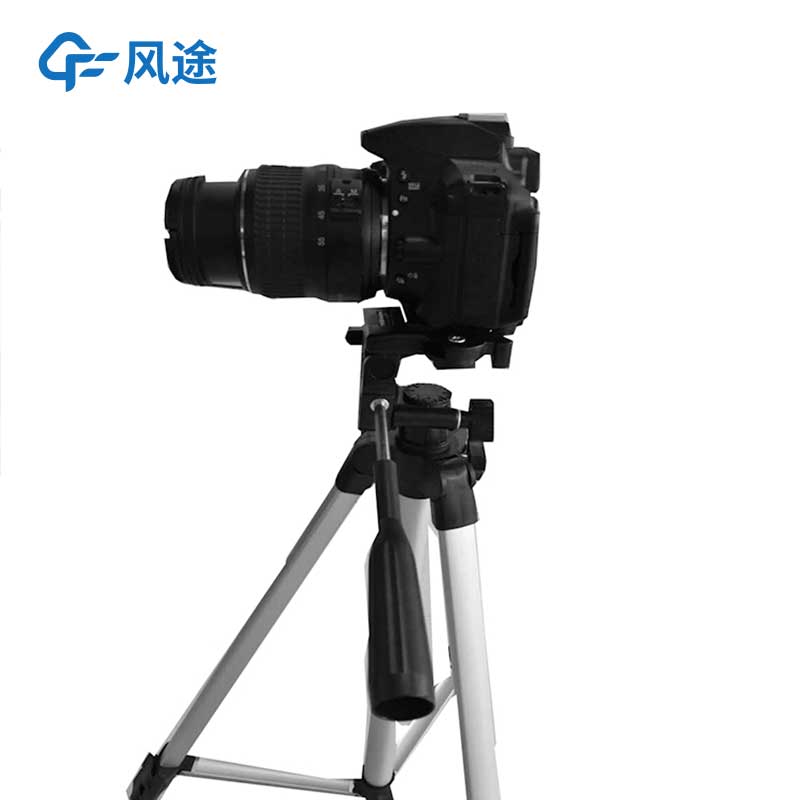
The FT-EL2 model Portable el detector is specifically designed for the detection of internal defects in photovoltaic solar panels, which can help users better control the product quality and reduce the production and installation risks. It is equipped with a 24-megapixel infrared camera, which can accurately capture the internal DC quality problems of the photovoltaic panel. The captured EL image has a clear quality and extremely high imaging accuracy. It has a full-time autofocus module to ensure that accurate images can be obtained in each detection. The device is also equipped with an energy storage power supply and a Wi-Fi wireless control module. Whether it is in the scenarios of the arrival inspection of components in a photovoltaic power station, the testing of components on the bracket after installation, or the quality inspection of components in a warehouse, laboratory, or factory, the detection work can be carried out conveniently and quickly, and the on-site 24-hour uninterrupted testing can be realized. Whether it is a crystalline silicon module or a thin-film module (which can be customized), the FT-EL2 can efficiently detect it, providing strong support for the quality control of the photovoltaic industry and ensuring the stable and efficient operation of the photovoltaic power station.
Since ancient times, agriculture has been the industry most closely tied to natural conditions, with "relying on heaven for food" being the most authentic portrayal of farmers. Traditional agricultural production heavily relies on personal experience and passed-down farming proverbs to pre...
Handheld Anemometer employs precision sensors and intelligent chips to accurately measure both wind direction and wind speed simultaneously. It is suitable for agriculture, forestry, environmental protection, marine science, and scientific research, used for real-time monitoring of atmospheric...
fluorescence quantitative PCR instrument is a four-channel 16-well quantitative PCR instrument running on an Android operating system. It has a temperature control range of 4℃ to 99℃ and a heated lid temperature of 30℃ to 108℃, making it suitable for molecular diagnostics, pathogen detecti...
Corn GMO Detector is a specialized solution custom-designed for maize. Based on real-time quantitative fluorescence technology, the system consists of a 4-channel, 16-well real-time quantitative PCR instrument and a portable accessory kit. It enables rapid and precise detection of transgenic c...


 Skype
Skype
 whatsapp
 mail
mail