Tianqiong Sensor IOT Technology Co., Ltd
Sales Manager:Ms. Emily Wang
Cel,Whatsapp,Wechat:+86 15898932201
Email:info@fengtutec.com
Add:No. 155 Optoelectronic Industry Accelerator, Gaoxin District, Weifang, Shandong, China


Sales Manager:Ms. Emily Wang
Cel,Whatsapp,Wechat:+86 15898932201
Email:info@fengtutec.com
Add:No. 155 Optoelectronic Industry Accelerator, Gaoxin District, Weifang, Shandong, China
time:2026-07-13 10:41:53 source:Weather Station viewed:36 time
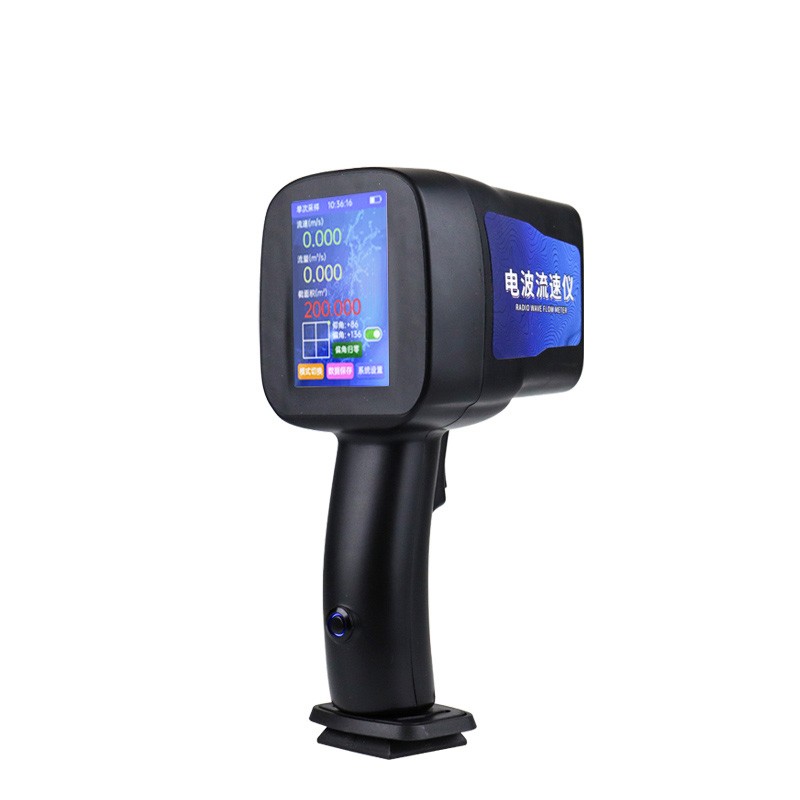
Instruments for measuring water flow velocity are specialized devices used to determine the speed of water in rivers, canals, pipelines, and other bodies of water. They fall into categories such as mechanical propeller, electromagnetic, and ultrasonic Doppler types. Modern portable flow meters utilize non-contact measurement technology, remaining unaffected by sediment or corrosive wastewater, while enabling rapid data acquisition and flow rate estimation.
These instruments serve as fundamental tools in hydrological monitoring and water resource management, finding wide application in river velocity measurement, irrigation canal flow monitoring, municipal drainage network inspections, industrial wastewater discharge monitoring, and emergency flow measurement during flood control operations. Based on their measurement principles, these instruments are primarily classified into mechanical rotor (propeller/cup), electromagnetic, and ultrasonic Doppler types.
Mechanical rotor flow meters represent the most traditional category, comprising both propeller and cup types. Propeller-type meters operate by using the water flow to drive the rotation of a propeller; a defined functional relationship exists between the propeller's rotational speed and the water velocity, allowing the velocity to be determined by measuring the rotation rate. These propellers typically have a diameter of 60 mm and a measurement range of 0.05 to 7 m/s, capable of functioning effectively even in water with high sediment content. Cup-type flow meters utilize a rotor composed of conical cups and are suitable for measuring low flow velocities. While these instruments feature simple structures and low costs, they require the sensor to be submerged in the water; furthermore, as each reading provides only a single-point velocity, determining the average velocity across an entire cross-section requires multiple measurements, making the process time-consuming and labor-intensive.
Ultrasonic Doppler flow meters are a new type of flow measurement device that has seen rapid development in recent years. They operate by emitting high-frequency sound waves into the water; when these waves encounter suspended particles or air bubbles within the flow, they are reflected back. The frequency of the reflected waves shifts due to the Doppler effect, with the magnitude of the shift being directly proportional to the water velocity. The instrument calculates the velocity by analyzing this frequency shift and employs built-in temperature compensation algorithms to correct for the impact of water temperature on the speed of sound. These devices enable non-contact measurement, are unaffected by sediment, debris, or corrosive water conditions, and offer high measurement accuracy. Some handheld Doppler flow meters offer a measurement range of 0.01 to 10 m/s, an accuracy of ±1% FS, and an IP67 protection rating, with a built-in lithium battery capable of over 24 hours of continuous operation.
Portable flow meters represent the mainstream product type in the current market. Lightweight and compact, these instruments support various mounting configurations, including handheld use, tripod mounting, or boat-based deployment. They feature a color LCD screen that displays real-time data such as flow velocity, flow rate, and cross-sectional area. Data can be exported via USB or Bluetooth, and some models support 4G wireless transmission to cloud platforms. Portable flow meters have become indispensable field measurement tools for scenarios requiring rapid response, such as flood control, aquatic environment monitoring, and the acceptance inspection of water conservancy projects.
Ground-based meteorological observation statio is a multi-parameter automatic weather station that monitors multiple parameters in real time....
Pool and Spa Water Quality Monitoring provides 24/7 online monitoring of core parameters including pool water temperature, pH, residual chlorine, turbidity, dissolved oxygen, and ORP. Data recording is accurate and traceable, supporting sensor expansion, data export, and alarms for exceeding l...
The River Flow Monitoring System is mainly used for remotely grasping the real-time hydrological conditions of various water areas, including natural rivers, artificial canals, and landscape watercourses. It assists relevant authorities in promptly recording the dynamic changes of river water source...
Water Hardness Tester can monitor water hardness and chloride ion levels online, record and store historical and alarm data, support data export, and facilitate integration with automation systems via RS485 MODBUS-RTU communication. It is suitable for boiler water, circulating cooling water, d...


 Skype
Skype
 whatsapp
 mail
mail