Tianqiong Sensor IOT Technology Co., Ltd
Sales Manager:Ms. Emily Wang
Cel,Whatsapp,Wechat:+86 15898932201
Email:info@fengtutec.com
Add:No. 155 Optoelectronic Industry Accelerator, Gaoxin District, Weifang, Shandong, China


Sales Manager:Ms. Emily Wang
Cel,Whatsapp,Wechat:+86 15898932201
Email:info@fengtutec.com
Add:No. 155 Optoelectronic Industry Accelerator, Gaoxin District, Weifang, Shandong, China
time:2026-07-03 10:51:02 source:Weather Station viewed:39 time
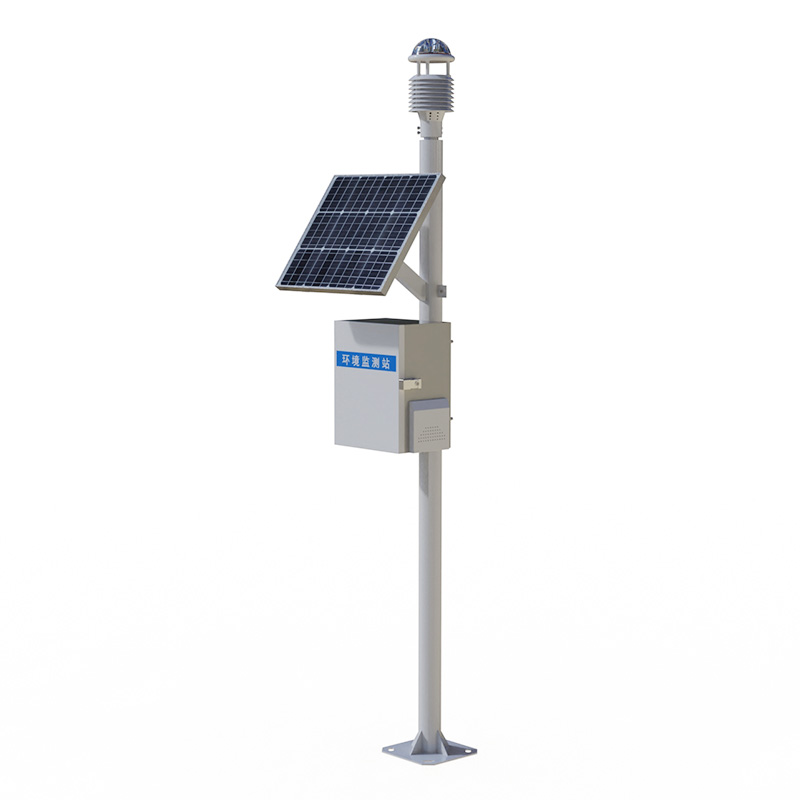
An automatic weather station is a highly integrated, low-power, and quickly installable automatic meteorological observation device. It uses a twelve-element integrated sensor to monitor parameters such as wind speed, wind direction, temperature, humidity, air pressure, rainfall, and PM2.5 in real time, transmitting data to a central station via wireless transmission methods such as GPRS.
An automatic weather station is a device capable of automatically observing and storing meteorological observation data. It mainly consists of sensors, a data logger, a communication interface, and a system power supply. As meteorological element values change, the electrical output of the sensing elements of each sensor changes. This change is collected by the data logger, and after linearization and quantification, the engineering quantity is converted into element quantity, ultimately yielding the values of each meteorological element.
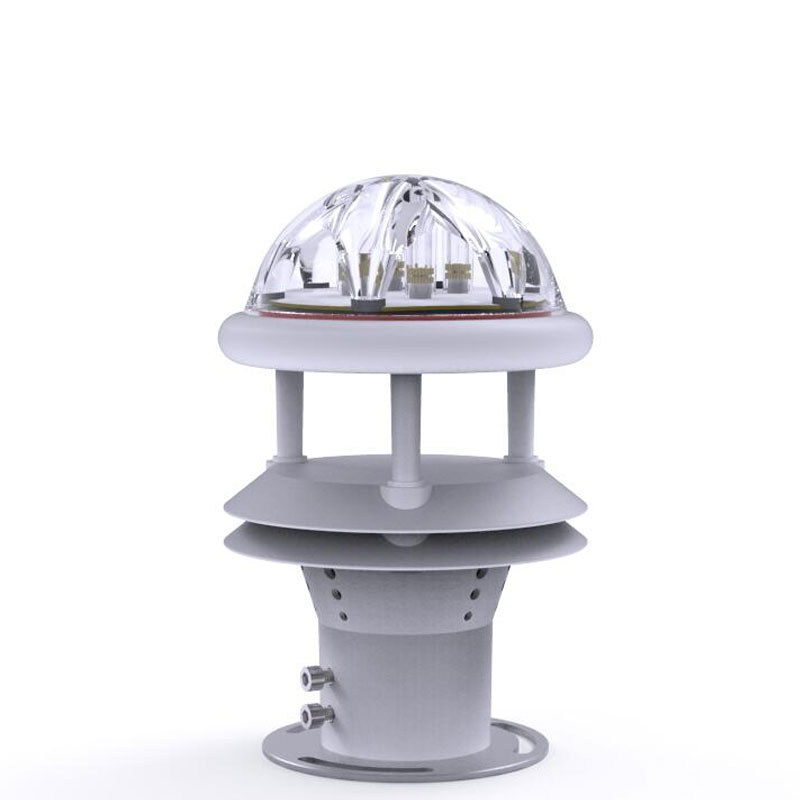
In terms of technical architecture, current mainstream automatic weather stations generally adopt a highly integrated design. The equipment consists of five parts: meteorological sensors, a data logger, a solar power supply system, a pole support, and a cloud platform. Taking the 12-element integrated weather station as an example, this equipment innovatively adopts a 12-element integrated sensor, enabling real-time observation of meteorological elements such as wind speed, wind direction, air temperature, humidity, atmospheric pressure, optical rainfall, PM2.5, PM10, CO, SO2, NO2, and O3. It achieves continuous online monitoring of outdoor meteorological parameters 24 hours a day, and outputs all 12 parameters to the user at once via a digital communication interface. The sensor housing is made of imported ABS or ASA material, effectively resisting environments such as salt spray, with a protection level of IP65 or higher.
Regarding data transmission, the automatic weather station comes standard with GPRS networking and offers optional RJ45, Ethernet, 4-20mA, LoRa transparent transmission, 4G transparent transmission, Bluetooth, and 485 to USB transmission methods. The equipment supports wired, Bluetooth, and GPRS transmission methods, requires no debugging, can be quickly deployed, and is suitable for various emergency short-term meteorological observations and mobile meteorological monitoring scenarios. For power supply, it uses a combination of solar power and a battery, and the charging controller employs MPPT automatic power point tracking technology, which can improve efficiency by 20%.
In terms of measurement accuracy, automatic weather stations have the following ranges: wind speed measurement range: 0 to 60 meters per second, accuracy ±0.1 meters per second; wind direction measurement range: 0 to 360 degrees, accuracy ±2 degrees; air temperature measurement range: -40 to 80 degrees Celsius, accuracy ±0.3 degrees Celsius; air humidity measurement range: 0 to 100% relative humidity, accuracy ±3% relative humidity; atmospheric pressure measurement range: 300 to 1100 hPa, accuracy ±0.25%; optical rainfall measurement range: 0 to 4 millimeters per minute.
Automatic weather stations have a wide range of applications, covering weather forecasting, agricultural production, forestry monitoring, environmental protection, marine observation, airport meteorological support, port operation safety, scientific research, and campus teaching. The equipment can automatically detect multiple elements without manual intervention, automatically generate reports, and transmit the detection data to the central station on a regular basis, making it an important means of filling gaps in meteorological detection data across spatial areas. With the continuous advancement of meteorological observation station network construction in my country, by 2014, the number of national-level operational automatic weather stations had reached 2,416, and the number of small- and medium-scale weather monitoring automatic weather stations built by various provinces, autonomous regions, and municipalities had exceeded 40,000. Automatic weather stations are playing an increasingly important role in improving the density of meteorological monitoring and the accuracy of forecasts.
The Handheld Weather meter is extremely lightweight with an ergonomic design that can be held and operated with one hand. It can real-time monitor five core meteorological elements: wind speed, wind direction, temperature, humidity, and atmospheric pressure. Its rugged housing design can withstand c...
The Anemometer for Drones FT-F1 is specially designed for low-altitude wind measurement by unmanned aerial vehicles (UAVs). With high precision, stability, and efficiency, it provides accurate data for meteorological research, agricultural and forestry monitoring, environmental surveying, and other...
Handheld Anemometer employs precision sensors and intelligent chips to accurately measure both wind direction and wind speed simultaneously. It is suitable for agriculture, forestry, environmental protection, marine science, and scientific research, used for real-time monitoring of atmospheric...
A School Weather Station is a comprehensive device established on campus that can automatically, continuously, and in real-time observe and record various meteorological elements. Composed of sensors, data loggers, power supply systems, communication modules, and data display platforms (such as camp...


 Skype
Skype
 whatsapp
 mail
mail