Tianqiong Sensor IOT Technology Co., Ltd
Sales Manager:Ms. Emily Wang
Cel,Whatsapp,Wechat:+86 15898932201
Email:info@fengtutec.com
Add:No. 155 Optoelectronic Industry Accelerator, Gaoxin District, Weifang, Shandong, China


Sales Manager:Ms. Emily Wang
Cel,Whatsapp,Wechat:+86 15898932201
Email:info@fengtutec.com
Add:No. 155 Optoelectronic Industry Accelerator, Gaoxin District, Weifang, Shandong, China
time:2026-08-07 10:06:18 source:Weather Station viewed:22 time
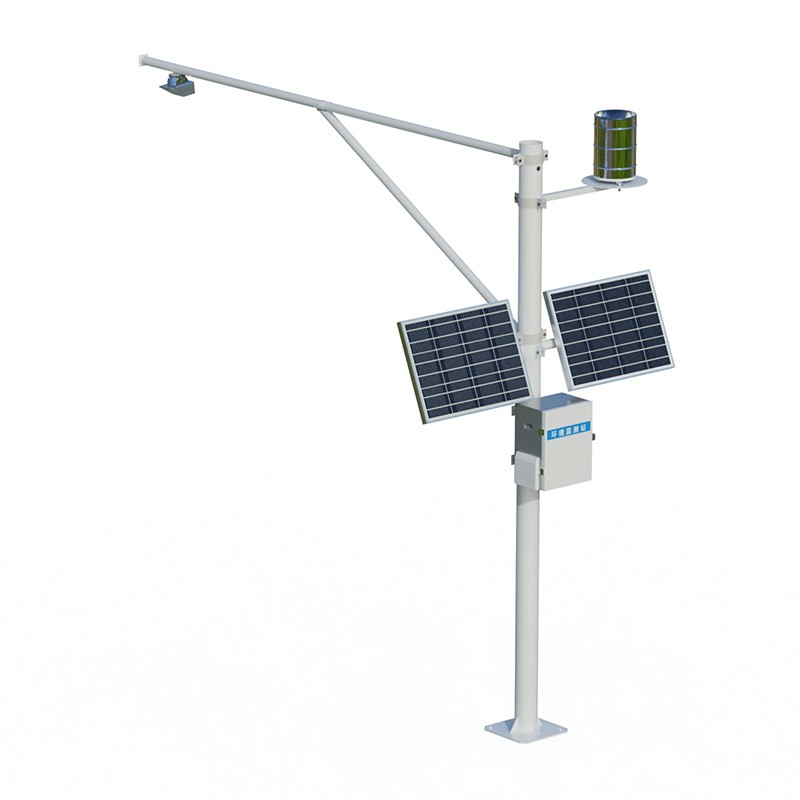
This system is a fully automated online hydrological monitoring device built on microwave technology. Equipped with K-band planar radar technology, it accurately monitors water data using a non-contact acquisition method. Adaptable to various water conservancy scenarios, it features anti-interference, low power consumption, and easy maintenance.
Traditional water conservancy and hydrological monitoring largely relies on manual operation and contact-based equipment. This not only results in delayed data acquisition and high labor costs but is also susceptible to interference from factors such as water sediment, floating debris, and ambient temperature, making it difficult to guarantee monitoring accuracy and failing to meet the real-time management needs of modern reservoir flood control and water resource allocation. The reservoir water level monitoring system specifically addresses the shortcomings of traditional monitoring by relying on advanced K-band planar radar microwave technology and a non-contact monitoring mode. It can complete the all-weather acquisition of multiple hydrological data without contacting the water body, significantly improving the stability and accuracy of hydrological monitoring.
The reservoir water level monitoring system can simultaneously monitor water level, flow velocity, discharge, and rainfall in multiple dimensions. It incorporates professional software algorithms to calculate and output cross-sectional and cumulative flow data in real time, enabling automated acquisition, analysis, and transmission of hydrological data. The equipment boasts excellent monitoring performance, with a water level measurement range of 0.1 to 40 meters, a measurement accuracy of ±5 mm, and a resolution of 1 mm. The monitoring interval is flexibly adjustable. The flow velocity monitoring range covers 0.15 to 15 m/s, with a velocity accuracy of ±2% and a velocity resolution of 0.01 m/s, adapting to the monitoring needs of various water bodies.
In actual operation, the reservoir water level monitoring system exhibits outstanding anti-interference capabilities. Measurement data is unaffected by external factors such as temperature changes, water sediment, pollutants, and floating debris, ensuring data accuracy in complex aquatic environments. Furthermore, the equipment features low overall power consumption, a compact size, convenient installation and deployment, minimal maintenance, and enhanced reliability, making it suitable for long-term unattended monitoring scenarios. Its applications are very wide. It can be used for hydrological monitoring of water bodies such as rivers, lakes, irrigation canals, underground drainage pipe networks, and reservoir gates. It can also assist in urban water supply and sewage treatment operations, and provide accurate and real-time data support for flood control early warning, water resource allocation, and drainage flow control. It is an important basic monitoring device in the construction of smart water conservancy.
The petrochemical production process involves a large number of flammable and explosive chemical substances, such as crude oil, gasoline, ethylene, and so on. During storage, transportation, and production, these substances can easily trigger explosions and fires once they encounter an ignition sour...
PCR Machine supports the simultaneous detection of two fluorescently labeled targets within a single reaction well. Its 16-well sample throughput combined with a dual-channel parallel design doubles the information obtained in a single detection. The device utilizes an imported high-quality TE...
Corn GMO Detector is a specialized solution custom-designed for maize. Based on real-time quantitative fluorescence technology, the system consists of a 4-channel, 16-well real-time quantitative PCR instrument and a portable accessory kit. It enables rapid and precise detection of transgenic c...
Environmental monitoring centers play a crucial role in atmospheric environment monitoring, responding to sudden environmental incidents, and providing data support for environmental protection decision - making. A portable and powerful mobile weather station is of great significance for improving i...


 Skype
Skype
 whatsapp
 mail
mail