Tianqiong Sensor IOT Technology Co., Ltd
Sales Manager:Ms. Emily Wang
Cel,Whatsapp,Wechat:+86 15898932201
Email:info@fengtutec.com
Add:No. 155 Optoelectronic Industry Accelerator, Gaoxin District, Weifang, Shandong, China


Sales Manager:Ms. Emily Wang
Cel,Whatsapp,Wechat:+86 15898932201
Email:info@fengtutec.com
Add:No. 155 Optoelectronic Industry Accelerator, Gaoxin District, Weifang, Shandong, China
time:2025-12-29 10:32:42 source:Weather Station viewed:474 time
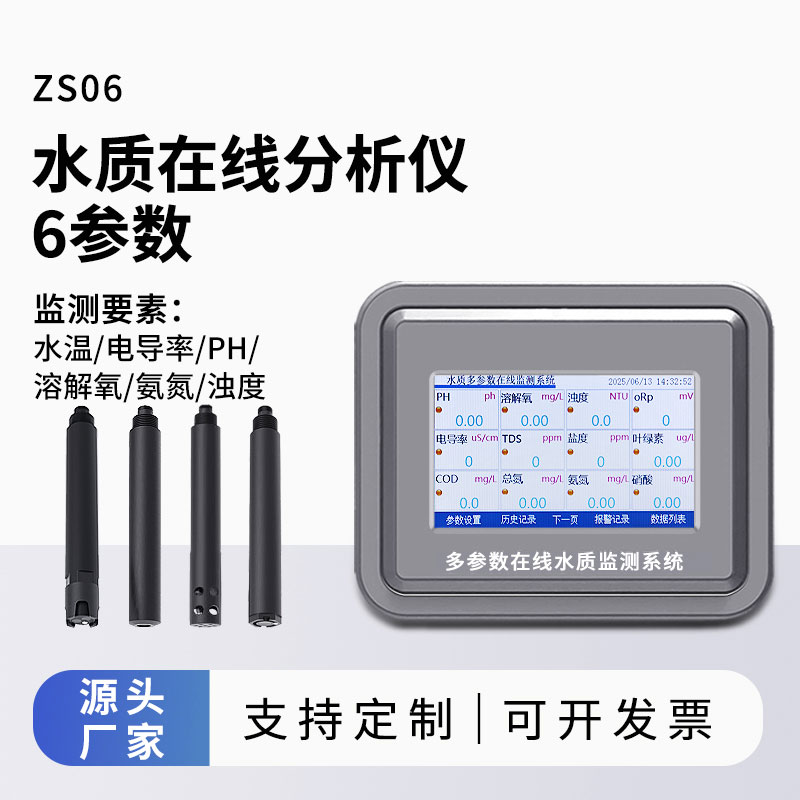
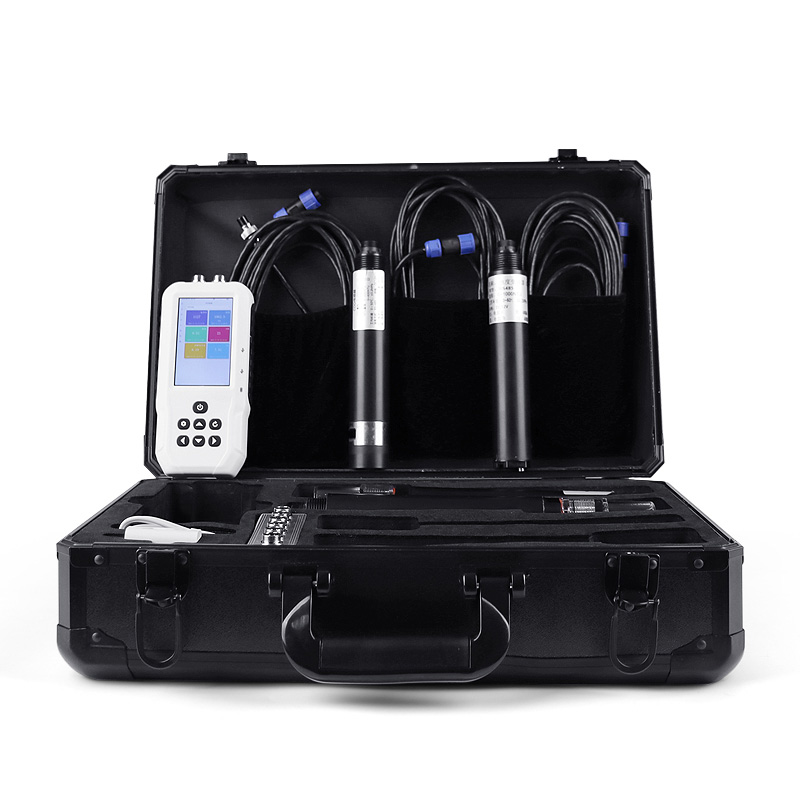
Water quality monitoring equipment is an integrated device based on Internet of Things (IoT) technology, capable of synchronously monitoring water conductivity, pH, dissolved oxygen, ammonia nitrogen, turbidity, and water temperature online. This system supports automatic data acquisition and transmission, and is suitable for long-term continuous monitoring in drinking water distribution networks and secondary water supply systems.
Water quality monitoring equipment is an integrated device used for continuous and automatic measurement of key physical and chemical indicators of water bodies. Its core function is to obtain real-time data on multiple water quality parameters in situ or in a flow cell without manual sampling and laboratory analysis, providing immediate information for water quality safety management.
These instruments typically employ an integrated structural design, integrating multiple independent sensor probes into a single measurement chamber or flow unit. The commonly monitored parameters include conductivity, pH, dissolved oxygen, ammonia nitrogen, turbidity, and water temperature. Each parameter corresponds to a dedicated sensor: pH and ammonia nitrogen use ion-selective electrode methods, dissolved oxygen uses fluorescence or polarographic methods, turbidity uses optical scattering principles, and conductivity and water temperature are measured through conductivity electrodes and temperature probes. The central controller inside the instrument coordinates the orderly operation of each sensor, performing signal acquisition, conversion, and compensation to reduce mutual interference between different parameter measurements.
A complete online monitoring system consists of three parts: a field monitoring instrument, a data transmission unit, and a remote monitoring platform. The monitoring instrument is the front end of the system, responsible for performing measurement tasks. Its design focuses on long-term operational stability and anti-fouling capabilities, and it is usually equipped with an automatic cleaning brush or compressed air cleaning device to address potential sensor fouling problems caused by complex water bodies. The data transmission unit (DTU) periodically sends the data packets collected and processed by the instrument to a cloud server or monitoring center via wired or wireless networks (such as 4G, fiber optic, LoRa). The remote monitoring platform is responsible for receiving, storing, and displaying data, and can automatically trigger alarms when thresholds are exceeded. Users can view real-time data, historical curves, and statistical reports at any time via computer or mobile app.
The main application areas of this device are concentrated in drinking water safety assurance. In municipal water supply networks, it is installed at key nodes to continuously monitor water quality changes in treated water, network water, and end-point water, promptly detecting water quality abnormalities caused by pipe aging, secondary pollution, or accidental events. This device, when installed in secondary water supply facilities (such as pump rooms and water tanks in high-rise residential buildings), enables water companies or property management departments to remotely monitor the water quality in the tanks, ensuring that the water storage and pressurization processes comply with hygiene standards. Furthermore, it can be applied to various scenarios including source water protection, wastewater treatment process control, industrial circulating water system monitoring, and water quality assessment of rivers and lakes.
The advantages of Water quality monitoring equipment lie in its efficient automation and data integration. It replaces cumbersome manual daily inspections and laboratory testing, increasing water quality monitoring frequency from several times a day to continuously every few minutes, significantly improving the timeliness and density of monitoring data. The integrated design reduces equipment footprint and installation complexity, while simultaneous multi-parameter measurement ensures strict temporal synchronization of data, facilitating the analysis of correlations between different parameters. The IoT-based architecture allows managers to achieve centralized monitoring and unified scheduling across different regions, significantly improving management efficiency and emergency response speed.
Maintenance is crucial for ensuring long-term data reliability. Routine maintenance mainly includes regular sensor calibration, replacement of sensor membranes or electrolytes, cleaning of the measurement window, and checking communication status. With advancements in sensor technology and data algorithms, modern Water quality monitoring equipment devices are becoming more intelligent, possessing stronger self-diagnostic capabilities and interference resistance, while also improving data accuracy and adaptability under complex water quality conditions. This device has become an indispensable infrastructure for building smart water systems and achieving digital supervision of the entire process from water source to tap.
African swine fever laboratory diagnostics is equipped with two independent detection channels and a total of 16 reaction wells, enabling simultaneous processing of two samples for parallel testing. This device is used for the quantitative and rapid diagnosis of livestock diseases such as Afri...
In the road traffic environment safety monitoring system, the Laser Snow Depth Monitor, especially in areas with frequent snowfall in winter, can accurately and real-time monitor the depth of snow on the road surface. It provides key data for traffic management departments, helping to ensure road sa...
Handheld Weather meter is a portable and easy-to-operate mobile meteorological observation device that integrates the measurement functions of five meteorological elements: wind speed, wind direction, temperature, humidity, and atmospheric pressure. It uses precision sensors and intelligent ch...
Smart agriculture emerges from the deep integration of modern technology and agriculture. Through technologies like the Internet of Things, big data, and artificial intelligence, it achieves full-process information perception, intelligent decision-making, automatic control, and precise management i...


 Skype
Skype
 whatsapp
 mail
mail