Tianqiong Sensor IOT Technology Co., Ltd
Sales Manager:Ms. Emily Wang
Cel,Whatsapp,Wechat:+86 15898932201
Email:info@fengtutec.com
Add:No. 155 Optoelectronic Industry Accelerator, Gaoxin District, Weifang, Shandong, China


Sales Manager:Ms. Emily Wang
Cel,Whatsapp,Wechat:+86 15898932201
Email:info@fengtutec.com
Add:No. 155 Optoelectronic Industry Accelerator, Gaoxin District, Weifang, Shandong, China
time:2026-11-10 10:12:56 source:Weather Station viewed:0 time
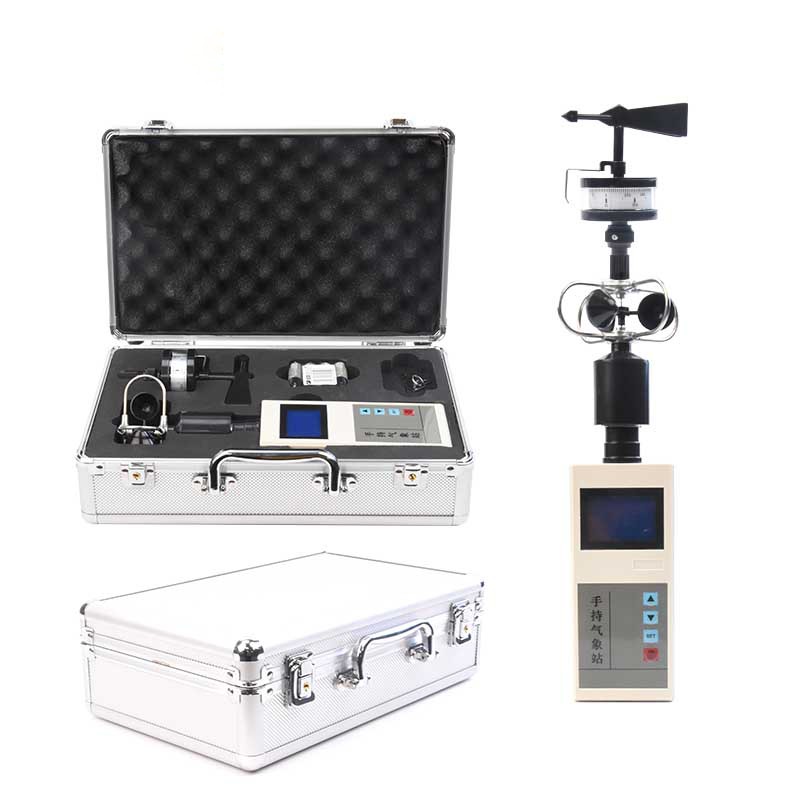
The Handheld Anemometer is a portable, easy-to-operate meteorological observation device designed primarily for on-site measurement of wind speed and wind direction. It integrates precision sensors with an intelligent chip and features a high-capacity internal storage module capable of retaining at least one year’s worth of data. Data can be exported for further analysis by connecting a USB flash drive to the device’s USB port. Typically, the wind speed measurement range spans 0 to 30 meters per second, with an accuracy of ±0.3 m/s and a resolution of 0.01 m/s; wind direction is displayed across 16 cardinal points with an accuracy of ±1 position. The unit is generally powered by standard dry-cell batteries; its low-power design ensures long-term standby capability for outdoor use, while its compact structure makes it easy to carry by hand or keep with you. Such instruments are widely used in fields including meteorological observation, environmental monitoring, airport operations, agricultural and forestry surveys, hydrological measurement, and warehouse environment management, effectively meeting the need for rapid, on-site acquisition of wind parameters.
In practical terms, the core value of the Handheld Anemometer lies in its ability to pack laboratory-grade measurement capabilities into a device that fits in one hand. The wind speed sensor typically utilizes a rotating-vane probe, which features a low starting threshold—ensuring it remains responsive even in light breezes, so that even very low wind speeds are not missed. For wind direction, the device uses a dial and pointer to indicate real-time orientation; some models even include an automatic "north-finding" feature, eliminating the need for manual orientation. Users can adjust the data-logging interval to set an appropriate sampling frequency based on their monitoring cycle, preventing the storage space from being filled with redundant or unnecessary data. An LCD screen displays current wind speed and direction, providing intuitive, real-time readings without the need to connect to a smartphone or computer.
The power supply method determines the Handheld Anemometer’s operational endurance in the field. Many models are powered by three AA batteries, which are easy to replace—eliminating the need to search for a power outlet—and making the device well-suited for multi-day, continuous observation tasks. Its low-power design extends standby time, minimizing the inconvenience of frequent battery changes. The device is designed to be handheld and lightweight, ensuring that holding it for extended periods during measurements does not place excessive strain on the user's wrist. Some models come with an aluminum alloy carrying case, which protects the sensors and display during transport and makes it convenient to carry the unit between different locations.
When selecting a device, it is important to consider the balance between measurement range and accuracy. A nominal range of 0 to 30 meters per second covers the vast majority of ground-level wind conditions, while an accuracy of ±0.3 meters per second is sufficient for on-site inspections and routine data logging. If your application requires high precision regarding wind direction, look for models that feature an automatic north-finding (orientation) function. In terms of storage, a capacity of 40,000 data records—combined with adjustable logging intervals—is more than enough to support continuous monitoring for over a year. While a USB port may not be the most cutting-edge interface, it offers excellent compatibility, allowing data to be read directly on any computer without the need for specialized drivers or software. For users who also need to monitor temperature or air pressure, some models include these additional parameters; however, as the core functionality remains focused on wind measurement, these extra features should be considered optional based on your specific operational requirements.
Fluorescent Quantitative PCR Detection System is a laboratory instrument integrating fluorescence optical detection, a temperature control system, and data analysis software. It employs four-channel fluorescence detection and a 48-well reaction module, with a maximum power of 550W and a weight...
As a device widely used in fields such as water conservancy monitoring, environmental governance, and engineering construction, a flow meter can monitor water flow velocity data in real time with high accuracy, providing a scientific basis for decision-making. Currently, mainstream flow meters on th...
Online Chlorophyll Analyzer employs a fluorescence-based detection technique with a measurement range of 0 to 400 µg/L, while simultaneously recording water temperature. It achieves a correlation coefficient greater than 0.999 and a resolution of 0.01 µg/L. The device supports the integration of v...
Complete Weather Station is a high-precision automatic observation device integrating twelve monitoring elements. It features low power consumption, requires no debugging, and can be deployed quickly. Supporting wireless data transmission, it is suitable for meteorological and environmental mo...


 Skype
 whatsapp
 mail