Tianqiong Sensor IOT Technology Co., Ltd
Sales Manager:Ms. Emily Wang
Cel,Whatsapp,Wechat:+86 15898932201
Email:info@fengtutec.com
Add:No. 155 Optoelectronic Industry Accelerator, Gaoxin District, Weifang, Shandong, China


Sales Manager:Ms. Emily Wang
Cel,Whatsapp,Wechat:+86 15898932201
Email:info@fengtutec.com
Add:No. 155 Optoelectronic Industry Accelerator, Gaoxin District, Weifang, Shandong, China
time:2026-05-20 13:15:53 source:Weather Station viewed:226 time
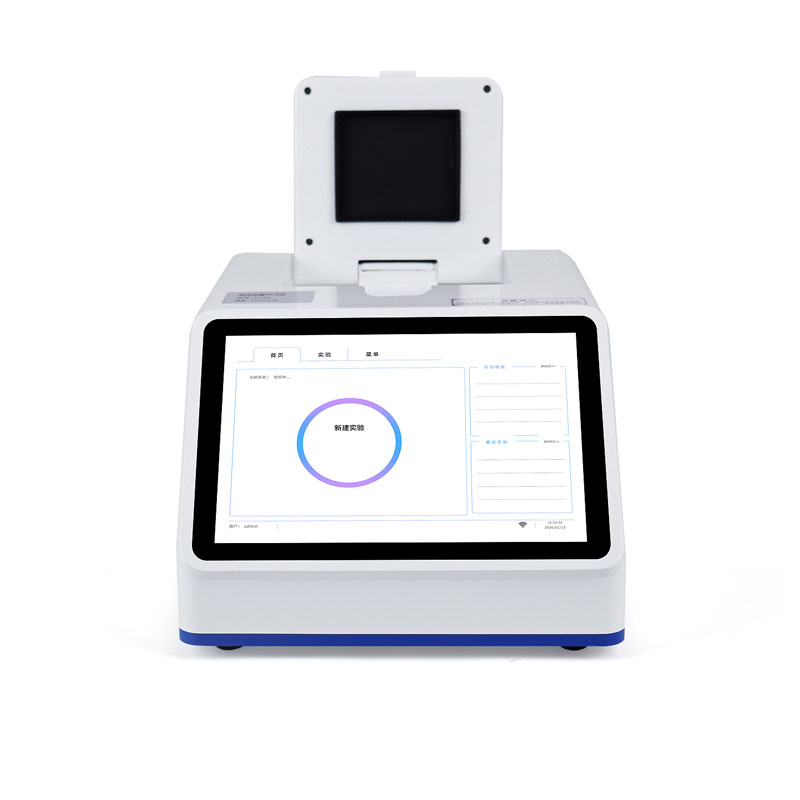
Fluorescent Quantitative PCR Detection System is a laboratory instrument integrating fluorescence optical detection, a temperature control system, and data analysis software. It employs four-channel fluorescence detection and a 48-well reaction module, with a maximum power of 550W and a weight of 7.5kg. It can be used in molecular diagnostics, pathogen detection, gene expression analysis, and scientific research experiments.
Fluorescent Quantitative PCR Detection System is a laboratory instrument that measures fluorescence during polymerase chain reaction (PCR). Clinically, this type of instrument can be used for qualitative and quantitative detection of target nucleic acids in human samples, including pathogens and human genes. The instrument consists of a fluorescence quantitative detection system and a computer control system, used to monitor changes in fluorescence signals during PCR cycles. Dedicated analysis software displays the data graphically, such as plotting a curve of fluorescence intensity relative to cycle number. The four-channel, 48-well real-time fluorescence quantitative PCR system is an integrated device designed for medium-throughput detection needs, suitable for molecular diagnostics, life science research, pathogen detection, and gene expression analysis.
In terms of the optical system, the four-channel 48-well Fluorescent Quantitative PCR Detection System system employs a design based on confocal fluorescence detection and fluorescence spectral separation technologies. Confocal fluorescence detection focuses the excitation light onto the sample and collects the fluorescence emitted by the sample, effectively removing background and excitation light interference to obtain a high signal-to-noise ratio fluorescence signal, saving on fluorescent probes and dyes. Fluorescence spectral separation technology uses specific excitation sources and filters to separate the spectra of all channels into mutually exclusive bands, effectively eliminating cross-interference in fluorescence between channels. The system can simultaneously detect multiple target genes, is compatible with most fluorescent dyes or probes, and rapidly completes multiplex PCR applications based on various dyes.
The temperature control system is a key performance determinant of the real-time quantitative PCR system. The device uses semiconductor cooling technology based on the Peltier effect, with multiple semiconductor cooling pads arranged below the heating block to improve temperature uniformity and accuracy. The average heating/cooling rate of mainstream models can reach 4 to 7℃/s, the temperature control range covers 0 to 100℃, the temperature accuracy is controlled within ±0.2℃, and the temperature uniformity also reaches ±0.2℃. Some models support dynamic temperature gradient functionality, allowing simultaneous operation of 8 to 16 different temperature gradients with a temperature difference range of 1 to 24°C, suitable for optimizing primer annealing temperatures. Gradient PCR avoids the process of repeatedly trying to find the optimal annealing temperature, effectively improving experimental efficiency. The precise temperature control system can detect differences in target template quantity as low as 1.5 times, with a linear dynamic range covering 1 to 10¹⁰ copy numbers, suitable for low-abundance gene detection and quantitative analysis of high-concentration samples.
In terms of operation and data analysis, the equipment is typically equipped with a high-resolution color touchscreen, allowing for independent operation and real-time monitoring of PCR fluorescence amplification curves without a computer connection. Data can be received via USB flash drive, network, or remote email. The software system supports various analysis modes, including absolute quantification, relative quantification, melting curve analysis, and genotyping. The equipment measures approximately 270 × 352 × 195 mm, weighs 7.5 kg, operates on 220V power, and has a maximum operating power of 550 watts. Its compact design makes it suitable for various environments, including molecular biology laboratories, clinical laboratories, and public health testing institutions.
In the photovoltaic field, "black heart" is a serious quality issue, manifested as the luminous intensity of some areas inside the photovoltaic module being significantly lower than the normal level, presenting black or dark areas. This indicates that the performance of the battery cells i...
I. Core Hardware Configuration(I) Meteorological SensorsBasic Elements: Wind speed, wind direction, air temperature, humidity, atmospheric pressure, rainfall, and light intensity sensors should be equipped as basic standards. The accuracy of each sensor should meet national meteorological instrument...
Environmental monitoring centers play a crucial role in atmospheric environment monitoring, responding to sudden environmental incidents, and providing data support for environmental protection decision - making. A portable and powerful mobile weather station is of great significance for improving i...
Urban waterlogging is an invisible "underground threat".In recent years, extreme rainfall events have occurred frequently, and many cities have suffered severe waterlogging. News of traffic paralysis, flooded vehicles, and trapped residents are not uncommon, which not only seriously affect...



 Skype
Skype
 whatsapp
 mail
mail