Tianqiong Sensor IOT Technology Co., Ltd
Sales Manager:Ms. Emily Wang
Cel,Whatsapp,Wechat:+86 15898932201
Email:info@fengtutec.com
Add:No. 155 Optoelectronic Industry Accelerator, Gaoxin District, Weifang, Shandong, China


Sales Manager:Ms. Emily Wang
Cel,Whatsapp,Wechat:+86 15898932201
Email:info@fengtutec.com
Add:No. 155 Optoelectronic Industry Accelerator, Gaoxin District, Weifang, Shandong, China
time:2025-12-02 10:48:01 source:Weather Station viewed:436 time
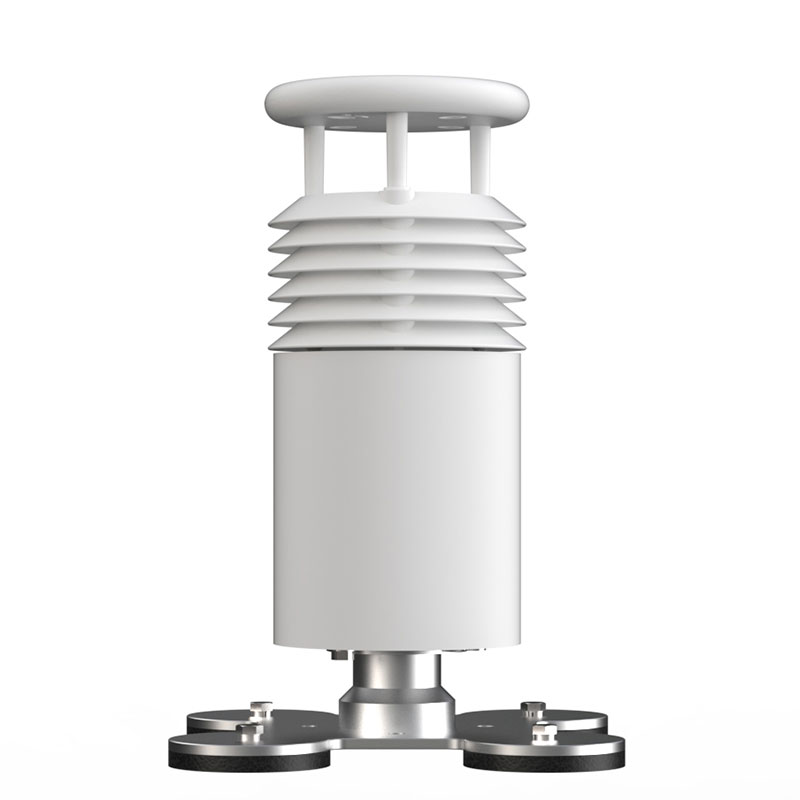
Vehicle Weather Station is a professional mobile monitoring device based on the ultrasonic time-of-flight principle. It accurately calculates wind speed and direction by measuring the time difference of ultrasonic wave propagation, and integrates temperature, humidity, and pressure sensors to achieve real-time collection of multi-element meteorological data on a vehicle platform.
Vehicle Weather Station is a high-precision automatic meteorological observation device specifically designed for mobile platforms. Its core function is to continuously monitor multiple key meteorological parameters at the current location in real-time while the vehicle is in motion. This system integrates advanced ultrasonic wind measurement technology and other environmental sensors, and is widely used in meteorological emergency monitoring, field scientific research, environmental mobile inspection, and traffic meteorological safety early warning.
The most significant technical feature of this device is the use of the ultrasonic time-of-flight method to measure wind speed and direction. Its working principle involves placing pairs of ultrasonic probes inside the device, which transmit and receive ultrasonic signals to each other. When air flows, the ultrasonic propagation speed in the downwind and upwind directions will differ, resulting in a propagation time difference. The microprocessor inside the device precisely calculates these time differences to determine accurate wind speed and direction values. This technology is entirely solid-state, completely eliminating traditional mechanical rotating parts such as wind cups and wind vanes, fundamentally avoiding problems such as mechanical wear, bearing freezing, and starting wind speed limitations. It boasts advantages such as high measurement accuracy, fast response speed, and low maintenance requirements.
To meet the special requirements of vehicle-mounted mobile monitoring, these meteorological stations have several adaptive features. The device is usually equipped with high-strength magnets (rubber-coated) that can be securely and non-destructively attached to the vehicle roof, allowing for quick installation and removal. The built-in electronic compass and Beidou/GPS dual-mode positioning module are key components. The electronic compass is used to automatically identify the device's orientation (automatic north finding), while the positioning module continuously records the vehicle's precise location and heading speed information. While the vehicle is in motion, the system combines the original ultrasonic wind measurement data with the vehicle's own speed and direction data, performing vector correction through algorithms to ultimately extract the true environmental wind speed and direction, thus ensuring data accuracy in mobile conditions.
In addition to core wind speed and direction measurement, modern Vehicle Weather Station devices are usually integrated as multi-element all-in-one sensors. In addition to wind speed and direction, it can simultaneously monitor basic meteorological elements such as air temperature, relative humidity, and atmospheric pressure. Some high-end models can also integrate monitoring modules for optical rainfall, PM2.5, and PM10, enabling more comprehensive environmental monitoring. The device features a low-power design, a built-in high-capacity lithium battery, and is often equipped with a solar charging system to ensure long-term energy supply for field operations. Collected data can be transmitted in real-time to in-vehicle display terminals or remote cloud platforms via various communication methods such as Bluetooth, 4G, and LoRa, facilitating on-site viewing and remote data management.
In practical applications, the Vehicle Weather Station system greatly expands the scope of meteorological data acquisition. It can be rapidly deployed to the scene of emergencies (such as severe weather and environmental accidents) for emergency meteorological monitoring, and can also be used for mobile inspections along roads, coastlines, or specific planned routes to create detailed spatial distribution maps of meteorological elements, providing important on-site data support for weather forecasting, disaster prevention and mitigation, traffic management, engineering construction, and scientific research.
Internet Weather Station is a highly integrated, low-power, high-precision automatic observation device. Equipped with a nine-element integrated sensor, it can collect multiple meteorological and environmental data in real time. The device is portable, easy to deploy, and highly resistant to i...
In the fields of solar energy resource assessment and meteorological monitoring, the Fully Automatic Solar Spectrometer is revolutionizing traditional measurement methods. This instrument combines multi - spectral filters with thermopiles to capture radiant energy within the spectral range of 280 to...
Sex identification in birds is a professional instrument capable of real-time detection. It consists of a dual-channel 16-well quantitative PCR instrument and a portable accessory kit. Simple to operate, it uses a non-invasive method to identify the sex of birds. Relying on molecular biology a...
I. Core Hardware Configuration(I) Meteorological SensorsBasic Elements: Wind speed, wind direction, air temperature, humidity, atmospheric pressure, rainfall, and light intensity sensors should be equipped as basic standards. The accuracy of each sensor should meet national meteorological instrument...


 Skype
Skype
 whatsapp
 mail
mail