Tianqiong Sensor IOT Technology Co., Ltd
Sales Manager:Ms. Emily Wang
Cel,Whatsapp,Wechat:+86 15898932201
Email:info@fengtutec.com
Add:No. 155 Optoelectronic Industry Accelerator, Gaoxin District, Weifang, Shandong, China


Sales Manager:Ms. Emily Wang
Cel,Whatsapp,Wechat:+86 15898932201
Email:info@fengtutec.com
Add:No. 155 Optoelectronic Industry Accelerator, Gaoxin District, Weifang, Shandong, China
time:2026-02-06 11:19:37 source:Weather Station viewed:446 time
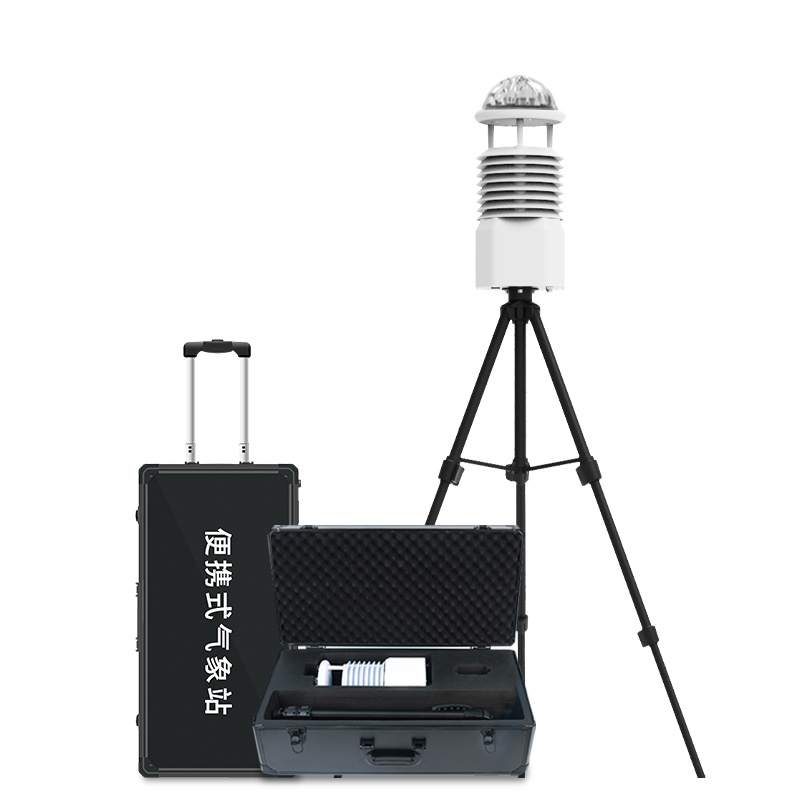
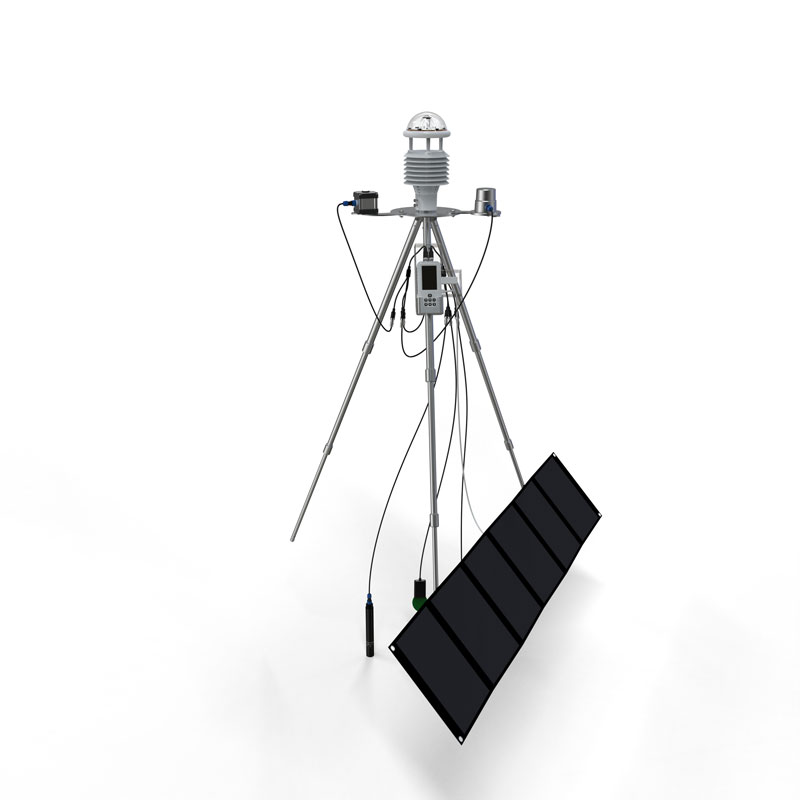
Integrated Weather Station integrates sensors such as wind speed, wind direction, temperature and humidity, air pressure, light, optical rainfall and air quality. It is a low-power, high-precision, field automatic weather observation equipment that can be quickly installed.
Integrated Weather Station is a compact observation equipment that integrates a variety of meteorological and environmental sensors and can achieve rapid deployment and automated data collection. Its core design goal is to meet the needs for real-time, continuous, and high-precision observation of on-site meteorological and environmental elements in field, temporary or mobile monitoring scenarios.
The device is capable of measuring multiple key elements simultaneously. Meteorological elements mainly include wind speed, wind direction, air temperature, relative humidity, atmospheric pressure, light intensity, and precipitation measured using optical principles. In addition, some models also integrate monitoring functions for PM2.5, PM10 and other particulate matter concentrations as well as environmental noise, thereby providing more comprehensive on-site environmental status information. This multi-element integrated design avoids the cumbersomeness of carrying and installing multiple independent instruments, and significantly improves field work efficiency.
The core features of Integrated Weather Station are reflected in its high degree of convenience and reliability. The equipment usually adopts a lightweight and sturdy structural design and is equipped with a portable case or a simple bracket, allowing a single person to complete installation and start-up in a short time, enabling "testing right out of the box". Its power supply system has been optimized to achieve long-term low-power operation by relying on a combination of built-in batteries and solar panels, adapting to outdoor environments without mains power supply. The data collector automatically coordinates the work of each sensor, stores the observation data locally in real time, and generally transmits it remotely to the user-designated data center or cloud platform through wireless communication methods such as GPRS, 4G or LoRa, making it convenient for users to view data anytime and anywhere. The equipment as a whole has good environmental adaptability and can withstand certain tests of wind, rain, dust and temperature changes.
Based on the above characteristics, Integrated Weather Station plays an important role in many fields. In the field of meteorological emergency monitoring, it can be quickly deployed at disaster sites (such as areas affected by typhoons, heavy rains, and flash floods), providing first-hand local meteorological data to serve disaster assessment and rescue decisions. In field scientific expeditions and ecological research, it provides a flexible and reliable mobile monitoring solution for climate change research, ecological environment assessment, and forest or grassland ecosystem observation. In the agricultural field, it can be used for farmland microclimate monitoring, special agricultural meteorological services and analysis of meteorological conditions for the occurrence of pests and diseases. In the fields of large-scale event site support, construction, transportation, etc., it can provide timely data support for temporary meteorological safety assurance. In addition, it is often used as an effective supplement to the existing fixed meteorological observation network for intensive observations or short-term special observations for specific projects. In short, with its advantages of flexible deployment, comprehensive functions and reliable data, Integrated Weather Station has become a tool of great practical value in the modern meteorological and environmental monitoring system.
Rat Bait Station utilizes the Internet of Things (IoT) and intelligent recognition technology to achieve 24/7 rodent activity data collection and remote control management....
The Atmospheric Environment Monitoring System serves as a monitoring unit in grid-based monitoring systems. It adopts a miniaturized design enabled by sensor technology, capable of flexibly detecting one or more of various pollutant parameters, including PM10, PM2.5, SO2, NO2, CO, O3, and TVOC. This...
Handheld Anemometer is a portable meteorological observation instrument that integrates the measurement of wind speed, wind direction, and average wind speed into a single unit. It features a wind speed measurement range of 0–60 m/s with an accuracy of ±0.3 m/s, and a wind direction range of...
As night fell, I was flying through the darkness as usual. Suddenly, I spotted a beam of light that lured insects ahead. Driven by instinct, my companions and I flew towards the light source without hesitation. Later I came to know that it was actually a nightmare from which there was no escape. Tha...


 Skype
Skype
 whatsapp
 mail
mail