Tianqiong Sensor IOT Technology Co., Ltd
Sales Manager:Ms. Emily Wang
Cel,Whatsapp,Wechat:+86 15898932201
Email:info@fengtutec.com
Add:No. 155 Optoelectronic Industry Accelerator, Gaoxin District, Weifang, Shandong, China


Sales Manager:Ms. Emily Wang
Cel,Whatsapp,Wechat:+86 15898932201
Email:info@fengtutec.com
Add:No. 155 Optoelectronic Industry Accelerator, Gaoxin District, Weifang, Shandong, China
time:2026-03-24 11:28:38 source:Weather Station viewed:305 time
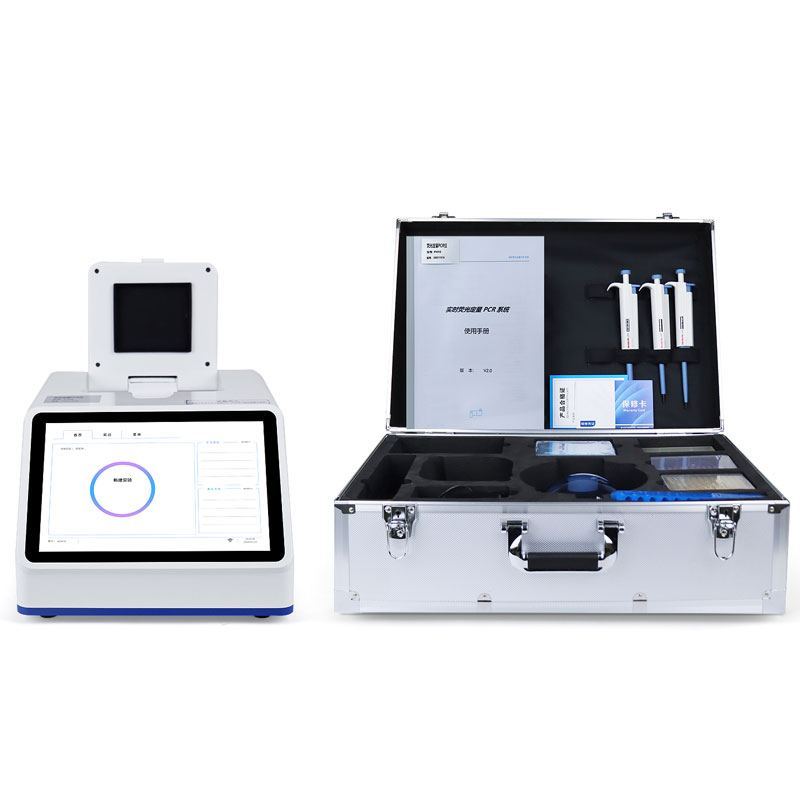
Corn GMO Detector is a specialized solution custom-designed for maize. Based on real-time quantitative fluorescence technology, the system consists of a 4-channel, 16-well real-time quantitative PCR instrument and a portable accessory kit. It enables rapid and precise detection of transgenic components in various maize samples—including seeds, grains, and semi-finished processed products—making it ideally suited for field-based operations and seed screening scenarios. The system provides essential support for ensuring planting compliance and maintaining quality control.
Corn GMO Detector is a dedicated detection system powered by real-time quantitative PCR technology. The equipment comprises a 4-channel, 16-well real-time quantitative PCR instrument paired with a portable accessory kit. Featuring a compact and lightweight design, the entire unit is highly portable, allowing for convenient use in various on-site environments such as fields, seed warehouses, and processing plants. The 4-channel design enables the simultaneous detection of multiple target genes within a single reaction batch, while the 16-well configuration effectively meets the screening requirements for small to medium-sized sample batches.
Corn GMO Detector features a simplified operational workflow. Users simply add the extracted maize DNA samples into the reaction system, place them into the PCR instrument, and initiate the detection process according to a pre-configured program. Utilizing real-time quantitative fluorescence technology, the system continuously monitors the amplification process via the accumulation of fluorescent signals, automatically determining—based on the cycle threshold—whether the sample contains transgenic components. The entire detection process can be completed on-site without the need to send samples to a specialized laboratory, ensuring a rapid turnaround time from sample processing to result output.
Corn GMO Detector is precisely adapted to analyze maize samples in various physical forms. For maize seeds, it enables the screening of transgenic components prior to sowing, thereby facilitating the selection of compliant seed sources. For maize grains, it allows for spot-checking during procurement and storage phases to ensure raw material quality. For semi-finished maize products—such as maize flour or maize germ—it facilitates the traceability of compositional components throughout the production process. The device features built-in detection protocols specifically targeting common transgenic events in maize; the resulting data is highly reproducible and meets the rigorous accuracy standards required for routine screening operations.
In terms of application scenarios, Corn GMO Detector serves a diverse range of stakeholders, including maize breeding institutions, seed companies, individual growers, grain trading enterprises, and quality supervision agencies. In the field, technicians can utilize this portable equipment to conduct spot checks on experimental or seed-multiplication plots, thereby enabling the timely removal of any admixed plant lines. During the seed screening phase, bulk seed lots can undergo sampling and screening to ensure that the seeds intended for sale comply with regulations regarding GMO labeling and cultivation permits. Furthermore, within the processing stage, the device facilitates compliance verification for raw materials and semi-finished products, thereby mitigating the trade and legal risks associated with the inadvertent contamination of products by GMO ingredients. By enabling rapid on-site detection, this equipment significantly reduces both testing turnaround times and costs, providing the maize industry with the necessary technical tools to ensure compliance with GMO regulations and maintain rigorous quality control.
weather monitoring system is an unattended meteorological data acquisition system that uses ultrasonic principles to measure wind speed and direction. This system integrates data acquisition, storage, and transmission functions, featuring a compact structure and easy installation....
fluorescent quantitative PCR instrument is a 96-throughput real-time quantitative PCR instrument that supports both dye-based and probe-based detection reagents, enabling multiplex PCR analysis. The instrument is suitable for applications in molecular diagnostics, pathogen detection, and quant...
Traditional meteorological monitoring often relies on large, fixed national-level weather observation stations. While these stations provide extremely accurate data, they also suffer from high construction costs, low density, and limited coverage. With social development, our demand for meteorologic...
The portable weather station is a highly integrated, low-power, and high-precision observation device. Equipped with an all-in-one sensor measuring twelve parameters and supporting multi-mode data transmission, it allows for rapid deployment. Its robust protection and anti-interference capabil...


 Skype
Skype
 whatsapp
 mail
mail